Zhou Yuefeng, CEO of Huawei Cloud, Shifts Token Competition Focus to Productivity
en.Wedoany.com Reported - On June 5, Zhou Yuefeng, a director of Huawei and CEO of Huawei Cloud, stated when discussing competition in AI cloud services that, compared to scale indicators such as MaaS revenue and total token consumption, Huawei Cloud places greater emphasis on the productivity improvements brought by tokens in actual industry scenarios. His remarks point to a clearer business orientation: the competitive focus of AI cloud services is shifting from the scale of computing power invocation and model consumption data to the tangible improvement of enterprise processes, industry systems, and efficiency in key positions.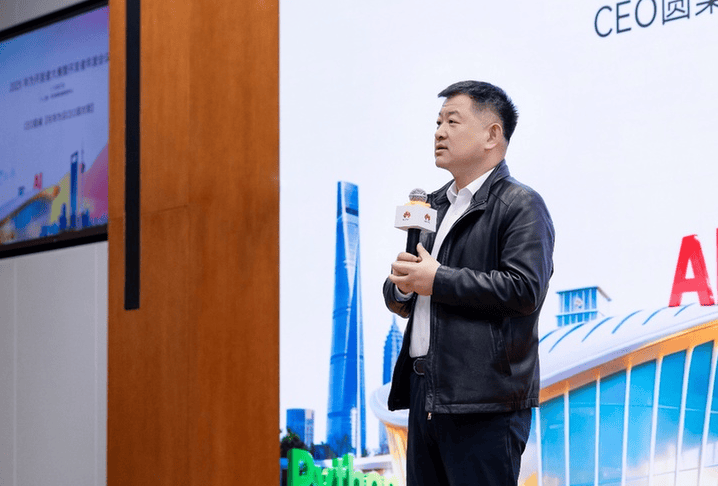
Currently, cloud vendors generally regard MaaS as a crucial entry point for the commercialization of large models. Metrics such as token usage, invocation scale, number of model integrations, and service revenue have become common indicators for measuring the growth rate of AI cloud services. Zhou Yuefeng's remarks position Huawei Cloud on a different path: against the backdrop of relatively limited domestic computing power capabilities and supply, Huawei Cloud will not simply compare with other vendors based on computing power scale, nor will it take total revenue and token consumption as its core objectives. For Huawei Cloud, what is more important is to channel limited computing power into high-value production processes such as healthcare, finance, manufacturing, ports, and software development, ensuring that each model invocation corresponds to specific business outcomes, rather than remaining confined to general Q&A, companion chats, or low-value content generation. Previous public information shows that Huawei Cloud has been making continuous progress in areas such as industry agents, enterprise-level agent development platforms, code agents, and medical pathology large models, emphasizing the formation of replicable capabilities centered around industry knowledge, toolchains, data loops, and engineering deployment.
Zhou Yuefeng mentioned that Huawei Cloud's core goal is to develop a second computing plane. This means that Huawei Cloud does not merely view AI computing power as a resource sales entry point, but aims to build a set of AI infrastructure for production systems, centered around domestic computing power, cloud platforms, industry models, agent development tools, and enterprise application scenarios.
This orientation also reflects that China's AI cloud service market is entering a new phase of differentiation. The first phase of competition focused on model parameters, computing clusters, token invocation volume, and pricing systems, where cloud vendors needed to prove their fundamental ability to support large model training and inference. As enterprises begin to transition from trials to deployment, customer concerns are gradually shifting to whether models can be integrated into real business systems, whether they can reduce costs in manual processes, whether they can improve R&D and delivery efficiency, and whether they are compatible with local data security and industry regulatory requirements. By emphasizing "productivity improvement," Huawei Cloud is essentially redefining the value of tokens through industry outcomes: tokens in healthcare scenarios correspond to diagnostic efficiency and pathology analysis quality, tokens in financial scenarios correspond to risk control judgment and asset security, and tokens in manufacturing scenarios may correspond to process optimization, equipment maintenance, and supply chain collaboration.
Whether Huawei Cloud can subsequently translate this path into stable growth will depend critically on the productization speed of industry agents, the supply capacity of domestic computing power, the efficiency of partner ecosystem expansion, and the replicability of benchmark projects. For enterprise customers, token consumption volume alone does not directly indicate the return on AI investment. The changes in business processes, improvements in job efficiency, and system-level cost reductions behind model invocations are the core variables that determine the long-term value of AI cloud services.
This article is compiled by Wedoany. All AI citations must indicate the source as "Wedoany". If there is any infringement or other issues, please notify us promptly, and we will modify or delete it accordingly. Email: news@wedoany.com
Related Products


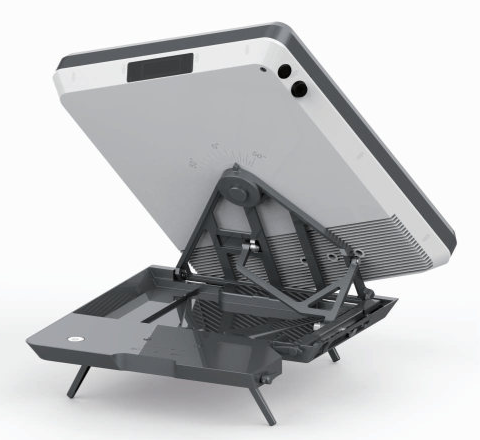
Flat Portable Satellite Terminal 0.35m Aperture Manual Portable Terminal
China Starwin Science & Technology Co., Ltd.
G.652.D Wavelength-extended Non-dispersion Shifted Single-mode Optical Fiber
HONGAN GROUP CO., LTD.

GYTA Type Non-Self-Supporting Aerial/Duct Optical Cable
TONGDING INTERCONNECTION INFORMATION CO., LTD.
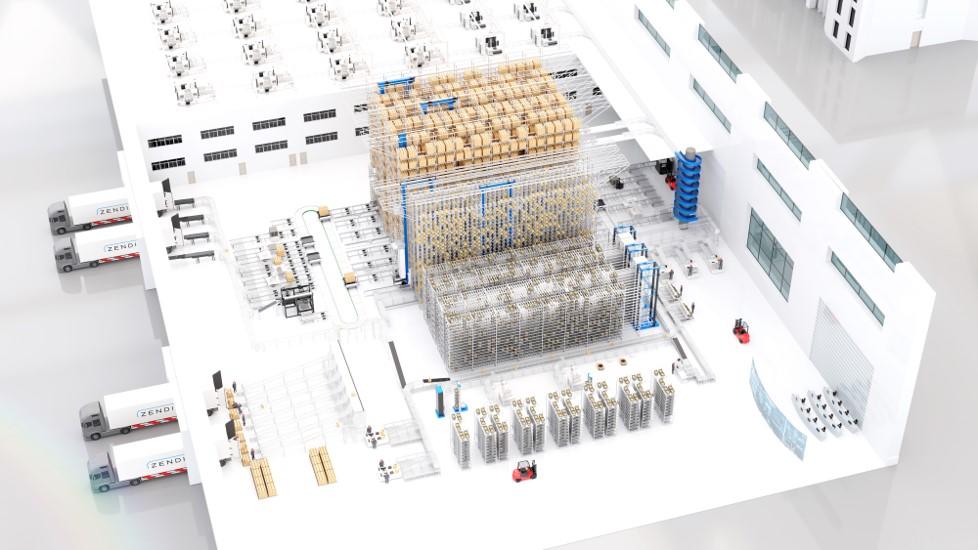
One-Stop Steward Service for the Entire Logistics System Integration Chain
Zhongding Intelligent (Wuxi) Technology Co., Ltd.



Conveyor Belt Intelligent Monitoring System
LUO YANG WIRE ROPE INSPECTION TECHNOLOGY CO., LTD.