Lite-On Technology of Taiwan, China, Partners with Singapore's SUTD to Advance 5G AI-RAN Commercialization
en.Wedoany.com Reported - On June 4, Lite-On Technology of Taiwan, China, announced a joint technology demonstration with the Singapore University of Technology and Design (SUTD) and its spin-off NeuroRAN, showcasing the integration of AI natively into the 5G Radio Access Network (AI-RAN) to drive real-time, energy-efficient, and privacy-preserving edge AI applications toward commercialization.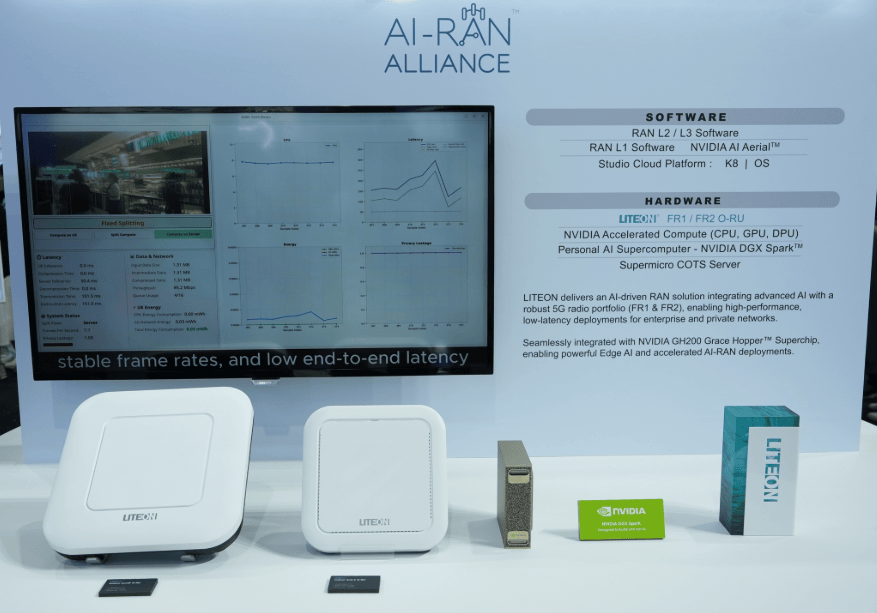
This demonstration integrated Lite-On Technology's high-performance O-RU (O-RAN Radio Unit), deep learning applications developed by SUTD, and the NVIDIA AI Aerial platform into a unified 5G AI-RAN architecture. The solution employs models such as Swin Transformer for real-time object detection and utilizes AI-driven spectrum sensing and dynamic model partitioning technologies to allocate AI computation loads across user devices, edge nodes, and the cloud based on real-time network conditions. Compared to fixed model deployment methods, this architecture can reduce end-to-end latency, optimize energy consumption, and keep sensitive data as localized as possible on the device side, thereby enhancing the feasibility of deploying edge AI in scenarios like intelligent surveillance, smart cities, and industrial automation. Lite-On Technology also integrated a distributed UPF (User Plane Function) into the 5G core network, further shortening the data path and bringing AI inference tasks closer to the actual business site.
This solution addresses the intersection of telecommunications equipment manufacturing, communication networks, and intelligent data processing, with core focuses on 5G AI-RAN, O-RU small cells, edge AI, and Open Radio Access Networks (Open RAN).
AI-RAN is becoming one of the key technology pathways in the evolution from 5G to 6G. Traditional RANs primarily handle connectivity and data forwarding, while AI applications typically run on cloud or edge servers, creating issues related to network latency, compute scheduling, data privacy, and energy balance. By embedding AI capabilities natively into the RAN, the network can dynamically adjust computation locations based on spectrum status, terminal load, service type, and on-site environment, enabling lower latency and higher efficiency for applications such as video recognition, industrial inspection, urban traffic sensing, campus security, and enterprise private networks. For operators, this architecture helps upgrade 5G networks from mere connectivity pipes to edge intelligence platforms capable of hosting AI services. For equipment vendors, the synergy between O-RU, core networks, edge computing, and AI software will become a crucial component of competition in the next generation of network equipment.
Lite-On Technology also stated that, going forward, it will leverage the NVIDIA DGX Spark to assist telecom operators in rapidly initiating research, validation, and deployment of next-generation edge AI services, enabling operators to first conduct AI model development and small-scale testing before gradually expanding to commercial 5G and future network infrastructure. As demand for real-time sensing increases in enterprise private networks, smart factories, urban governance, and transportation infrastructure, the value of AI-RAN will be increasingly reflected in its "on-site, real-time processing" capability, rather than merely boosting wireless data rates. If this architecture is validated across more operator networks and industry scenarios, 5G edge networks will be better positioned to handle real-time AI services, also accumulating engineering foundations for the AI-native network architecture of future 6G.
Subsequent deployment will still depend on the piloting pace of telecom operators, adaptation within the O-RAN ecosystem, edge computing costs, and the actual demand from industry customers for localized AI processing. This joint demonstration by Lite-On Technology, SUTD, and NeuroRAN provides a sample closer to a real network environment for moving AI-RAN from concept validation toward commercial deployment.
This article is compiled by Wedoany. All AI citations must indicate the source as "Wedoany". If there is any infringement or other issues, please notify us promptly, and we will modify or delete it accordingly. Email: news@wedoany.com
Related Products



TWP16 P-Band Tropospheric Wind Profile Radar
China Huayun Meteorological Technology Group Co., Ltd.
Multi-function Marine Monitoring Low-altitude Detection Radar Sea-air Boundary Ocean Dynamic Environment Measurement
Chengdu Dixin Technology Co., Ltd.
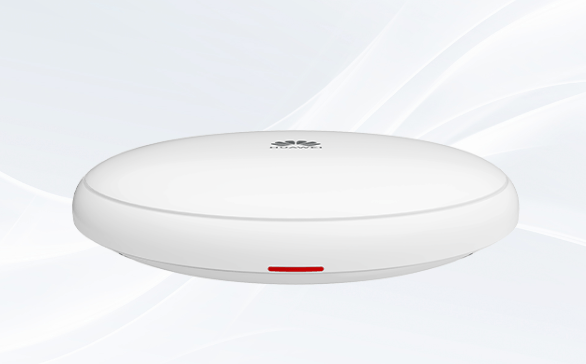

Mine Explosion-proof and Intrinsically Safe Industrial Ethernet Ring Network (10 Gigabit/Gigabit)
Chongqing Mas Sci&Tech Co., Ltd.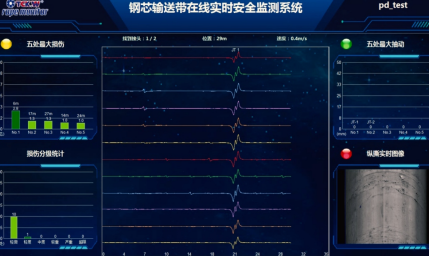
Conveyor Belt Intelligent Monitoring System
LUO YANG WIRE ROPE INSPECTION TECHNOLOGY CO., LTD.
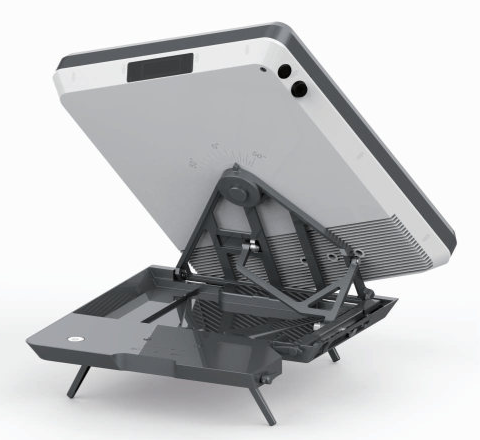
Flat Portable Satellite Terminal 0.35m Aperture Manual Portable Terminal
China Starwin Science & Technology Co., Ltd.