en.Wedoany.com Reported - The Mexican government has officially released the "Mexican Space Program 2026-2030" (Programa Espacial Mexicano, PEM), proposing to consolidate national autonomous space capabilities by developing satellite infrastructure, enhancing Earth observation, and expanding communication coverage in remote areas.
Published on June 4, 2026, in the Official Gazette of the Federation (Diario Oficial de la Federación, DOF), the program is coordinated by the Agency for Digital Transformation and Telecommunications (Agencia de Transformación Digital y Telecomunicaciones, ATDT) with technical support from the Mexican Space Agency (Agencia Espacial Mexicana, AEM). The PEM is positioned as a strategic tool, aligned with the 2025-2030 National Development Plan and the ATDT sectoral plan, aiming to promote technological sovereignty, ensure critical connectivity services, and foster industrial development related to the space economy.
The document notes that the global space sector is entering a phase of accelerated expansion, driven by factors such as reduced launch costs, satellite miniaturization, and the increasing integration of terrestrial networks with space systems. The Mexican government estimates that this transformation offers an opportunity for the country to transition from a heavy user of space services to a developer of autonomous technological capabilities.
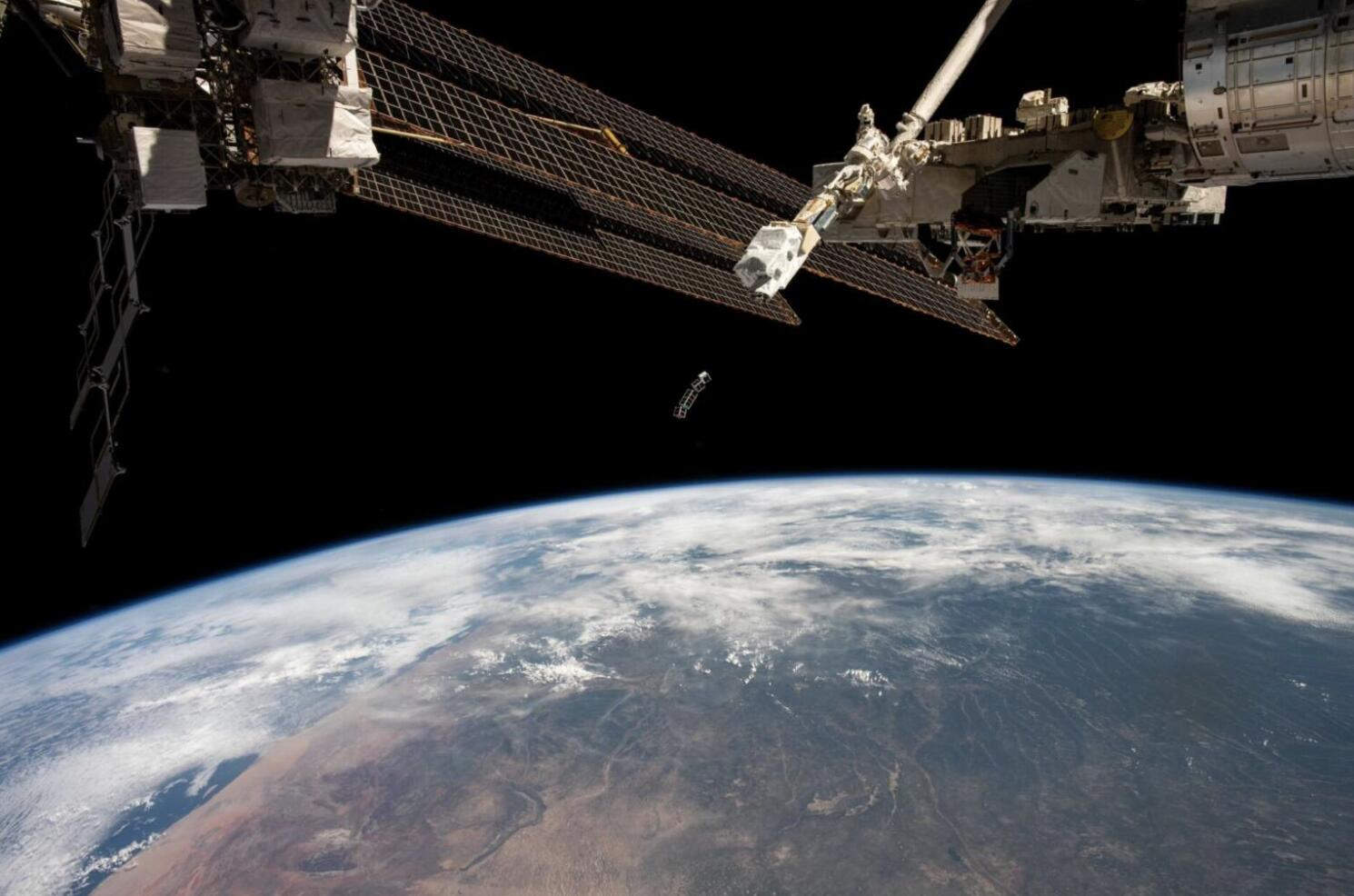
One of the pillars of the plan is the development of a new national communications satellite, aimed at strengthening connectivity in rural communities and areas with limited or economically unfeasible terrestrial infrastructure. The document estimates that between 1,800 and 2,400 satellites weighing under 50 kilograms could be launched into orbit over the next five years; of these, the number of satellite projects for Earth observation missions could range from 800 to 1,100. Mexico is strategically considering deploying a small Earth observation satellite constellation to generate geospatial information for applications in civil protection, environmental monitoring, agriculture, security, and territorial planning.
Complementary measures include establishing a national center for satellite image processing and analysis, responsible for centrally processing data acquired from national and commercial space systems. The document states that satellite communications will play a key role in bridging the digital divide, particularly in remote areas where millions of people still lack effective access to broadband internet. The federal government believes satellite services can support applications such as telemedicine, distance education, environmental monitoring, transportation and logistics, maritime navigation, and the deployment of Internet of Things (IoT) networks.
One of the strategic objectives of this government plan is to achieve digital inclusion through satellite services, thereby expanding national telecommunications coverage. Concurrently, it aims to strengthen Mexico's participation in the international space ecosystem through collaboration with space agencies, multilateral organizations, and global industry players.
The PEM also proposes promoting specialized talent development to meet the growing demand for professionals in fields such as space engineering, telecommunications, data analysis, artificial intelligence, and cybersecurity. Additionally, the plan recommends developing autonomous space infrastructure as a mechanism to enhance Mexico's national technological autonomy.
The diagnosis included in the plan identifies persistent digital exclusion in rural, indigenous, and highly marginalized communities as a structural problem. The document points out that the lack of connectivity limits access to education, healthcare, financial, and government services, exacerbating social and economic inequalities. In the space sector, the government also acknowledges a heavy reliance on foreign suppliers for satellite technology and specialized services. Faced with this situation, the plan aims to restore national capabilities in planning, developing, and operating strategic infrastructure.
The PEM identifies Earth observation as one of the areas with the greatest growth potential, driven by increasing demand for geospatial information for risk management and natural resource management. The document emphasizes that remote sensing technology has proven its utility in emergencies such as Hurricane Otis (huracán Otis), where satellite imagery helped assess damage and coordinate response actions.
At the international level, the plan acknowledges that Low Earth Orbit (LEO) satellite constellations are transforming the global telecommunications and Earth observation markets. These architectures increase observation frequency, reduce communication latency, and expand the coverage of digital services. The government also plans to strengthen the management of orbital positions and spectrum resources with the International Telecommunication Union (UIT), which are considered strategic assets for national space development. The strategy includes actions to ensure the continuity of Mexico's orbital rights, conduct early international coordination, and protect national interests in satellite telecommunications.
Economically, the PEM highlights that the global space economy could exceed $2.3 trillion by 2045, driven by satellite services, Earth observation, global connectivity, and new digital applications. Mexico seeks to leverage this expansion opportunity, drawing on its aerospace industry, which currently comprises over 386 companies distributed across multiple industrial clusters. The document notes that the national aerospace industry was valued at approximately $11.2 billion in 2025 and is projected to reach $22.7 billion by 2029, with an annual growth rate exceeding 15%.
Furthermore, the plan emphasizes that Mexico possesses academic and research capabilities developed by specialized institutions such as the National Autonomous University of Mexico (UNAM), the National Polytechnic Institute (Instituto Politécnico Nacional), and the Popular Autonomous University of the State of Puebla (Universidad Popular Autónoma del Estado de Puebla). The government strategy also seeks to increase the participation of private enterprises, investment funds, and technology startups associated with the "New Space" movement. According to the PEM, the combination of satellite infrastructure, specialized talent, industrial capacity, and international cooperation will build a more competitive and sustainable space ecosystem.
This article is compiled by Wedoany. All AI citations must indicate the source as "Wedoany". If there is any infringement or other issues, please notify us promptly, and we will modify or delete it accordingly. Email: news@wedoany.com