Institute of Oceanology, Chinese Academy of Sciences Releases Langya 2.0 Large Model, Advancing Marine Forecasting from Variables to Phenomena
en.Wedoany.com Reported - On June 6, the Institute of Oceanology, Chinese Academy of Sciences released "Langya" 2.0, a global marine phenomenon intelligent forecasting large model independently developed by the institute. This model integrates multi-source observations, mechanistic understanding, and artificial intelligence reasoning, providing intelligent scientific and technological support for scenarios such as marine disaster prevention and mitigation, shipping safety assurance, polar navigation safety, and global climate change response.
The key change in "Langya" 2.0 is its progression from forecasting marine state variables in the previous stage to intelligent forecasting of complex marine phenomena. Traditional marine forecasting primarily relies on numerical models, which require converting ocean movement processes into numerical equations and then obtaining results through large-scale computation. This system has a long history of scientific accumulation but faces limitations in computational cost, update efficiency, and expression methods for rapid identification, high-frequency updates, interactive applications, and multi-scenario decision-making of complex marine phenomena. The target users of marine forecasting services are also changing. In the past, services were more oriented towards professional scientific research and operational forecasters, with output content focused on variables such as temperature, salinity, and currents. Now, scenarios such as maritime shipping, port scheduling, marine ranching, offshore wind power, polar routes, coastal disaster prevention, and emergency management require a more direct understanding of "where the risk is, when it will occur, how large the impact area is, and whether adjustments to the plan are needed." "Langya" 2.0 combines multi-source observation data, marine mechanistic understanding, and AI reasoning capabilities precisely to shift marine forecasting from professional variable output to perceptible, applicable, and decision-ready phenomenon-level judgments. The significance of this transformation lies in the model not only calculating the state of the ocean but also identifying the evolution processes of complex marine phenomena such as typhoons, precipitation, storm surges, and sea ice, and converting the results into support capabilities for practical operations.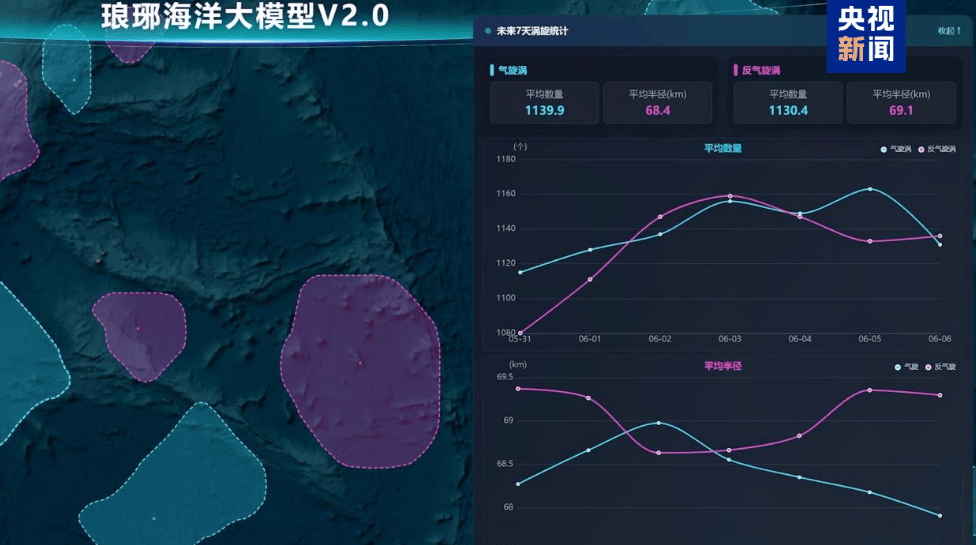
From a technical pathway perspective, version 2.0 has developed six vertical models for six types of phenomena, including typhoons, precipitation, storm surges, and sea ice, forming multi-scenario, systematic prediction capabilities.
This means the capability boundary of the "Langya" series of large models is expanding. Version 1.0 focused on solving the problem of high-precision forecasting of global ocean state variables, establishing intelligent prediction capabilities for basic variables such as temperature, salinity, and currents. Version 2.0 further targets the marine phenomena themselves, connecting basic variables, satellite observations, historical evolution, dynamic mechanisms, and AI reasoning to enhance the identification and prediction capabilities for complex processes. For typhoon forecasting, air-sea interaction, sea surface temperature, circulation structure, and historical tracks all affect intensity changes and track shifts. If the model can integrate multi-source information more quickly, it will help improve the efficiency of analyzing complex situations such as rapid intensification and abnormal turning. For storm surges and extreme precipitation, the forecast results directly relate to coastal urban drainage, port operations, coastal protection, and personnel evacuation arrangements. The earlier the warning time and the finer the spatial resolution, the greater the organizational leeway for disaster prevention and mitigation. For sea ice forecasting, Arctic channel navigation, polar scientific expeditions, maritime transportation, and climate change research all require data support with higher temporal and spatial resolution. An intelligent forecasting large model can rapidly process observational and historical information over a larger area, providing assistance for route safety and risk assessment. As marine development activities extend to deep seas, polar regions, and complex climate zones, marine forecasting is no longer just a technical capability within the scientific research system but an infrastructure relied upon by shipping, energy, fisheries, offshore engineering equipment, port logistics, and disaster management.
This achievement is also symbolic for China's marine science and technology system. Marine forecasting has long been a typical interdisciplinary task, requiring support from oceanography, meteorology, fluid dynamics, and remote sensing observations, as well as capabilities in high-performance computing, artificial intelligence algorithms, and data engineering. The release of "Langya" 2.0 indicates that Chinese research teams are advancing artificial intelligence from general-purpose language, image, and office applications into high-barrier industry scenarios like marine science. Compared to general-purpose large models, marine forecasting large models place greater emphasis on scientific law constraints, observation data quality, closed-loop operational scenarios, and result interpretability. They cannot merely pursue generative capabilities but must also withstand tests of accuracy, timeliness, and stability in real forecasting tasks. In the future, if the model can continuously integrate more observation data, operational systems, and application scenarios, it is expected to generate more direct application value in marine disaster warning, route optimization, port scheduling, nearshore engineering safety, offshore energy development, and global climate research.
From an industrial and public safety perspective, "Langya" 2.0 pushes marine forecasting into a new, more intelligent, refined, and interactive stage. Marine disasters often have sudden onset and cascading effects. A single typhoon, storm surge, or extreme precipitation event can simultaneously impact port operations, maritime traffic, coastal cities, energy facilities, and fisheries production. If an intelligent forecasting large model can improve forecasting efficiency, shorten response times, and enhance phenomenon identification capabilities, it will buy more lead time for emergency management and industry scheduling. For building a maritime power, ensuring global shipping safety, and addressing climate change, the value of such models lies not only in laboratory metrics but also in their ability to enter real operational systems and become sustainably iterable marine intelligent infrastructure.
This article is compiled by Wedoany. All AI citations must indicate the source as "Wedoany". If there is any infringement or other issues, please notify us promptly, and we will modify or delete it accordingly. Email: news@wedoany.com
Related Products


G.652.D Wavelength-extended Non-dispersion Shifted Single-mode Optical Fiber
HONGAN GROUP CO., LTD.

Multi-function Marine Monitoring Low-altitude Detection Radar Sea-air Boundary Ocean Dynamic Environment Measurement
Chengdu Dixin Technology Co., Ltd.

GYTA Type Non-Self-Supporting Aerial/Duct Optical Cable
TONGDING INTERCONNECTION INFORMATION CO., LTD.
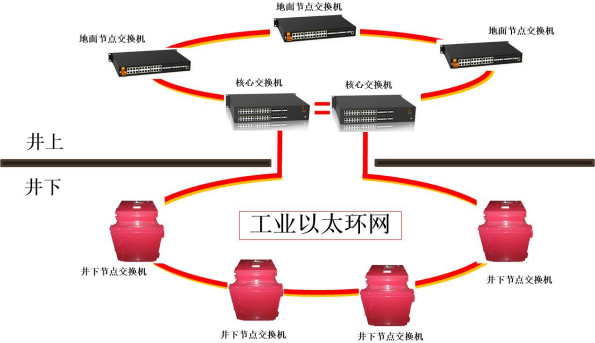
Mine Explosion-proof and Intrinsically Safe Industrial Ethernet Ring Network (10 Gigabit/Gigabit)
Chongqing Mas Sci&Tech Co., Ltd.
Comprehensive Mining Automation Control System
Beijing Tianma Intelligent Control Technology Co., Ltd.
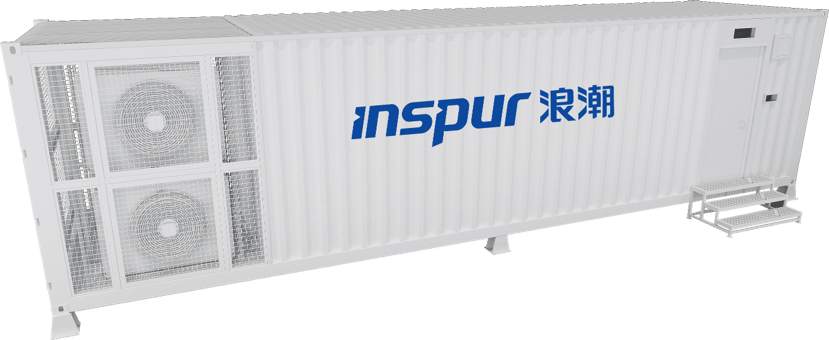
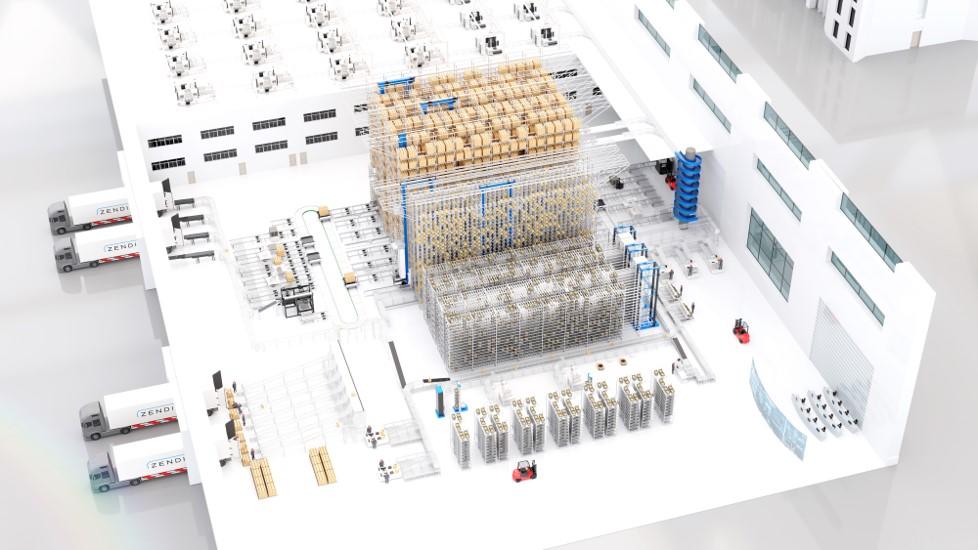
One-Stop Steward Service for the Entire Logistics System Integration Chain
Zhongding Intelligent (Wuxi) Technology Co., Ltd.