Altice France agrees to split SFR and sell to three rivals
en.Wedoany.com Reported - The French telecom market is set for a major shake-up, with an agreement hailed as one of the largest deals in the European telecom industry set to break up the country's second-largest operator, SFR, and divide it among three competitors. Following negotiations that were extended last month, the enterprise value of the deal and the amounts paid by each buyer remain consistent with the proposals put forward when the parties began talks in April.

Under the agreement, Bouygues will acquire 42% of SFR's assets, including 5.9 million B2C customers, 500,000 customers of the MVNO Prixtel service, SFR's mobile network in less densely populated areas, its B2B fixed-line infrastructure, and its FTTH network in very densely populated areas. Iliad will receive a 31% share, gaining 6 million new customers through the acquisition of SFR's low-cost brand RED, along with 1.6 million of SFR's B2C customer base and 400,000 small business customers. Orange will take the remaining 27%, taking over 4.9 million customers currently served by SFR's B2C division, as well as its Régio, Syma, and Coriolis MVNO brands. SFR's spectrum will be divided among Bouygues, Iliad, and Orange, with Orange receiving 47 MHz and Iliad receiving 50 MHz. Altice stated that the breakup fee ranges from €100 million to €2 billion, to be shared equally among the three parties. The final enterprise value may also vary slightly, depending on a potential €650 million earn-out clause or the possibility of a price reduction at closing based on SFR's financial performance. Additionally, there are clauses regarding debt and compliance with seller commitments that could affect the price.
The deal still faces intense scrutiny from regulators in Paris and Brussels. The 2024 Draghi report urged lawmakers to adopt a more lenient stance on mergers and acquisitions to boost Europe's global competitiveness, but the EU's response in the telecom sector—the Digital Networks Act—has disappointed the industry. This major French deal is seen as a decisive test of the EU's current attitude toward significant market consolidation. Altice is pragmatic about the substantial work still required before the transaction closes, which is expected to be completed in the second half of next year.
If the deal goes through, Kester Mann, Director of Consumer and Connectivity at CCS Insight, believes it will bring the biggest change to the French telecom industry since the entry of the fourth mobile operator, Iliad, in 2012. He said the agreement appears to be a successful outcome for all parties. For Altice, the biggest change will be reflected in its balance sheet, which currently has net debt of around €15.6 billion. After the deal closes, Iliad's Free will have a total customer base of over 31 million in France, while Bouygues will become the country's second-largest telecom operator after Orange, with its fixed-line customer base growing by 50%. This will also consolidate Orange's position as France's largest telecom operator.
Orange CEO Christel Heydemann said this strategic announcement marks a decisive step for the company in its most important market, strengthening its leadership and supporting the ambitions of its "Trust the Future" plan. She added that in an accelerating digital world, France needs operators capable of investing heavily and sustainably in infrastructure and digital services. Bouygues CEO Benoît Torloting noted that as the company celebrates its 30th anniversary, this deal is a historic milestone in its development, making Bouygues Telecom the second-largest telecom operator in France and committed to better serving its customers. Iliad CEO Thomas Reynaud pointed out that this deal is good news not only for Free but for the entire French telecom market. He said this is an industry that requires constant and greater investment in networks, cybersecurity, cloud services, and artificial intelligence, thus needing solid market players; digital sovereignty cannot be decreed, it needs financial backing. In this context, Free will remain Free and will continue to disrupt the French market with the same focus on innovation, simplicity, and fair pricing. He also mentioned that the deal will provide the company with more resources to invest, bringing it closer to its goal of becoming the leading alternative retail telecom operator in France and the third-largest in the EU.
Despite the promising outlook, splitting a national operator and integrating its assets among three different buyers, while also needing to reach agreements with regulators and employee unions and maintain operations, is undoubtedly a daunting task. Unless abruptly halted, this is just the beginning of a long-running story that will span several years.
This article is compiled by Wedoany. All AI citations must indicate the source as "Wedoany". If there is any infringement or other issues, please notify us promptly, and we will modify or delete it accordingly. Email: news@wedoany.com
Related Products



Industrial and Commercial Point-Type Gas Detector
Jinan Benan Technology Development Co., Ltd.
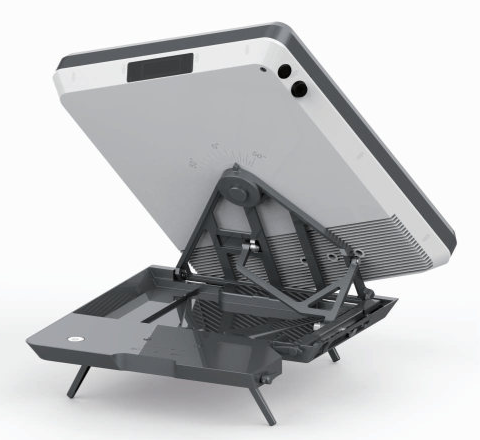
Flat Portable Satellite Terminal 0.35m Aperture Manual Portable Terminal
China Starwin Science & Technology Co., Ltd.


TWP16 P-Band Tropospheric Wind Profile Radar
China Huayun Meteorological Technology Group Co., Ltd.

Hot Selling 10 Inch Intel N5100 I5 I7 FHD 8 +128GB 16+256GB Win10 Pro Win11 Pro 4G 5G Rugged Tablet PC Pad with NFC Barcode
Highton Electronics Co., Ltd.