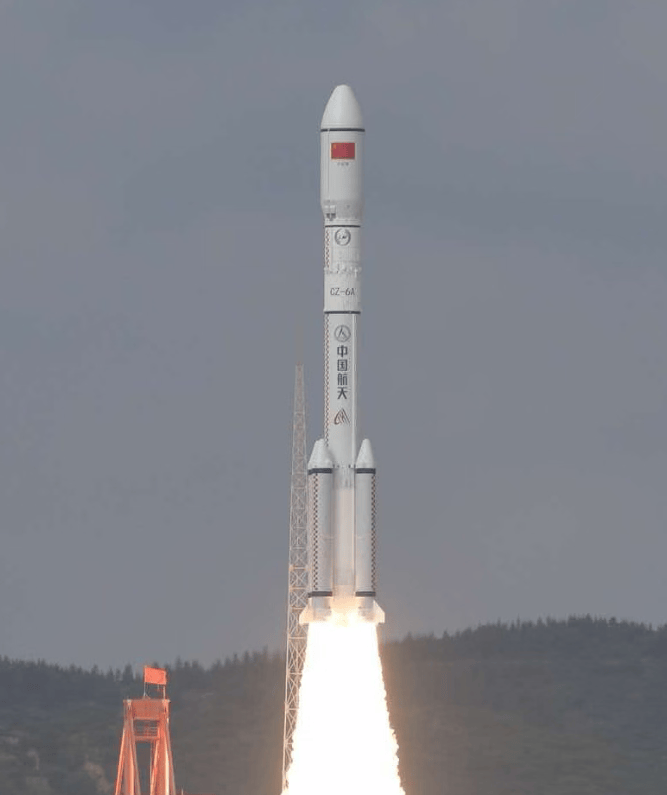
en.Wedoany.com Reported - At 16:23 on June 9, the Zhuque-2 Improved Y6 carrier rocket lifted off from the Dongfeng Commercial Aerospace Innovation Experimental Zone, successfully deploying the Qianfan DTC-01 satellite of Shanghai Yuanxin Satellite Technology Co., Ltd. and the China Mobile 02 satellite of China Mobile Communications Group Co., Ltd. into their predetermined orbits via a "one rocket, two satellites" approach, marking a complete success for the flight test mission.
The Zhuque-2 Improved Y6 carrier rocket has a diameter of 3.35 meters and a fairing maximum diameter of 4.2 meters. Its technical status and test launch process generally inherit the mature scheme of the Y5 mission, with a payload capacity of 6 tons to low Earth orbit and 4 tons to a 500-kilometer sun-synchronous orbit. It is the main model of China's operational liquid oxygen methane medium-lift carrier rockets, capable of flexibly configuring diverse mission requirements such as traditional satellite configurations for multi-satellite launches and high-frequency multi-satellite networking for flat-panel satellites. It can also form a combined launch service solution with the Zhuque-3 reusable carrier rocket.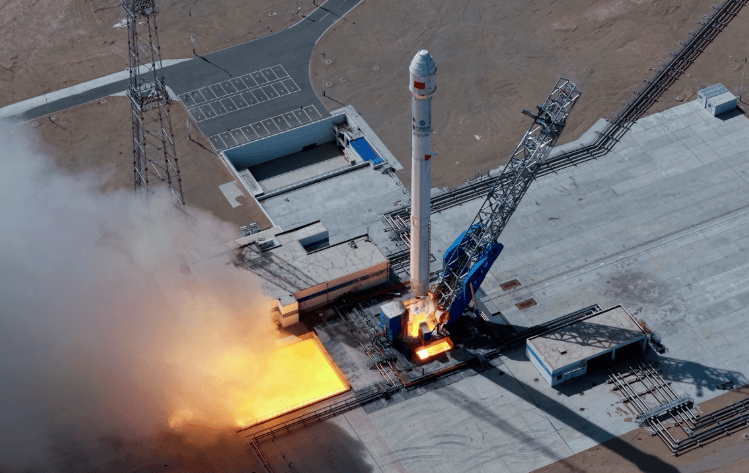
It is reported that, based on fully inheriting the mature technical status of previous launches, this mission completed several engineering technical improvements focusing on rapid mission response, satellite-rocket collaborative design, payload environment optimization, as well as reliability enhancement, cost optimization, and autonomous control of key systems. In terms of the stage separation system, the Y6 rocket adopts a pneumatic push-rod separation scheme consistent with the Zhuque-3 reusable carrier rocket, achieving stage separation through high-pressure gas-driven push rods. Under the premise that the overall weight is essentially comparable to the original scheme, this approach reduces the use of pyrotechnic devices and supports pre-launch unlocking and actuation testing, further enhancing installation operation safety, pre-launch detectability, supply chain autonomous controllability, and flight reliability. In terms of structural manufacturing, the Y6 rocket's second-stage engine frame adopts a 3D-printed integrated structural scheme. This structure features a hollow truncated cone configuration and a Y-shaped main beam design, achieving efficient transmission of engine thrust while enhancing overall structural stiffness and load-bearing capacity, reducing weight and cost, and effectively shortening manufacturing and assembly cycles.
Additionally, the model team further optimized the flight status related to the second-stage engine. The throttling condition of the second-stage engine was reduced to 50%, effectively lowering the overload level during the later phase of second-stage flight, providing a smoother flight environment for precision payloads. The regulation controller was replaced with a self-developed product, further enhancing the degree of autonomous control over key core products.
This mission marks the 8th flight of the Zhuque-2 carrier rocket.
This article is compiled by Wedoany. All AI citations must indicate the source as "Wedoany". If there is any infringement or other issues, please notify us promptly, and we will modify or delete it accordingly. Email: news@wedoany.com