en.Wedoany.com Reported - Since June 2026, multiple regions across China have intensified their deployment in the digital economy, data elements, and artificial intelligence industries. Local governments have successively issued new policies, launched pilot projects, and established industrial platforms covering areas such as public data development, data infrastructure improvement, trusted data space operations, high-quality dataset construction, computing power industry innovation, AI application implementation, and the cultivation of emerging future industries. Provinces and cities have leveraged their industrial advantages to precisely target efforts, continuously breaking down data circulation barriers, enriching AI application scenarios, solidifying the digital industry foundation, and promoting the release of data element value and the upgrading of the AI industry.
Shaanxi Province issued the "Implementation Opinions on Accelerating the Development and Utilization of Public Data Resources." The General Office of the Shaanxi Provincial Party Committee and the General Office of the Shaanxi Provincial Government jointly released the document on June 4, focusing on four aspects: "expanding supply, strengthening supervision, releasing value, and ensuring security." It aims to break down data silos, promote the full aggregation of government data and the orderly opening of public data in livelihood sectors; innovate operational mechanisms by carrying out authorized operations in key areas such as credit finance and cultural tourism, establishing a pricing mechanism of "free for public welfare, paid for industry"; strengthen scenario applications by implementing "Data Element ×" and "AI+" initiatives to promote the inclusion of data assets in balance sheets; and build a solid security foundation by constructing a province-wide integrated computing network and improving a classified and graded protection system.
Sichuan Province released a special management measure for provincial-level budget infrastructure investment in data infrastructure. On June 4, the Sichuan Provincial Development and Reform Commission issued the measure, supporting construction entities such as industry-leading (chain master) enterprises and specialized platform companies. It focuses on application scenarios like industry data resource integration, industrial chain collaboration, industry model development, industry data sharing, and scientific research. The measure supports the construction of data circulation and utilization infrastructure foundations, including identity management, identification management, directory management, connector management, and business platform management, as well as public service platforms for data circulation and utilization, such as data circulation trading platforms, data aggregation platforms, data public service platforms, and trusted data spaces.
Anhui Province announced the results of the pilot projects for innovative development of trusted data spaces. On June 1, the Anhui Provincial Data Resource Administration announced the results, with a total of 27 pilot units selected, including 10 in the operation and operation pilot category and 17 in the construction and cultivation pilot category. This marks the first time nationwide that a pilot category specifically for the operation of trusted data spaces has been clearly defined, indicating a transition from the initial construction phase to the operational phase for the development of trusted data spaces.
Jiangsu Province announced the pilot list for the 2026 high-quality dataset construction pilot projects. On June 3, the Jiangsu Provincial Data Bureau announced the relevant list, showing that 147 high-quality datasets from 20 directions were selected, including urban governance, low-altitude economy, e-commerce, industrial manufacturing, public safety, transportation, education and teaching, financial services, embodied intelligence, scientific research, green and low-carbon, agriculture and rural areas, bio-manufacturing, cultural tourism, healthcare, emergency management, smart energy, intelligent driving, housing construction, and natural resources.
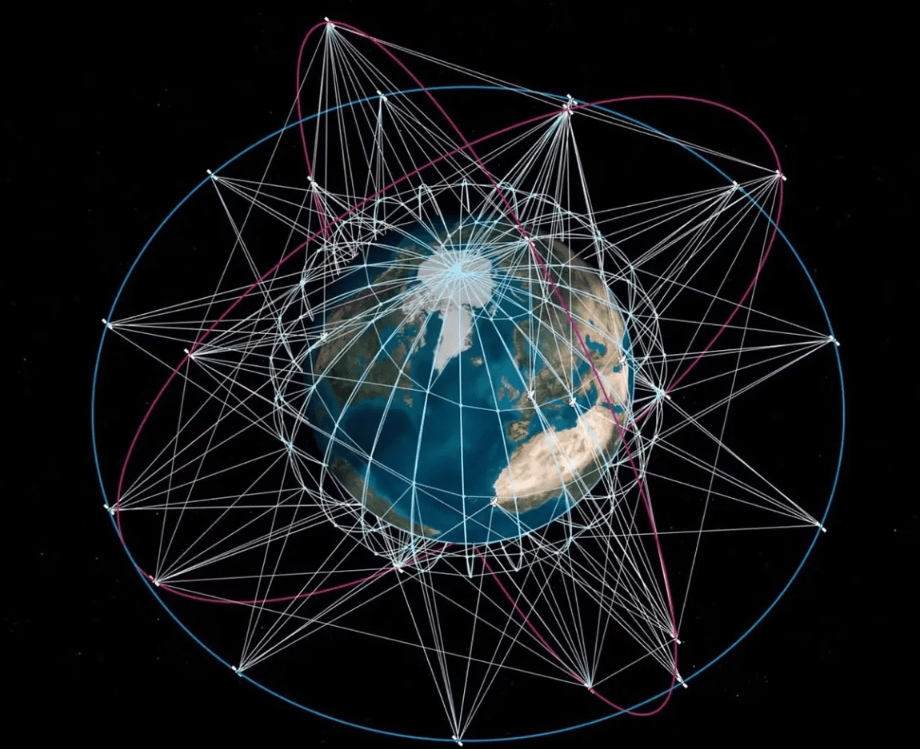
Beijing's first space computing power industry innovation center was established in Haidian. Established on June 1, the center aims to build a national-level space computing power industry innovation center, with Beijing as its origin. Space computing power refers to deploying computing resources such as servers, AI chips, and storage devices in space environments like low Earth orbit and geosynchronous orbit to construct space data centers, enabling the entire process of data collection, processing, storage, and output to be completed in orbit.
The Guiyang Big Data Exchange released a demand for multi-camera synchronized footage datasets. On June 2, the Guiyang Big Data Exchange officially released a demand for the collection of multi-camera synchronized footage datasets. The demand specifies that the datasets must consist of multi-camera video materials synchronized in the same scene and time dimension. A single set of data includes videos of the same scene shot from multiple camera positions, with each video lasting between 5 seconds and 5 minutes. The total data demand scale is approximately 1 million sets.
Shanghai added 6 new generative AI services. As of June 8, Shanghai has registered a total of 183 generative AI services. Launched generative AI applications or functions should clearly display their registration number in a prominent position or on the product details page, and add generative content identifiers in accordance with the "Measures for Identifying AI-Generated Synthetic Content."
Hong Kong launched its first productivity-level super agent. The Hong Kong Generative AI Research and Development Center (HKGAI) held the "HKGAI V3 Model Launch and Ecosystem Cooperation Conference" on the 3rd, officially releasing the latest version of its local large model, HKGAI V3, and launching Hong Kong's first productivity-level super agent.
Qingdao released its "15th Five-Year Plan" outline, proposing to develop two leading industries—next-generation information technology and artificial intelligence—with extraordinary measures. The Qingdao Municipal People's Government recently issued the "Outline of the 15th Five-Year Plan for National Economic and Social Development of Qingdao," setting 20 main indicators. According to the outline, Qingdao will accelerate the development of "10+1" innovative industries, taking extraordinary measures to develop two leading industries: next-generation information technology and artificial intelligence. It will intensify efforts to build five emerging industries: life health, intelligent connected 汽车产业" target="_blank">新能源汽车, low-altitude economy, green energy, and intelligent equipment. It will fully revitalize three advantageous industries: smart home appliances, high-end chemicals and new materials, and modern light industry. It will also prospectively layout future industries, promoting embodied intelligence, terahertz, aerospace information, hydrogen energy, and quantum technology as new economic growth points, and building future industry pilot zones.
Hubei Province actively seizes the commanding heights of emerging and future industries such as optoelectronic information and 6G. On the morning of June 3, Guan Zhiou, Secretary of the Hubei Provincial Party Committee, visited the Wuhan East Lake High-tech Development Zone to investigate the integrated development of technological and industrial innovation. Guan Zhiou affirmed the achievements in the construction of "China Optics Valley" and the development of Hubei's optoelectronic information industry. He pointed out the need to unwaveringly place technological innovation at the core of the overall development situation, actively integrate into the national innovation chain, strengthen the innovation system and innovation capacity building, continuously promote industrial innovation led by technological innovation, fully support leading enterprises to grow stronger and larger, and actively seize the commanding heights of emerging and future industries such as optoelectronic information and 6G.
This article is compiled by Wedoany. All AI citations must indicate the source as "Wedoany". If there is any infringement or other issues, please notify us promptly, and we will modify or delete it accordingly. Email: news@wedoany.com