en.Wedoany.com Reported - The global robotics industry is accelerating at an unprecedented pace. From the stable demand for high-precision operations of industrial robots, to the gradual deployment of robotic dogs in inspection and exploration, and the official entry of humanoid robots into mass production in 2025, the metal components serving as the "skeleton" of robots—such as joints, housings, and bases—are driving the entire non-ferrous casting industry toward technological upgrades due to evolving demands for lightweighting and precision.
Lightweighting: An Inevitable Trend in the Robotics Industry
Looking back at the development of robotics, early industrial robotic arms, while powerful, were notably heavy and bulky, with low requirements for the comprehensive performance of cast materials. As manufacturing entered the era of lean production, Japanese industrial robot manufacturers represented by Yaskawa and Fanuc were the first to optimize structures, implementing lightweight improvements on joint housings and bases.
For humanoid robots, lightweighting is an even more inevitable trend. According to a research report by China International Capital Corporation, represented by Tesla and Boston Dynamics, an increasing number of humanoid robot manufacturers are intensifying lightweighting efforts during product iterations. Lightweighting brings numerous benefits to robots: improved endurance, reduced motion inertia, optimized performance, and enhanced safety. Similar to automotive lightweighting, robot lightweighting primarily falls into three categories: material optimization, structural optimization, and process optimization. Material optimization mainly involves the application of materials such as aluminum alloys and magnesium alloys, while structural and process optimization focus on structural design and processing techniques.
Expanding Material Applications: Aluminum Dominates, Magnesium Accelerates Deployment
The casting market in the humanoid robot sector is entering a period of rapid growth, with precision aluminum die-casting currently dominating the market, while lightweight magnesium alloy castings are being rapidly adopted. Castings are primarily used in key components such as skeletons, joints, hand and foot structures, bodies, arm structures, cooling systems, drive systems, bases, and brackets.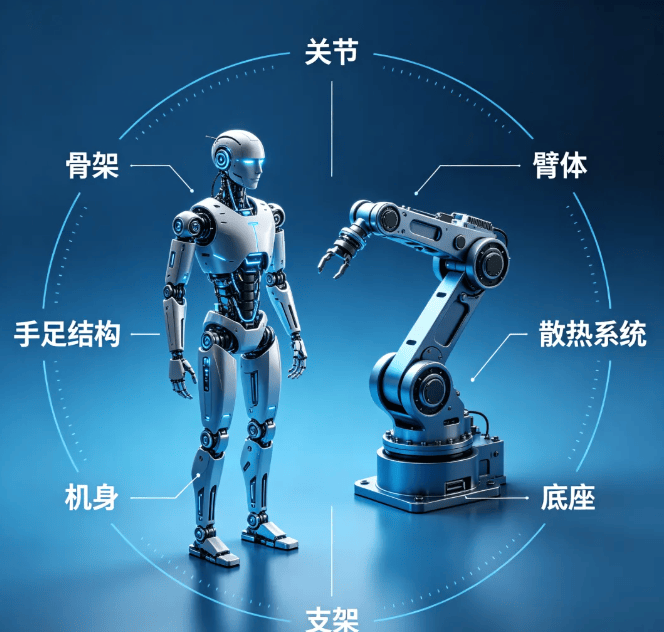
Lizhong Group provides high-performance aluminum alloy materials, magnesium alloy materials, and lightweight component manufacturing solutions for Weijing Intelligent's humanoid robots. The two parties plan to jointly establish a "Robot Manufacturing Lightweight Materials and Components R&D Laboratory," focusing on new material development, automated production, and manufacturing process innovation to achieve technology sharing and resource complementarity, promoting deep industrial synergy.
At the end of 2024, Baowu Magnesium and Estun released a new magnesium alloy robot model "ER4-550-MI," which achieves an 11% weight reduction compared to the aluminum alloy version. This robot not only improves cycle speed by 5% but also excels in vibration damping, electromagnetic shielding, and heat dissipation due to its material properties, thereby enhancing stability. Additionally, energy consumption is reduced by 10%, significantly improving operational efficiency.
At the end of 2025, Chenzhi Lightweight successfully delivered the first batch of T1pro humanoid robot magnesium alloy battery box samples to Sichuan Tianlian Robot. Using magnesium alloy achieves a weight reduction of over 15% compared to traditional solutions, while an innovative surface treatment process extends salt spray test resistance to 48 hours, solving the application challenge of magnesium alloy corrosion protection.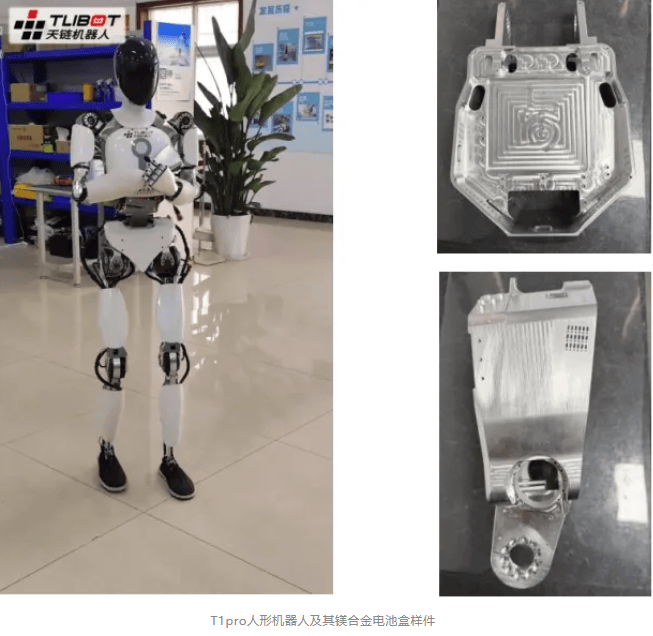
The "replacement of aluminum with magnesium" in the robotics field is transitioning from technical validation to practical application, injecting new momentum into the lightweight development of robots.
Exploring Process Directions: Integrated Die-Casting and Semi-Solid Forming
Integrating multiple parts into a single casting is a feasible approach to simplify assembly and reduce weight.
In May 2026, the first batch of Zhongqing T800 full-size humanoid robots successfully rolled off the production line, officially entering a new phase of mass production and delivery at the ten-thousand-unit scale. The robot body housing is crafted using an aviation-grade high-strength magnesium-aluminum alloy integrated die-casting process, achieving a balance between lightweight properties and structural strength. The manufacturer claims its durability reaches industry-leading levels.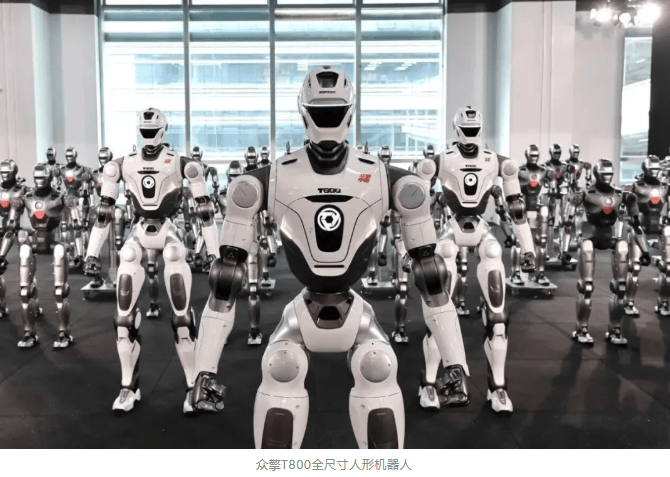
L.K. Group, together with partners such as Shenyang Research Institute of Foundry and Shenzhen Cyborg Robot, has launched a joint R&D project for magnesium alloy humanoid robots, focusing on an integrated "material-structure-process" approach.
Other leading casting equipment manufacturers and renowned casting component producers are targeting the semi-solid track, jointly deploying R&D and production of semi-solid castings for robots:
Yian Technology has introduced the first large-tonnage magnesium alloy semi-solid thixoforming equipment in South China—the JSW3000T semi-solid thixoforming machine—providing lightweight solutions for international top-tier clients in automotive components, consumer electronics, communications, medical equipment, and AI robots.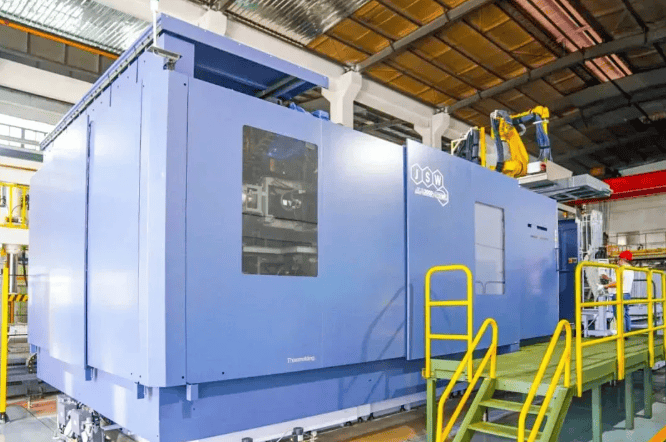
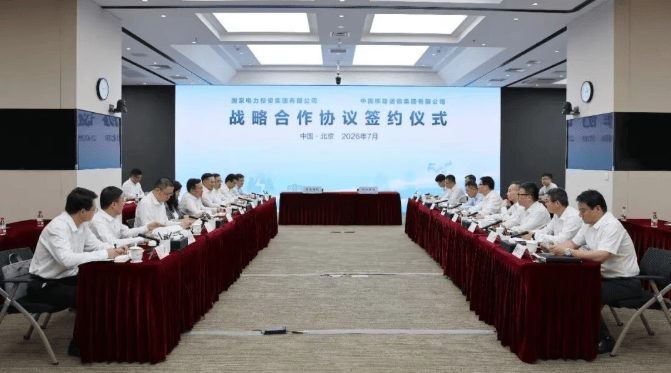
Yujiang Die-Casting has signed a strategic cooperation agreement with Yizumi on magnesium alloy semi-solid forming technology, initiating the deployment of multiple large-scale Yizumi magnesium alloy semi-solid injection molding machines. This aims to provide high-performance lightweight solutions for industries such as new energy vehicles, 3C electronics, humanoid robots, and low-altitude aircraft.
Dexin Technology has signed a strategic cooperation agreement with Haitian Precision Metal, making multiple repeat purchases of HMG series magnesium alloy injection molding machines, with tonnage ranging from 500T to 3200T, precisely matching the production needs of precision magnesium alloy parts in new energy vehicles, robotics, 3C electronics, and communications.
Mold Innovation: Supporting Customization of Robot Components
The high-precision operational requirements of industrial robots and the diverse complexity of humanoid robot joints have significantly raised casting manufacturers' demands for mold design precision and durability.
Shunda Mold, leveraging high-pressure die-casting technology, has manufactured high-magnesium alloy components for a modern agricultural robot project. Compared to traditional materials, these components achieve a 30% weight reduction and a substantial leap in mechanical properties, precisely matching emerging markets such as humanoid robots and new energy vehicles.
Xinlin Mold has established an R&D and pilot center for magnesium and aluminum alloys and semi-solid molds and products. Equipped with 3000T and 1250T large die-casting machines integrating "die-casting + semi-solid magnesium alloy TPI" technology, it can efficiently complete trial production of high-precision semi-solid magnesium alloy, high-pressure magnesium alloy, and aluminum alloy die-casting molds and castings, catering to the R&D needs of core components for new energy vehicles, humanoid robots, electric bicycles, and low-altitude aircraft.
Asia's Largest Die-Casting & Non-Ferrous Casting Exhibition: Providing Full-Stack Solutions for Key Metal Components in the Robotics Industry
The 20th China Die Casting & Nonferrous Casting Exhibition (CHINA DIECASTING & CHINA NONFERROUS) will be held from July 15–17, 2026, at the Shanghai New International Expo Centre (Halls N1–N5). As Asia's largest die-casting and non-ferrous casting exhibition, this edition is themed "Dual-Engine Drive, Lightweight Future with Aluminum & Magnesium." It is expected to cover an exhibition area of 52,000 square meters, attracting over 600 exhibitors and 28,000+ professional visitors, covering core segments of the application and supply chain, including OEMs, robot manufacturers, Tier 1 suppliers, casting enterprises, and equipment and material suppliers.
The exhibition systematically builds a display matrix around mainstream processes such as magnesium-aluminum alloy die-casting and semi-solid forming. It will present a comprehensive full-industry-chain solution for key metal castings in robotics, spanning material R&D (e.g., Lizhong Group), equipment manufacturing (e.g., L.K. Group, JSW, Yizumi, Haitian, Buhler), mold manufacturing (e.g., Shunda, Xinlin, Yuda Mold), casting forming (e.g., Yian, Chenzhi Lightweight, Baowu Magnesium, Dexin, Mingxin Electric, Daqi Hongxiang), as well as peripheral auxiliary equipment, post-processing, inspection, and environmental protection.
This article is compiled by Wedoany. All AI citations must indicate the source as "Wedoany". If there is any infringement or other issues, please notify us promptly, and we will modify or delete it accordingly. Email: news@wedoany.com