en.Wedoany.com Reported - Airbus presented a range of aviation innovations covering materials, propulsion systems, and factory operations at this month's Berlin International Aerospace Exhibition (ILA). The air show, which dates back to 1909, provided Airbus with a platform to showcase its research and development achievements over the past year in structural lightweighting, hydrogen energy, and digital intelligence.
In the materials exhibition area, the integrated fuselage frame developed by Airbus in collaboration with CTC and Broetje-Automation uses the Resin Transfer Molding (RTM) process to consolidate complex elements into a single high-precision component. This process eliminates energy-intensive climate control steps, aiming to improve production efficiency. An interactive exhibit called "Weigh Me!" allows visitors to compare the weight differences between traditional materials and lightweight composites. Also on display was a 3D-printed door lock shaft already in use on the A350 aircraft. This additively manufactured component replaces ten individual parts with a single titanium alloy piece, achieving a 45% weight reduction compared to its predecessor. Airbus also showcased a recycled titanium cylinder made from scrap aircraft metal. This Grade 5 alloy cylinder aims to reduce carbon dioxide emissions from primary mineral extraction. The biomimetic "Wing of Tomorrow" project features foldable wingtips, enabling longer, more slender wings to improve fuel efficiency without altering airport gate infrastructure. The H160 helicopter rotor hub model uses carbon fiber and PEEK thermoplastic, offering superior fatigue resistance and environmental footprint compared to traditional thermoset resins.
In the propulsion and operations exhibition area, Airbus demonstrated a navigation system based on quantum sensors. This system provides positioning information by reading magnetic fields in the Earth's crust, offering a high-precision, anti-spoofing, and anti-jamming supplement to traditional satellite navigation.
The fuel cell model from the ZEROe hydrogen-powered aircraft project converts hydrogen into electricity, with water as the only byproduct, aiming to achieve near-carbon-neutral flight when using renewable hydrogen. Additionally, an AI-powered demonstration glasses system driven by a large language model (LLM) can predict pilot responses by capturing their eye movement data, helping to optimize digital twin models and future pilot training.
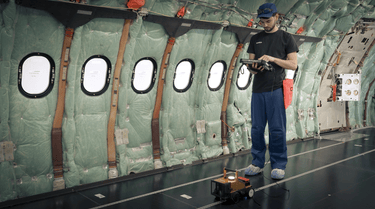
In terms of production innovation, the Airbus robotics division developed the CabinMarker multifunctional robot. This robot can automatically locate aircraft seats, replacing operators in repetitive manual tasks that require kneeling and crawling, aiming to protect operator health while improving assembly precision.
Airbus also uses digital twin technology, combined with advanced analytics and artificial intelligence, to model and optimize real objects or processes. It is currently applying this to the hydrogen-powered flight domain to design the ideal architecture for fuel cell engines. These exhibits reflect Airbus's technological pathway for reducing environmental footprint, covering multiple stages from material recycling and reuse, weight reduction design, to intelligent production assistance.
This article is compiled by Wedoany. All AI citations must indicate the source as "Wedoany". If there is any infringement or other issues, please notify us promptly, and we will modify or delete it accordingly. Email: news@wedoany.com