HarmonyOS Open-Sources AI Stability Diagnosis Capability, Xiaohongshu Among First to Integrate
en.Wedoany.com Reported - HarmonyOS has officially open-sourced its AI-assisted stability diagnosis capability, with Xiaohongshu (RED) as one of the first ecosystem partners to integrate it. Through technical collaboration, the two parties are exploring new pathways for ensuring the quality of HarmonyOS applications.
In the rapid development of the HarmonyOS ecosystem, application stability faces three major challenges: high problem density, high log complexity, and high labor costs. Data shows that a single product reports over 300 stability failures per week, covering scenarios such as screen freezes, crashes, memory leaks, and abnormal restarts; fault localization requires traversing five layers of data links, with over 60% being edge cases without fixed templates; traditional automation tools can only cover scenarios with fixed rules, with an average time of 0.8 to 2.5 hours for locating a single issue.
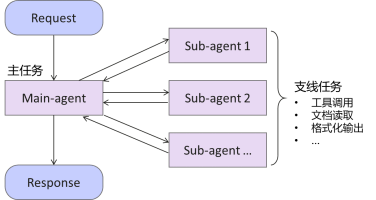
To address these pain points, HarmonyOS engineers have introduced deep reasoning technology based on large models, reconstructing the diagnostic workflow with an approach that replaces rules with AI and hard coding with generalization. The platform is built on an industrial-grade AI architecture of "Skills + Multi-Agent," featuring root cause deduction capabilities.
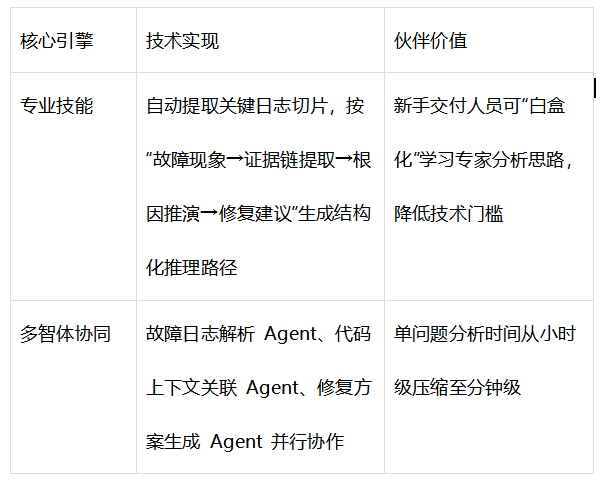
During its HarmonyOS migration, Xiaohongshu faced challenges from massive business interactions and concurrent extreme scenarios. After integrating the HarmonyOS stability diagnosis skill, the average troubleshooting time for complex screen freeze or crash issues was reduced from 4 hours to under 30 minutes, with a target of stabilizing to the minute level. It also supports multi-turn dialogues with "initial conclusions + supplementary logs/code snippets" and batch automated analysis, automatically generating standardized reports containing responsible persons, responsible modules, key evidence chains, and repair suggestions.
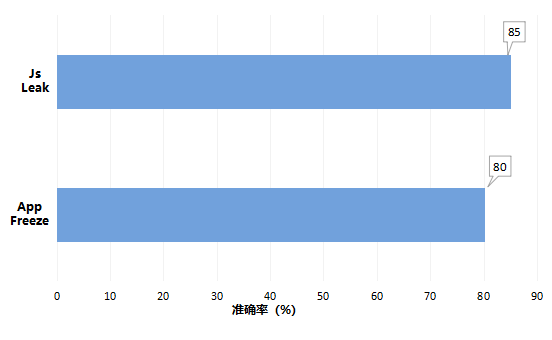
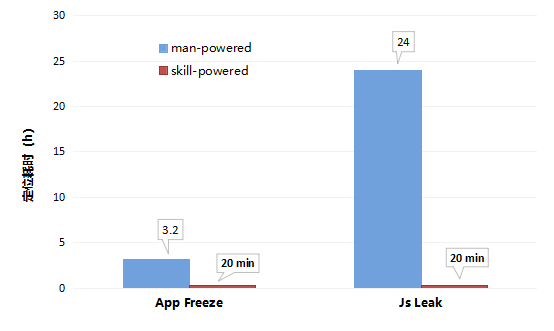
Based on collaborative practices, HarmonyOS has officially launched the DFX (Design for X) localization capability co-building framework, opening its stability diagnosis capability to all ecosystem partners. The framework features four aspects: low-cost integration, eliminating the need to build a diagnostic system from scratch; coverage of three common scenarios: hangs, crashes, and leaks; formation of standardized operating procedures from diagnosis to repair; and future quarterly releases of capabilities such as performance degradation early warning, abnormal power consumption analysis, and multi-device collaborative scenario diagnosis.
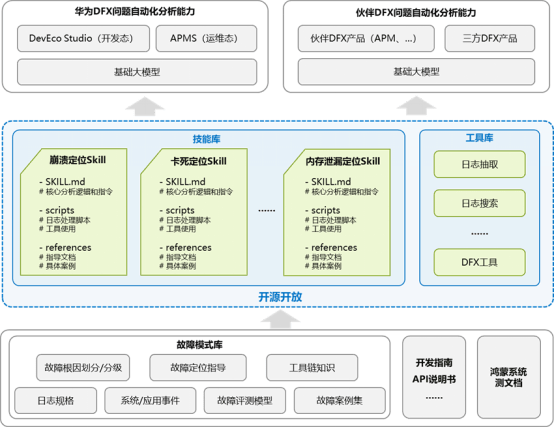
HarmonyOS plans to continue investing in inference large model computing power and domain knowledge base construction, and jointly output stability assurance content for complex business scenarios with Xiaohongshu. It also invites more leading applications, vertical industry partners, and independent developers to join the HarmonyOS stability diagnosis co-building initiative, sharing the AI diagnosis capability foundation and co-building domain fault knowledge graphs.
This article is compiled by Wedoany. All AI citations must indicate the source as "Wedoany". If there is any infringement or other issues, please notify us promptly, and we will modify or delete it accordingly. Email: news@wedoany.com
Related Products



Flat Portable Satellite Terminal 0.35m Aperture Manual Portable Terminal
China Starwin Science & Technology Co., Ltd.
Conveyor Belt Intelligent Monitoring System
LUO YANG WIRE ROPE INSPECTION TECHNOLOGY CO., LTD.


20 Inch 1600*900 Full HD 60Hz TFT LED Monitor with VGA and DP Interfaces for Desktop Computers-Business Use
Guangzhou Zanying Optoelectronics Technology Co., Ltd.


Comprehensive Mining Automation Control System
Beijing Tianma Intelligent Control Technology Co., Ltd.

Automatic Aiming Laser Remote Obstacle Removal Robot
Pinggao Group Weihai High-Voltage Apparatus Co., Ltd.
G.652.D Wavelength-extended Non-dispersion Shifted Single-mode Optical Fiber
HONGAN GROUP CO., LTD.