Brazil's Brisanet Proposes Allocating Part of 600MHz Spectrum to Regional Operators
en.Wedoany.com Reported - Brisanet CEO José Roberto Nogueira proposed at the Teletime Tec event that a portion of the 600 MHz band spectrum be allocated to regional operators as part of a spectrum organization model, allowing large operators to renew their 850 MHz licenses. Speaking on a panel at the event held in São Paulo on the 11th, Nogueira stated that despite the 700 MHz auction, regional operators including Brisanet, Unifique, iez! telecom, and Amazônia 5G still need more sub-1 GHz spectrum to cover rural areas. In contrast, large operators already hold operating licenses in the 700 MHz, 800 MHz, 850 MHz, and 900 MHz bands.

Under the model proposed by Nogueira, regional operators would no longer bid for the 850 MHz band, which would be reserved for national operators. New entrants would receive 40 MHz (20 MHz + 20 MHz FDD) of spectrum in the 600 MHz frequency, while the remaining 30 MHz of that band would be reserved for broadcasting. The funds required for spectrum clearance would be covered by proceeds from the 850 MHz auction. In a conversation with TELETIME, Nogueira stated that regional operators have taken on significant commitments to cover rural areas, while national operators would bear the costs of band clearing as part of the 850 MHz license renewal.
Nogueira pointed out that with the growth of network demands such as artificial intelligence and streaming consumption, a coverage gap will emerge by 2030, as 4G will then be like 2G is today. He noted that coverage gaps currently exist in areas relying on 2G or 3G, technologies that only serve machines and IoT and cannot meet user needs. Nogueira also mentioned that the 600 MHz band currently does not require an auction, but by giving up bidding for 850 MHz, a model can be established for regional operators. He asserted that regional operators have the capability to build networks covering rural areas, whereas large operators lack feasibility.
In Nogueira's view, allocating a portion of the 600 MHz band to regional operators would not conflict with the broadcasting industry, as the latter has already obtained 70 MHz of spectrum in the 300 MHz band (250 MHz to 320 MHz) for activating TV 3.0. He added that regional operators would only need 40 MHz allocated, with the remaining 30 MHz still reserved for broadcasting, particularly in cities with a higher number of channels.
This article is compiled by Wedoany. All AI citations must indicate the source as "Wedoany". If there is any infringement or other issues, please notify us promptly, and we will modify or delete it accordingly. Email: news@wedoany.com
Related Products
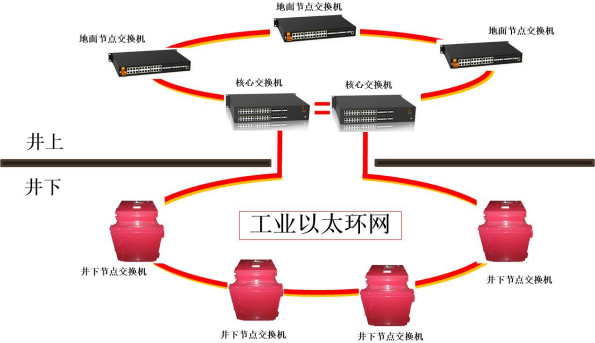

Mine Explosion-proof and Intrinsically Safe Industrial Ethernet Ring Network (10 Gigabit/Gigabit)
Chongqing Mas Sci&Tech Co., Ltd.


G.652.D Wavelength-extended Non-dispersion Shifted Single-mode Optical Fiber
HONGAN GROUP CO., LTD.


GYTA Type Non-Self-Supporting Aerial/Duct Optical Cable
TONGDING INTERCONNECTION INFORMATION CO., LTD.
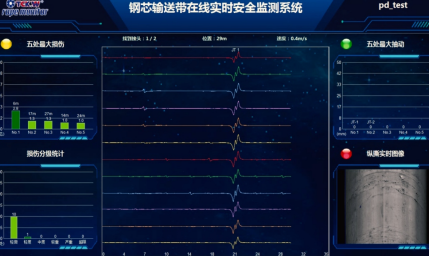
Conveyor Belt Intelligent Monitoring System
LUO YANG WIRE ROPE INSPECTION TECHNOLOGY CO., LTD.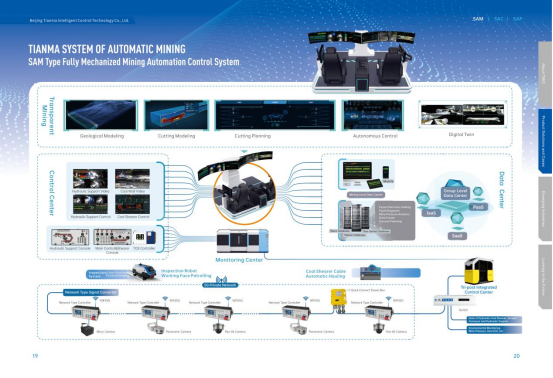
Comprehensive Mining Automation Control System
Beijing Tianma Intelligent Control Technology Co., Ltd.
Flat Portable Satellite Terminal 0.35m Aperture Manual Portable Terminal
China Starwin Science & Technology Co., Ltd.
Industrial and Commercial Point-Type Gas Detector
Jinan Benan Technology Development Co., Ltd.