Alibaba Cloud Launches Johor Public Cloud Region in Malaysia
en.Wedoany.com Reported - Recently, Alibaba Cloud launched a new public cloud region in Johor, Malaysia, and added two new data centers to meet the demand for cloud computing, artificial intelligence, and enterprise digital services in Malaysia and the Southeast Asian market. With the launch of the new region, Alibaba Cloud's number of data centers in Malaysia has increased to five, forming one of its largest infrastructure deployments in Southeast Asia. This region will offer services including computing, storage, containers, networking, big data, security, databases, and cloud-native solutions, and plans to introduce a series of agent-based AI services to Malaysian enterprises in the second half of this year.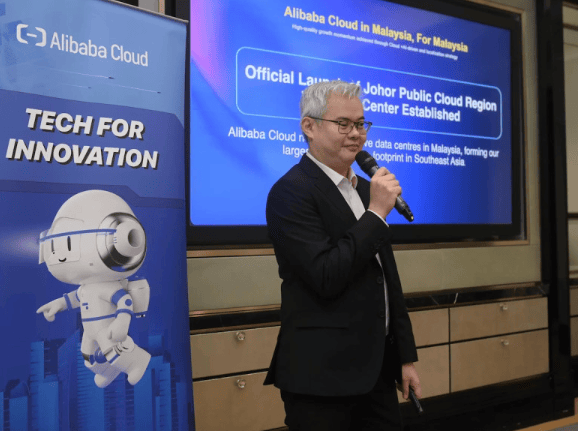
The significance of launching the Johor public cloud region goes beyond merely adding data center capacity; it positions Malaysia more prominently in the Southeast Asian competition for AI and cloud infrastructure. Johor's proximity to Singapore gives it a locational advantage for hosting cross-border cloud services, enterprise data processing, and AI computing needs. As Singapore's data center expansion faces constraints from land, power, and green energy, Johor, Malaysia, is emerging as an alternative node of interest for regional cloud service providers and data center operators. By building a public cloud region here, Alibaba Cloud can serve local Malaysian customers while also providing lower-latency and more resilient cloud resources for surrounding markets.
The demand targeted by the new region is shifting from traditional cloud migration to AI-ready infrastructure. Enterprises are no longer just moving websites, databases, and business systems to the cloud; they also need to support new applications such as generative AI, intelligent customer service, enterprise agents, automated operations, data analytics, and security management. Alibaba Cloud plans to introduce agent-related services including AgentRun, STAROps, ACS Agent Sandbox, Agent Security Center, AI Security Guardrails 2.0, and Agentic SOC, indicating that its deployment in Malaysia has extended from basic cloud resources to AI application development, intelligent operations, and AI security governance. For local enterprises, if such services can be localized, they will lower the barrier to developing and deploying AI agents.
Malaysia's digital economy has been heating up in recent years, with finance, e-commerce, manufacturing, logistics, public services, and small and medium-sized enterprises all accelerating their cloud adoption. For developing markets, the significance of a local cloud region lies not only in improving access speed but also in data residency, compliance management, disaster recovery capabilities, and service continuity. With the addition of the Johor region, Alibaba Cloud enables customers to access more availability zones and greater redundancy within Malaysia, making it easier for enterprises to choose local deployment, cross-region backup, or hybrid cloud architectures targeting Southeast Asia based on business needs. According to Alibaba Cloud's official information, its global infrastructure has expanded to 32 regions and 104 availability zones, providing a unified cloud platform foundation for multinational enterprises deploying regional operations in Malaysia.
This deployment will also strengthen Malaysia's local cloud ecosystem. Alibaba Cloud already has over 300 partners in Malaysia, covering system integration, distribution, resale, and enterprise services. With the launch of the new public cloud region, local partners can generate more project opportunities around cloud migration, AI applications, security services, data governance, and industry solutions. For Malaysian SMEs, combining a cloud platform with local service providers is easier to implement than simply purchasing overseas cloud resources, because enterprises need not only servers and storage but also solution design, training, cost control, compliance support, and ongoing operations.
The key going forward is whether the Johor region can generate real business workloads rather than remaining at the infrastructure announcement level. AI services have high requirements for computing power, networking, data security, and cost control. Whether enterprises are willing to place core business and AI workloads in the new region will depend on performance, pricing, stability, compliance capabilities, and ecosystem support. If Alibaba Cloud can integrate the Johor public cloud region with agent-based AI services, local partners, and the needs of Southeast Asian enterprises, Malaysia will further enhance its capacity in regional cloud computing and AI infrastructure, while also providing a new case study for developing markets building localized digital infrastructure.
This article is compiled by Wedoany. All AI citations must indicate the source as "Wedoany". If there is any infringement or other issues, please notify us promptly, and we will modify or delete it accordingly. Email: news@wedoany.com
Related Products




TWP16 P-Band Tropospheric Wind Profile Radar
China Huayun Meteorological Technology Group Co., Ltd.
GYTA Type Non-Self-Supporting Aerial/Duct Optical Cable
TONGDING INTERCONNECTION INFORMATION CO., LTD.


Industrial and Commercial Point-Type Gas Detector
Jinan Benan Technology Development Co., Ltd.

Comprehensive Mining Automation Control System
Beijing Tianma Intelligent Control Technology Co., Ltd.
One-Stop Steward Service for the Entire Logistics System Integration Chain
Zhongding Intelligent (Wuxi) Technology Co., Ltd.