Canada Introduces Bill to Restrict Minors' Social Media Use and Regulate AI
en.Wedoany.com Reported - The Canadian government has submitted a digital safety bill to Parliament, stipulating that minors under the age of 16 can only access social media platforms if they meet specific child protection standards.

The bill also regulates artificial intelligence (AI) systems and establishes a regulatory body. Companies that violate the rules will face fines of up to 10 million Canadian dollars or 3% of global revenue, whichever is higher.
Canada's Minister of Identity and Culture, Marc Miller, stated that social networks and AI chatbots are designed to capture attention and have become sources of anxiety, isolation, depression, and other mental health issues for many young Canadians. He said the law aims to provide a safe virtual environment where young people can thrive by interacting in real life, building friendships, focusing on their studies, and learning practical skills.
In addition to social media restrictions, the bill also oversees AI chatbots by establishing a regulatory body that will set safety standards for these technologies.
This discussion aligns with international trends. After Australia banned social media for minors under 16 (deleting 5 million accounts in the first month), countries such as France, Denmark, and Poland are evaluating stricter restrictions, while Greece will restrict access for minors under 15 starting in 2027.
According to Reuters, Canada's proposal aims to go further than the Australian model. Brett Caraway, a professor specializing in technology and privacy at the University of Toronto, explained that the proposal sets a more complex set of obligations for platforms, aiming to redesign the social media ecosystem to be safe for children and to incorporate AI regulation within the same legal framework.
The proposal comes amid strict scrutiny of technology platforms. Recently, the families of victims of a serious mass shooting in Canada sued OpenAI, claiming the company knew the attacker had discussed his plans with ChatGPT but failed to alert authorities.
This article is compiled by Wedoany. All AI citations must indicate the source as "Wedoany". If there is any infringement or other issues, please notify us promptly, and we will modify or delete it accordingly. Email: news@wedoany.com
Related Products



TWP16 P-Band Tropospheric Wind Profile Radar
China Huayun Meteorological Technology Group Co., Ltd.




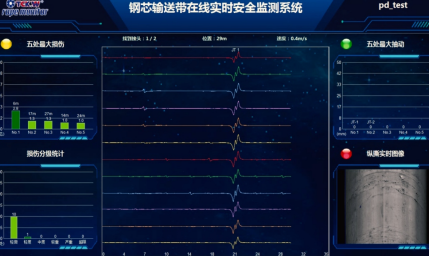
Conveyor Belt Intelligent Monitoring System
LUO YANG WIRE ROPE INSPECTION TECHNOLOGY CO., LTD.

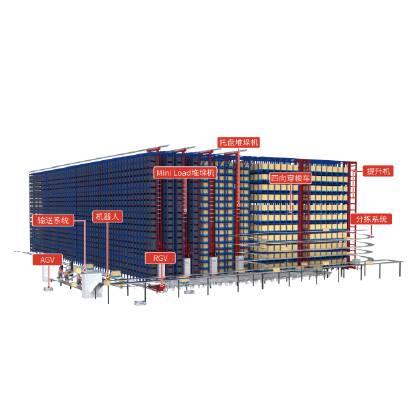

Comprehensive Mining Automation Control System
Beijing Tianma Intelligent Control Technology Co., Ltd.