India's TRAI Drives V2X Communication Rules to Reshape Smart Highway Connectivity
en.Wedoany.com Reported - On June 15, the consultation process initiated by India's telecom regulator TRAI on the regulatory framework for Vehicle-to-Everything communication has drawn industry attention. Related discussions indicate that future telecom competition in India may no longer revolve solely around spectrum auctions, mobile base stations, and data tariffs, but will enter a new scenario involving highways, connected vehicles, roadside units, and cloud platforms working in synergy. TRAI's consultation document focuses on Vehicle-to-Everything communication, i.e., V2X communication, aiming to establish a regulatory foundation for real-time data exchange among vehicles, road infrastructure, pedestrians, emergency systems, and communication networks.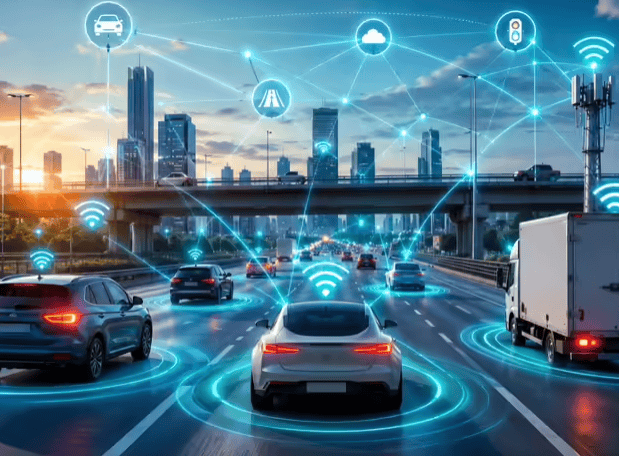
The practical value of V2X communication is first evident in traffic safety. If vehicles can communicate in real time with preceding vehicles, traffic signals, roadside units, pedestrian terminals, and cloud platforms, they can obtain advance information on sudden braking, blind spots, accidents, congestion, and hazardous road conditions. India has a vast road traffic network. The consultation document and related reports mention that India's road network exceeds 6.7 million kilometers, of which national highways account for approximately 146,000 kilometers; in 2023, road accidents caused about 173,000 deaths and 463,000 injuries. For a market like India, characterized by high population density, diverse road types, and widespread mixing of motorized and non-motorized vehicles, relying solely on vehicle sensors and driver reactions is insufficient to fully address traffic safety issues. V2X transforms roads themselves into communication nodes, providing a new technological entry point for intelligent transportation systems.
The deeper significance of this consultation lies in its potential to bring India's highway network into the scope of telecom infrastructure competition. TRAI's discussion is not merely about vehicle-to-vehicle communication, but about a real-time mobile communication layer composed of on-board units, roadside equipment, mobile networks, cloud platforms, and data services. The Indian government's preferred technical approach is Cellular Vehicle-to-Everything, i.e., C-V2X, which leverages the capabilities of 4G and 5G cellular networks rather than building a completely separate communication system. If this direction is ultimately established, telecom operators will gain a more significant role in smart highways, connected vehicles, logistics fleets, emergency response, and traffic management.
For Indian operators, V2X represents new value space for networks. Traditional mobile communication primarily connects people to phones; in the future, vehicles may also become high-frequency online terminals. Each connected vehicle could continuously generate data on location, speed, braking, road environment, and driving intent, while highways could become digital networks covering sensing, communication, computation, and scheduling. Operators can provide low-latency connectivity, network slicing services, edge computing, vehicle-road collaboration platforms, and data transmission guarantees. Automakers, cloud platforms, and software companies will compete for in-vehicle experience, data services, and application entry points. Whoever controls the basic communication layer, platform layer, and data interfaces may gain long-term advantages in the intelligent transportation ecosystem.
However, the V2X regulatory framework is still in the consultation phase, and several issues need to be resolved before large-scale deployment. How spectrum is allocated, who builds roadside units, whether on-board equipment is license-exempt, how secure communication is authenticated, how vehicle data ownership is defined, and how operators, automakers, road management authorities, and cloud platforms divide responsibilities will all affect the final implementation outcome. V2X itself is not merely a procurement of communication equipment, but an infrastructure project requiring coordination among transportation, communication, automotive, cloud computing, AI, and public safety sectors. If India subsequently aims to deploy V2X on highways and urban roads, it needs to establish a unified path across standards, business models, road upgrades, and network coverage.
India's TRAI promoting discussions on V2X communication regulation indicates that information and communication construction in major developing countries is transitioning from "expanding mobile network coverage" to "embedding connectivity into industries and urban infrastructure." Once highways, vehicles, logistics, emergency systems, and traffic management platforms are integrated into real-time communication networks, the role of telecom operators will expand from mobile data service providers to participants in smart transportation infrastructure. For India's digital economy, V2X is not just a connected vehicle technology but could also become the underlying connectivity framework for smart highways, autonomous driving, logistics scheduling, and urban traffic governance. As the deadline for submitting counter-comments approaches, TRAI's subsequent recommendations will determine the technical route and industrial division of India's intelligent transportation communication system.
This article is compiled by Wedoany. All AI citations must indicate the source as "Wedoany". If there is any infringement or other issues, please notify us promptly, and we will modify or delete it accordingly. Email: news@wedoany.com
Related Products


Mine Explosion-proof and Intrinsically Safe Industrial Ethernet Ring Network (10 Gigabit/Gigabit)
Chongqing Mas Sci&Tech Co., Ltd.
Flat Portable Satellite Terminal 0.35m Aperture Manual Portable Terminal
China Starwin Science & Technology Co., Ltd.

Multi-function Marine Monitoring Low-altitude Detection Radar Sea-air Boundary Ocean Dynamic Environment Measurement
Chengdu Dixin Technology Co., Ltd.
TWP16 P-Band Tropospheric Wind Profile Radar
China Huayun Meteorological Technology Group Co., Ltd.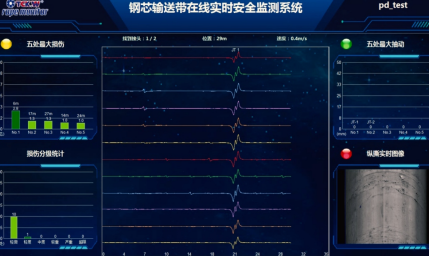
Conveyor Belt Intelligent Monitoring System
LUO YANG WIRE ROPE INSPECTION TECHNOLOGY CO., LTD.