China's Songyan Power Launches OpenHarmony-Powered N2 Consumer-Grade Humanoid Robot
en.Wedoany.com Reported - Recently, Songyan Power officially released the OpenHarmony version of the N2 consumer-grade humanoid robot, which made its debut at the HUAWEI Developer Conference HDC 2026. This model integrates into the OpenHarmony ecosystem, targeting application expansion in areas such as home companionship, educational interaction, developer validation, and multi-device collaboration. Concurrently, Songyan Power announced the launch of the "Hundred People, Hundred Robots" developer co-creation program, which will provide 100 developers or teams with humanoid robot hardware and SDKs, supporting both Ubuntu and OpenHarmony dual ecosystems, thereby lowering the barrier for humanoid robot application development and scenario validation.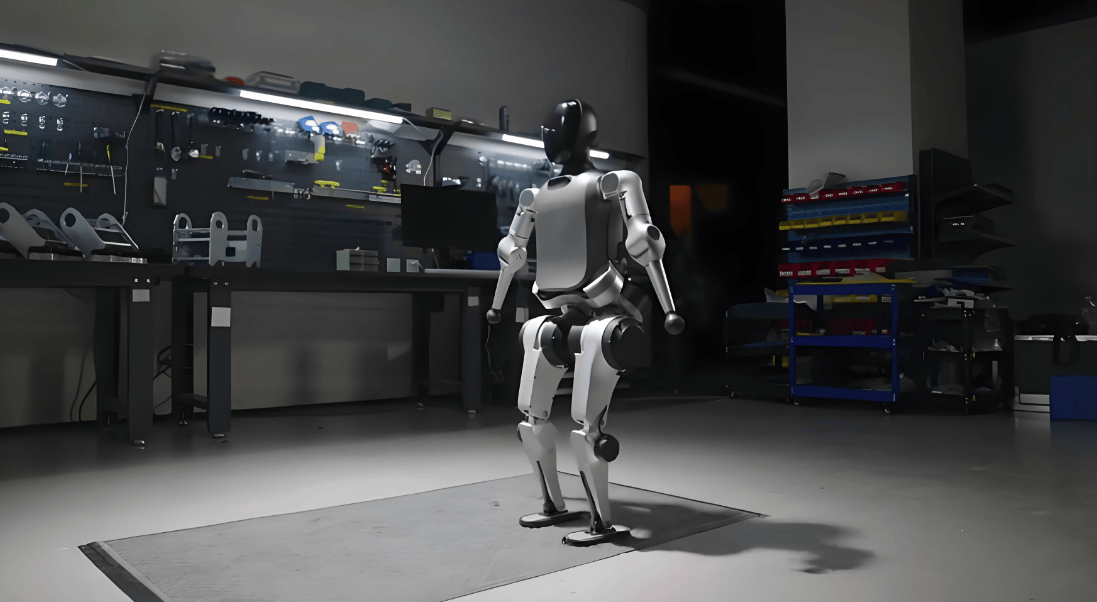
The release of the OpenHarmony version N2 focuses on integrating consumer-grade humanoid robots into a unified operating system ecosystem. Previously, humanoid robots relied more on proprietary systems, dedicated control frameworks, and closed development tools. Developers often spent significant time dealing with underlying environments, hardware interfaces, and system compatibility issues for motion control, voice interaction, AI perception, or application adaptation. OpenHarmony features a distributed soft bus, multi-device collaboration, a security architecture, and cross-terminal development capabilities. Its integration into robotic products enables tighter connections between robots and smartphones, tablets, smart homes, sensors, and other IoT devices. For consumer-grade products, whether a robot can integrate into the home digital ecosystem is becoming a crucial factor affecting its practical value.
The N2 itself is a sports-oriented humanoid robot platform designed for embodied intelligence developers and consumer scenarios. According to public information, the N2 stands approximately 1.2 meters tall, weighs about 30 kilograms, and features a lightweight bionic structure with 18 high-performance joints, enabling capabilities such as walking, running, dancing, jumping, and moving on complex terrain. Adding the OpenHarmony ecosystem means the robot can not only demonstrate its inherent motion capabilities but also gain more application interfaces and cross-device linkage possibilities through the system ecosystem. Songyan Power believes that, leveraging OpenHarmony's microkernel architecture, high security, and cross-terminal collaboration advantages, the robot can coordinate with home appliances, security devices, and educational terminals in the future, creating richer experiences in smart home management, educational companionship, and interactive teaching.
The "Hundred People, Hundred Robots" program represents a more ecologically significant move in this release. Songyan Power will select 100 developers or teams, providing each with a humanoid robot for local development, along with native SDKs and a complete development environment compatible with mainstream industry development frameworks. For the robotics industry, declining hardware prices are only the first step towards popularization. The true determinant of application ecosystem maturity is whether more developers can participate in algorithm validation, functional development, and scenario implementation. By opening up hardware and SDKs, developers can experiment in areas such as voice interaction, educational content, motion skills, AI vision, home services, entertainment interaction, and multi-robot collaboration, reducing redundant work on underlying adaptation.
Such co-creation programs also reflect a shift in the competitive focus of humanoid robots. The early industry was more concerned with who could run, jump, or perform complex movements. As products begin to enter the consumer and education markets, operating systems, application ecosystems, development tools, content services, and cross-terminal connectivity capabilities will become more important. If the OpenHarmony version N2 can attract developers to continuously build applications, it has the potential to expand the capabilities of a single robot into a scenario ecosystem that is updatable, callable, and reusable. For Songyan Power, this is not just a product version release but also the establishment of a developer entry point and application distribution foundation beyond robot hardware.
The actual implementation of the developer program remains to be seen. For consumer-grade humanoid robots to enter the home and education markets, issues such as safety, stability, battery life, cost, content supply, interaction experience, and after-sales service must be addressed simultaneously. The OpenHarmony ecosystem can provide a system-level and multi-device collaboration foundation, but whether the robot is truly user-friendly depends on application quality, motion reliability, and user scenario adaptation. With the debut of the OpenHarmony version N2 and the launch of the "Hundred People, Hundred Robots" program, Songyan Power is pushing consumer-grade humanoid robots from single hardware showcases towards open ecosystem development, providing a new industrial example for the application of OpenHarmony in the humanoid robot field.
This article is compiled by Wedoany. All AI citations must indicate the source as "Wedoany". If there is any infringement or other issues, please notify us promptly, and we will modify or delete it accordingly. Email: news@wedoany.com
Related Products

TWP16 P-Band Tropospheric Wind Profile Radar
China Huayun Meteorological Technology Group Co., Ltd.
One-Stop Steward Service for the Entire Logistics System Integration Chain
Zhongding Intelligent (Wuxi) Technology Co., Ltd.
20 Inch 1600*900 Full HD 60Hz TFT LED Monitor with VGA and DP Interfaces for Desktop Computers-Business Use
Guangzhou Zanying Optoelectronics Technology Co., Ltd.
Industrial and Commercial Point-Type Gas Detector
Jinan Benan Technology Development Co., Ltd.
Automatic Aiming Laser Remote Obstacle Removal Robot
Pinggao Group Weihai High-Voltage Apparatus Co., Ltd.
Conveyor Belt Intelligent Monitoring System
LUO YANG WIRE ROPE INSPECTION TECHNOLOGY CO., LTD.
Flat Portable Satellite Terminal 0.35m Aperture Manual Portable Terminal
China Starwin Science & Technology Co., Ltd.

GYTA Type Non-Self-Supporting Aerial/Duct Optical Cable
TONGDING INTERCONNECTION INFORMATION CO., LTD.

Mine Explosion-proof and Intrinsically Safe Industrial Ethernet Ring Network (10 Gigabit/Gigabit)
Chongqing Mas Sci&Tech Co., Ltd.
Multi-function Marine Monitoring Low-altitude Detection Radar Sea-air Boundary Ocean Dynamic Environment Measurement
Chengdu Dixin Technology Co., Ltd.