China's Moore Threads Completes Day-0 Adaptation of MiniMax M3 Model on MTT S5000
en.Wedoany.com Reported - On June 12, MiniMax's new-generation native multimodal flagship model M3 was officially open-sourced. On the same day, Moore Threads announced that its flagship AI training-inference integrated intelligent computing card, the MTT S5000, has completed Day-0 adaptation for MiniMax M3. This adaptation means that upon the model's release, the domestic GPU platform can complete the deployment and verification of cutting-edge large models in the shortest possible time, providing support for developers, enterprise customers, and computing platforms to run new models on domestic hardware.
MiniMax M3 is positioned as a new-generation native multimodal flagship model, targeting tasks in programming, intelligent agents, multimodality, and long-context processing. The model supports multimodal inputs such as images and videos, and is optimized for scenarios including complex software development, tool invocation, information retrieval, and long-range task execution. Compared to general text models, native multimodal models impose higher requirements on operator support, memory management, inference scheduling, and software stack compatibility; the million-level context capability also significantly amplifies pressure on KV Cache management, memory bandwidth, and inference efficiency. After a model is open-sourced, the speed at which it can be adapted to mainstream and domestic computing platforms directly impacts the pace of subsequent ecosystem diffusion.
Moore Threads' use of the MTT S5000 for Day-0 adaptation this time focuses on verifying the rapid response capability of domestic full-function GPUs to cutting-edge large models. The MTT S5000 is designed for integrated AI training and inference scenarios, equipped with the MUSA software stack and related development tools, handling tasks such as large model operator execution, memory scheduling, and inference acceleration. Models like MiniMax M3 typically involve long contexts, multimodal data streams, and intelligent agent task chains, requiring high levels of coordination between the GPU hardware, drivers, compilers, operator libraries, and model frameworks. Completing adaptation on Day-0 indicates that Moore Threads possesses relatively mature model migration and software-hardware collaboration capabilities.
This adaptation capability holds practical significance for domestic AI infrastructure. The update pace of large models is accelerating, and the time window between model release, open-sourcing, deployment, and application is continuously shortening. If computing vendors cannot complete verification in the early stages of model release, it becomes difficult for them to enter the rhythm of developer testing, enterprise evaluation, and cloud platform listing. Moore Threads' continuous efforts to promote timely adaptation around the MiniMax series of models help maintain the domestic GPU ecosystem's ability to keep pace with new models, while also providing AI application enterprises with more hardware choices.
The open-sourcing of MiniMax M3 will also drive downstream application testing. Programming agents, enterprise knowledge bases, multimodal content understanding, desktop operation assistants, and long document processing are areas where such models are likely to find practical application. For enterprise users, model capability is only the first step; actual deployment must also consider inference costs, response speed, stability, security boundaries, and localized computing resources. If domestic GPUs can provide a stable operating environment in these scenarios, it will help large model applications move from experimental verification to business system integration.
In recent years, Moore Threads has repeatedly emphasized its "Day-0 adaptation" capability, which reflects a change in the approach to building the domestic computing ecosystem. In the past, domestic AI hardware was more easily measured by external parties based on single chip performance. Now, the competitive focus is shifting towards the software stack, model adaptation, developer support, and industry deployment efficiency. The more complex the cutting-edge model, the harder it is to form a complete competitive advantage based solely on hardware parameters; operator coverage, framework compatibility, model migration tools, and customer support capabilities all affect whether domestic GPUs can enter real production environments.
The simultaneous open-sourcing of MiniMax M3 and the completion of adaptation on the MTT S5000 provides a new case study for the synergy between domestic large models and domestic AI computing power. As multimodal models, intelligent agent applications, and long-context tasks enter more enterprise scenarios, computing platforms need to respond more quickly to model iterations, while also continuously optimizing inference efficiency, memory utilization, and deployment stability. Whether Moore Threads can subsequently translate Day-0 adaptation into more developer usage, cloud services, and industry customer deployments will become an important indicator for observing the maturity of the domestic GPU ecosystem.
This article is compiled by Wedoany. All AI citations must indicate the source as "Wedoany". If there is any infringement or other issues, please notify us promptly, and we will modify or delete it accordingly. Email: news@wedoany.com
Related Products
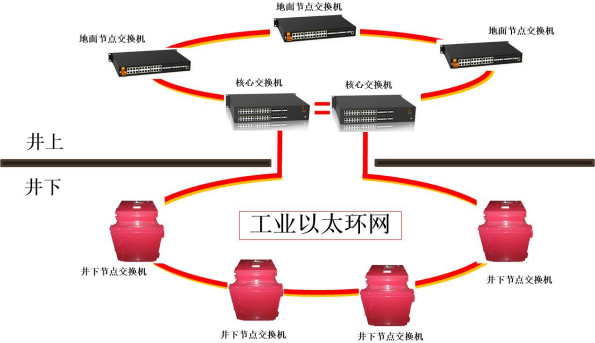

Mine Explosion-proof and Intrinsically Safe Industrial Ethernet Ring Network (10 Gigabit/Gigabit)
Chongqing Mas Sci&Tech Co., Ltd.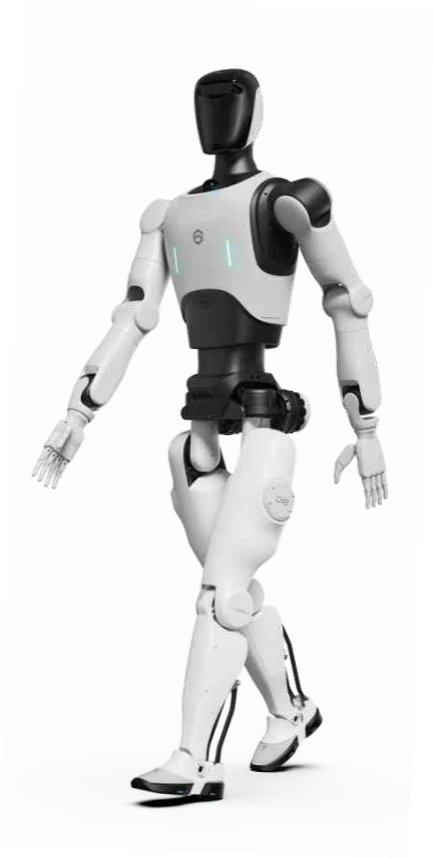
D12 Humanoid Robot
Automation Research Institute Co., Ltd. of China South Industries Group Corporation
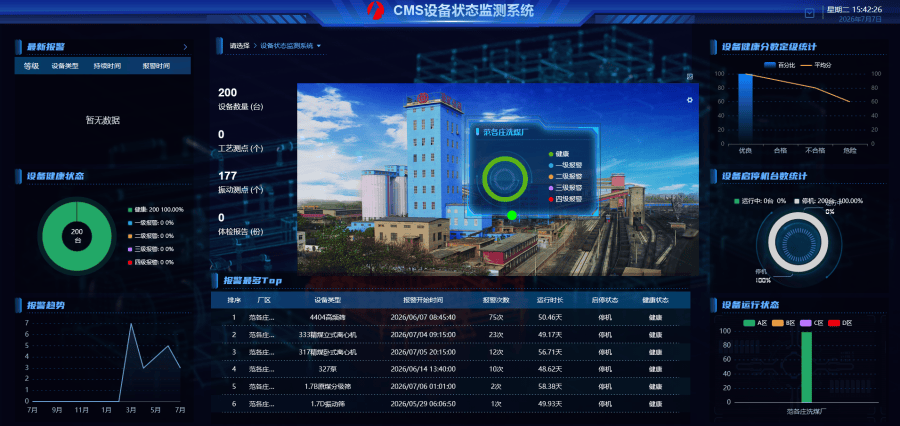
Automatic Aiming Laser Remote Obstacle Removal Robot
Pinggao Group Weihai High-Voltage Apparatus Co., Ltd.

GYTA Type Non-Self-Supporting Aerial/Duct Optical Cable
TONGDING INTERCONNECTION INFORMATION CO., LTD.
Conveyor Belt Intelligent Monitoring System
LUO YANG WIRE ROPE INSPECTION TECHNOLOGY CO., LTD.


MUX Series Communication Interface Device for Security and Stability Control System
Nanjing NR Electric Co., Ltd.
Flat Portable Satellite Terminal 0.35m Aperture Manual Portable Terminal
China Starwin Science & Technology Co., Ltd.