Five Major Patent Offices Push for AI Integration into Patent Examination in Japan
en.Wedoany.com Reported - The world's five major patent offices (IP5 Group) reached a consensus at their annual meeting in Tokyo to further integrate artificial intelligence (AI) into patent examination and service processes. The European Patent Office (EPO) participated in these discussions alongside partners from the United States, China, Japan, and South Korea, aiming to deepen international cooperation to chart new directions for technological roadmaps.
These five patent offices handle approximately 85% of global patent applications, making this initiative significant for the protection of intangible intellectual property in the global industrial sector. The heads of the European Patent Office, the United States Patent and Trademark Office (USPTO), the China National Intellectual Property Administration (CNIPA), the Japan Patent Office (JPO), and the Korean Intellectual Property Office (MOIP) unanimously stated that AI is no longer a theoretical concept but an operational tool that should help enhance the quality and efficiency of global patent examination. Chaired by JPO Commissioner Yasuyuki Kasai, the heads agreed to conduct the first comprehensive and rigorous review of the New Technology and AI Roadmap adopted in 2021, to identify further areas for strategic cooperation and ensure that regulatory and operational frameworks keep pace with technological developments.
However, a paradoxical situation exists in international patent policy: while patent offices rapidly upgrade their systems to adapt to an algorithmic future, AI remains legally excluded on the applicant side. Global legal practices, including rulings by the EPO and other IP5 offices, maintain that AI itself cannot be listed as an inventor in patent applications, with legal systems mandating natural persons as creative authors. Developers thus face a dilemma: innovations generated by highly advanced AI, though examined using patent office algorithms, must still be legally treated in the same way as traditional human inventions during the creation process.
EPO President António Campinos emphasized in Tokyo the responsible use of new tools by patent offices. AI offers opportunities to optimize services for developers and enterprises and enhance innovation capabilities, but this must be done transparently and under supervision. Humans remain the ultimate control authority in the examination process, but algorithms should support increasingly complex preparatory work and searches. Through coordinated exchange of best practices within the IP5 alliance, the offices aim to avoid system fragmentation and strive for harmonization in AI-assisted patent practices.
The surge in Asian applications continues. On the day before the main meeting, the office heads held discussions with leading industry associations. According to the EPO, industry supports the patent offices' initiatives, with discussions focusing on the operational use of AI tools. For the tech industry, reliable and accelerated examination is crucial, as delays in the patent system can lead to competitive disadvantages. In talks between the EPO and the JPO, in addition to harmonizing examination practices, the growing interest of Japanese inventors in the new European Unitary Patent was a key focus. Discussions with Korean Intellectual Property Office Commissioner Yong Sun Kim centered on the continued boom of Asian high-tech applications in Europe, with the EPO showcasing new AI-assisted tools to improve system compatibility.
The meeting also marked the 20th anniversary of the "Patent Prosecution Highway" (PPH). This cooperation network allows for accelerated patent examination based on positive examination results already obtained from one partner office. The EPO stated that through this division of labor, the system has significantly contributed to reducing the workload of individual offices and accelerating legal certainty for developers. The partners reaffirmed their commitment to continuously develop the PPH and modernize its technology, so that automated data flows and algorithmic pre-examinations can be interconnected in the future.
This article is compiled by Wedoany. All AI citations must indicate the source as "Wedoany". If there is any infringement or other issues, please notify us promptly, and we will modify or delete it accordingly. Email: news@wedoany.com
Related Products


G.652.D Wavelength-extended Non-dispersion Shifted Single-mode Optical Fiber
HONGAN GROUP CO., LTD.
Industrial and Commercial Point-Type Gas Detector
Jinan Benan Technology Development Co., Ltd.
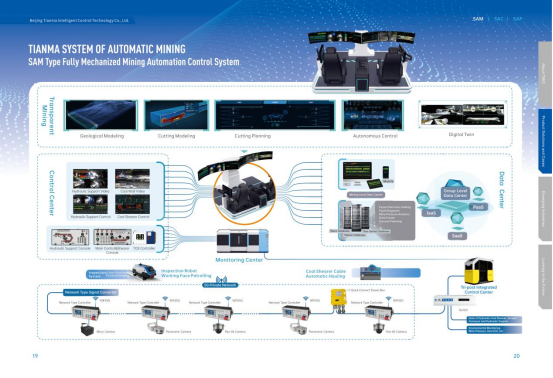
Comprehensive Mining Automation Control System
Beijing Tianma Intelligent Control Technology Co., Ltd.

Conveyor Belt Intelligent Monitoring System
LUO YANG WIRE ROPE INSPECTION TECHNOLOGY CO., LTD.



20 Inch 1600*900 Full HD 60Hz TFT LED Monitor with VGA and DP Interfaces for Desktop Computers-Business Use
Guangzhou Zanying Optoelectronics Technology Co., Ltd.
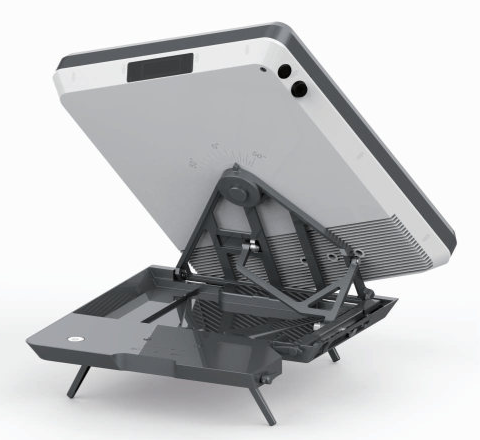
Flat Portable Satellite Terminal 0.35m Aperture Manual Portable Terminal
China Starwin Science & Technology Co., Ltd.