Brazil's Pecém Secures 322 MW Grid Connection Capacity to Support Data Center Construction
en.Wedoany.com Reported - Recently, French renewable energy company Voltalia signed a Transmission System Usage Agreement with Brazil's National Electric System Operator (ONS), securing 322 MW of grid connection capacity at the Pecém Industrial and Port Complex in Ceará State, Brazil, to support the construction of large-scale local data center projects. Voltalia stated that it is in in-depth negotiations with multiple data center operators and plans to develop dedicated renewable energy projects, primarily wind power, to provide stable, low-carbon electricity for high-energy-consuming digital infrastructure.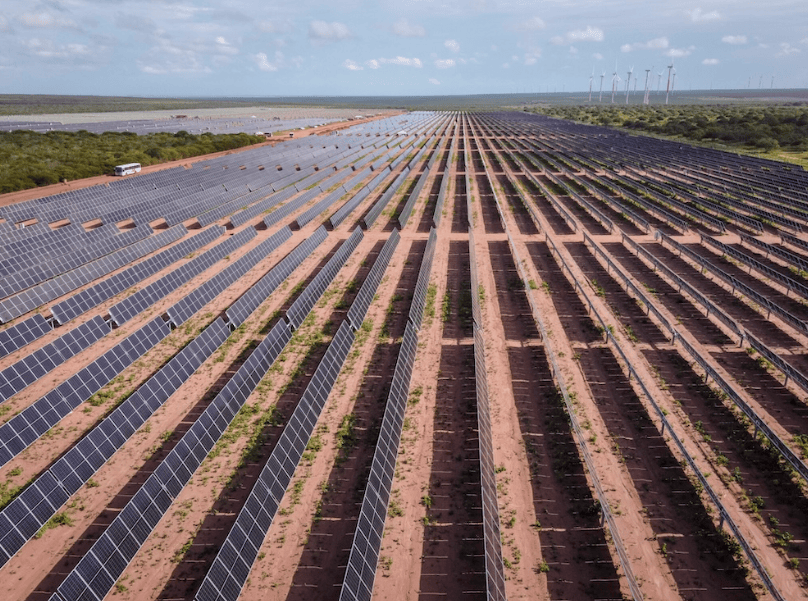
This agreement directly links the renewable energy advantages of northeastern Brazil with the demands of data centers. Data centers, especially those for AI and cloud computing, have high requirements for power capacity, supply stability, and long-term electricity prices. In the past, data center site selection focused more on network connectivity, land, taxes, and customer proximity; now, whether power is sufficient, whether low-carbon energy is available, and whether there is room for expansion are becoming prerequisites for project viability. Pecém, with its industrial and port infrastructure, is also located in a region with excellent wind energy resources in Brazil. By securing 322 MW of grid connection capacity, Voltalia has effectively locked in a key energy gateway for future data center projects.
For Brazil, the significance of such projects extends beyond adding server rooms; it is about striving to become a digital infrastructure hub in Latin America. Brazil has one of the largest internet and cloud service markets in Latin America, with fintech, e-commerce, streaming, enterprise cloud, government digitalization, and AI applications all driving up local computing power demand. If data center capacity is overly concentrated in a few cities, it can lead to power pressure, rising land costs, and insufficient network redundancy. Regions like Pecém in Ceará, which possess port, industrial zone, grid access, and renewable energy conditions, have the opportunity to host new data center clusters, expanding digital infrastructure from traditional core cities to more energy and industrial nodes.
Voltalia's role is also noteworthy. It is not a traditional data center operator but an energy company entering the power supply segment for digital infrastructure. As AI data centers rapidly increase their electricity consumption, the relationships among renewable energy developers, energy storage companies, grid operators, and data center customers are becoming closer. By intervening through grid connection capacity and subsequent dedicated wind power projects, Voltalia can provide data center operators with clearer power solutions and expand its own business from simple power generation to long-term energy services for high-energy-consuming customers. For data center customers, securing renewable energy and grid access capabilities in advance helps reduce uncertainties during project approval, construction, and operation phases.
The Pecém project also reflects the practical thresholds for developing markets to host AI infrastructure. Many countries hope to attract investment in cloud computing, AI computing power, and data centers, but whether large-scale projects can ultimately materialize depends on the simultaneous availability of power, land, network, cooling, approvals, and talent. The 322 MW grid connection capacity provides an energy foundation for Pecém, but subsequent steps still require data center customer signings, development of supporting renewable energy projects, grid engineering integration, and operational cost control. If these links proceed smoothly, northeastern Brazil will have the opportunity to extend from traditional industrial and port economies into the fields of data centers, cloud services, and AI infrastructure.
As global demand for AI computing power continues to grow, data center site selection is increasingly moving closer to renewable energy resources and high-capacity grid nodes. Voltalia's securing of 322 MW of grid connection capacity in Pecém, Brazil, indicates that competition for digital infrastructure in Latin America has entered a phase of "computing power + electricity" synergy. For Brazil, this project helps enhance local data center carrying capacity and provides more stable infrastructure support for cloud services, enterprise digitalization, and AI applications; for energy companies, data centers are also becoming an important customer base for the long-term consumption of renewable energy.
This article is compiled by Wedoany. All AI citations must indicate the source as "Wedoany". If there is any infringement or other issues, please notify us promptly, and we will modify or delete it accordingly. Email: news@wedoany.com
Related Products


MUX Series Communication Interface Device for Security and Stability Control System
Nanjing NR Electric Co., Ltd.
Industrial and Commercial Point-Type Gas Detector
Jinan Benan Technology Development Co., Ltd.
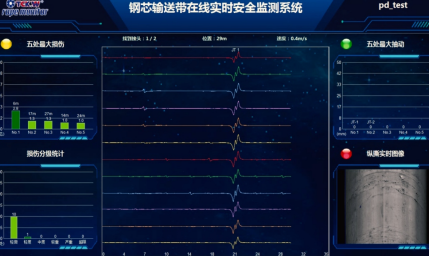
Conveyor Belt Intelligent Monitoring System
LUO YANG WIRE ROPE INSPECTION TECHNOLOGY CO., LTD.

Multi-function Marine Monitoring Low-altitude Detection Radar Sea-air Boundary Ocean Dynamic Environment Measurement
Chengdu Dixin Technology Co., Ltd.


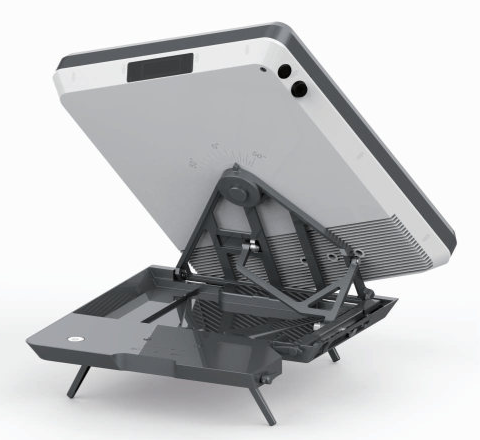
Flat Portable Satellite Terminal 0.35m Aperture Manual Portable Terminal
China Starwin Science & Technology Co., Ltd.