en.Wedoany.com Reported - Chevron and Halliburton have successfully validated a fully automated closed-loop fracturing solution in Colorado and are integrating more diagnostic tools into the system.
The closed-loop system consists of a sensing layer, a decision logic layer, and an execution layer, enabling dynamic adjustment of completion parameters based on real-time subsurface data. Halliburton technical advisor Awais Navaiz, presenting a paper (SPE 230613) at the SPE Hydraulic Fracturing Technology Conference and Exhibition in February, noted that the system is part of ongoing improvement efforts rather than a standalone research project.
Chevron Rockies region completions engineer Jason Bell stated in the report that the core objective of this deployment was to validate the feasibility of the technology. He emphasized: "The team tried to quickly deploy and validate the technology while working within certain boundaries to convince the company that it is useful and important, without disrupting the schedule or impacting assets." The paper authors further explained that the solution aims to create and deploy a fully autonomous, sensor-informed closed-loop fracturing system in unconventional assets. In the Colorado practice, the system needed to demonstrate sustained and reliable autonomous execution, collect actionable subsurface information through non-invasive diagnostic means without disrupting operations, and demonstrate how automated workflows translate subsurface feedback into real-time adjustments at the wellsite. This workflow reduces decision-making time from minutes or hours typically required by humans to just seconds.
The deployment was carried out in three phases: first, diagnosing current fracturing performance; second, optimizing efficiency and automating the fracturing process; and finally, integrating subsurface feedback to enable the closed-loop system to autonomously execute treatment parameter adjustments.

Navaiz revealed that the team obtained diagnostic data through single-use fiber optics. This low-cost, non-invasive fiber was used to collect data to monitor fracture system behavior and establish baseline key performance indicators. He pointed out that surface automation is a key foundation of the solution, reducing manual decision-making at the wellsite by approximately 90% and increasing computer decision-making by 14 times. "Computers can execute thousands of fracturing stages day after day in exactly the same way, as long as operational boundaries are defined. Human operations always involve variability." He explained that the system defines full closed-loop operation as a self-regulating, self-contained process that controls its own performance through feedback. "When feedback is continuously integrated into the system without any human intervention, the process is considered fully closed-loop." In this deployment, subsurface data was continuously fed into the system, which made decisions based on predefined logic and sent them directly to the fracturing pumps for execution, with no human intervention throughout.
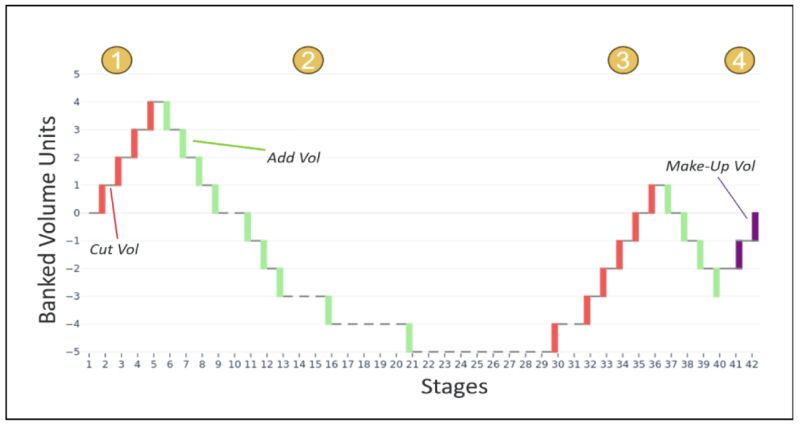
The energy engineering workflow was the first milestone in achieving the closed loop. This workflow connects diagnostic feedback with surface automation, dynamically redistributing reservoir energy based on fracture propagation feedback to promote more uniform fracture system growth. "When we design fracturing stages, we assume all perforation clusters are equally spaced, stage lengths are uniform, and well spacing is equal. But reality is quite different," Navaiz said. The traditional approach is to pump slurry into rapidly propagating stages, while the closed-loop energy engineering workflow takes the opposite strategy: limiting fluid volume until encountering a better-performing stage, then redirecting the 'stored' fluid volume to that stage.
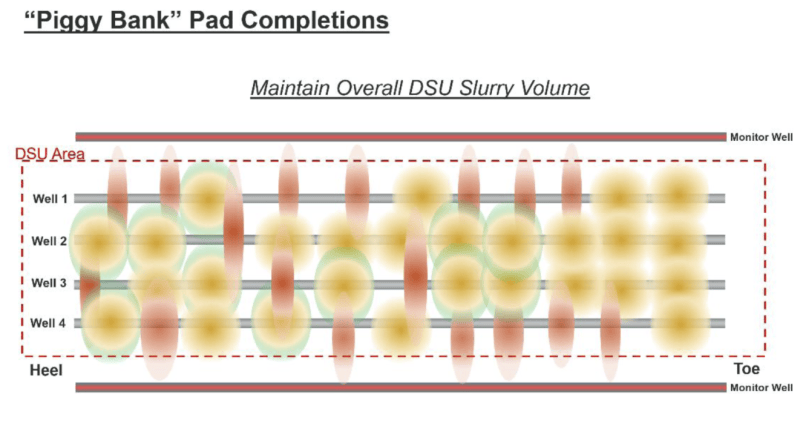
Bell stated that determining which stages perform well or poorly requires extensive data, collected via single-use fiber optics. The team gathered data from over 1,500 stages as background data for the entire fracturing program execution. "During this period, we didn't change anything in the fracturing program—same stage design, everything remained the same—just collected data, sent it to the cloud, analyzed, cataloged, and characterized it." Through data characterization, the team successfully distinguished fracture systems with 'fast' and 'slow' propagation characteristics. When the computer determined slow fracturing was occurring, it would draw slurry volume from a storage tank and apply it to the slowly propagating stage.
Navaiz added that the system is modular, allowing components such as observation, decision-making, or execution to be replaced as needed. "If you want to replace the fiber optics in offset wells with other diagnostic tools, or change the action method, or adjust the decision logic, it can be done." Bell emphasized that the modular design gives the system plug-and-play characteristics, enabling it to easily adapt to different operational scenarios. "Perhaps fiber optics are not the only answer, or there are no offset DUC (Drilled but Uncompleted) wells, but the system can incorporate another diagnostic tool—that's the advantage of this system." He revealed that other sensing tools may be used in the future.
In the Colorado deployment, the team first operated in open-loop mode, then switched to closed-loop mode. In the first closed-loop application, over 90% of fracturing stages achieved full end-to-end automation. "The team completed and demonstrated a fully autonomous, subsurface-driven closed-loop feedback fracturing application without any human intervention," Bell described. "The system collects sensing data, processes it in the cloud, makes decisions, and sends instructions on whether to change back to the fracturing fleet, and the equipment automatically executes the changes, with no human intervention throughout."
In their summary, the paper authors noted that intelligent surface fracturing operations guided by downhole measurements can trigger dynamic completion decisions, thereby optimizing the completion program. Future work may involve more complex decision logic architectures, and additional diagnostic tools are being considered for integration into the workflow. Navaiz said the overall agenda of the team's current research revolves around maintaining operational efficiency. "The limitation we are currently trying to address is to make the operation so versatile that it can make changes to individual wells in simultaneous fracturing, even three-well or four-well simultaneous fracturing, without affecting the operation of the entire completion factory."
Related paper information: SPE 230613 "Transforming Hydraulic Fracturing: The First-Ever Closed-Loop Completions Program," authored by A. Navaiz and P.F. Stark (Halliburton), M. Paradeis (formerly Chevron USA, now Subterra Energy Consulting), J. Bell, D. Beasley, E. White, and H. Lynch (Chevron), and F. Adil, J.B. Tran, C. Cox, and J. Doucette (Halliburton).
This article is compiled by Wedoany. All AI citations must indicate the source as "Wedoany". If there is any infringement or other issues, please notify us promptly, and we will modify or delete it accordingly. Email: news@wedoany.com