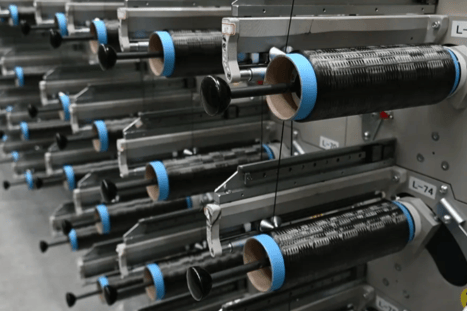
en.Wedoany.com Reported - A Spanish research team has developed carbon nanotube fibers with electrical conductivity exceeding that of copper and strength surpassing steel, offering a new alternative to traditional electrical conductor materials.
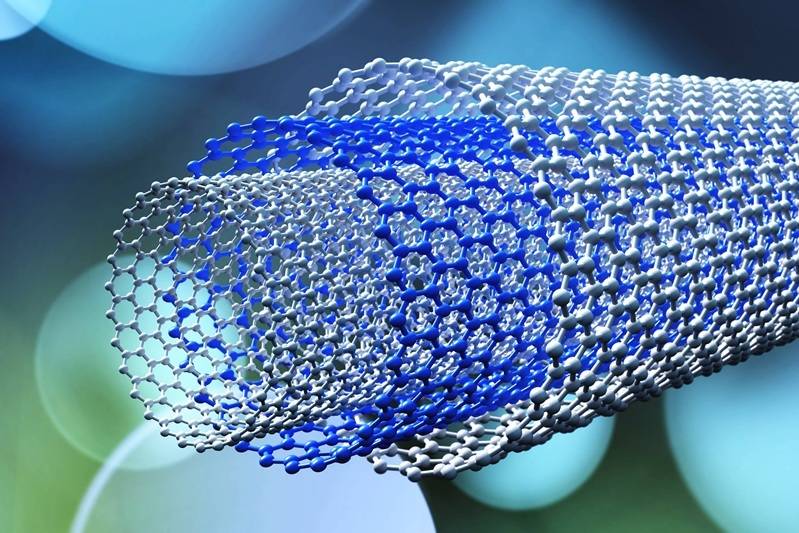
With the rapid development of electronics, renewable energy, and the electric vehicle industry, demand for electrical power continues to grow, and traditional conductor materials such as copper and aluminum are approaching their performance limits. Carbon nanotubes have long been regarded as an ideal material for manufacturing electrical conductors due to their low density and excellent electrical, thermal, and mechanical properties. However, until now, carbon nanotubes had not achieved the electrical conductivity levels required to replace traditional materials on an industrial scale.
According to Javier Llorca, a researcher in the Department of Materials Science at the Universidad Politécnica de Madrid (UPM) and Scientific Director of Imdea Materiales, a study conducted jointly by researchers from UPM, Imdea, and the Instituto de Nanociencia y Materiales de Aragón (INM) has for the first time developed carbon nanotubes that overcome these limitations. These carbon nanotubes exhibit electrical conductivity higher than copper and strength greater than steel. The findings have been published in the international journal Science.
Llorca stated that these limitations were overcome through a scalable manufacturing process that allows doping of carbon nanotube fibers with tetrachloroaluminate (AlCl₄). This molecule embeds itself between the carbon nanotubes forming the fiber without altering their mechanical properties. The charge transfer from carbon atoms to chlorine ions increases electrical conductivity to up to 24.5 MS/m (megasiemens per meter), nearly half that of copper, but with a density only one-sixth that of copper.
The researchers noted that the obtained carbon nanotube properties are particularly significant for the electrification of transportation, including electric vehicles, drones, and aircraft, as these applications require large quantities of conductors with the lowest possible density. The achievement also holds great potential in the field of overhead cables, where performance is often limited by the cable's own weight. Institutions involved in this research include the Universidad Politécnica de Madrid, Imdea Materiales, and the Instituto de Nanociencia y Materiales de Aragón, a joint center of the Spanish National Research Council (CSIC) and the University of Zaragoza.
This article is compiled by Wedoany. All AI citations must indicate the source as "Wedoany". If there is any infringement or other issues, please notify us promptly, and we will modify or delete it accordingly. Email: news@wedoany.com