South Korea's Sungkyunkwan University Develops New Polymer Binder, More Than Doubling Battery Lifespan
en.Wedoany.com Reported - A joint research team from Sungkyunkwan University (SKKU) and Seoul National University has developed a new hybrid polymer binder that enables the production of thicker lithium-ion battery electrodes, enhancing energy density while extending battery lifespan. Tests show that pouch cells using this material retain 86.8% of their initial capacity after more than 200 charge-discharge cycles, with a lifespan more than double that of conventional batteries.
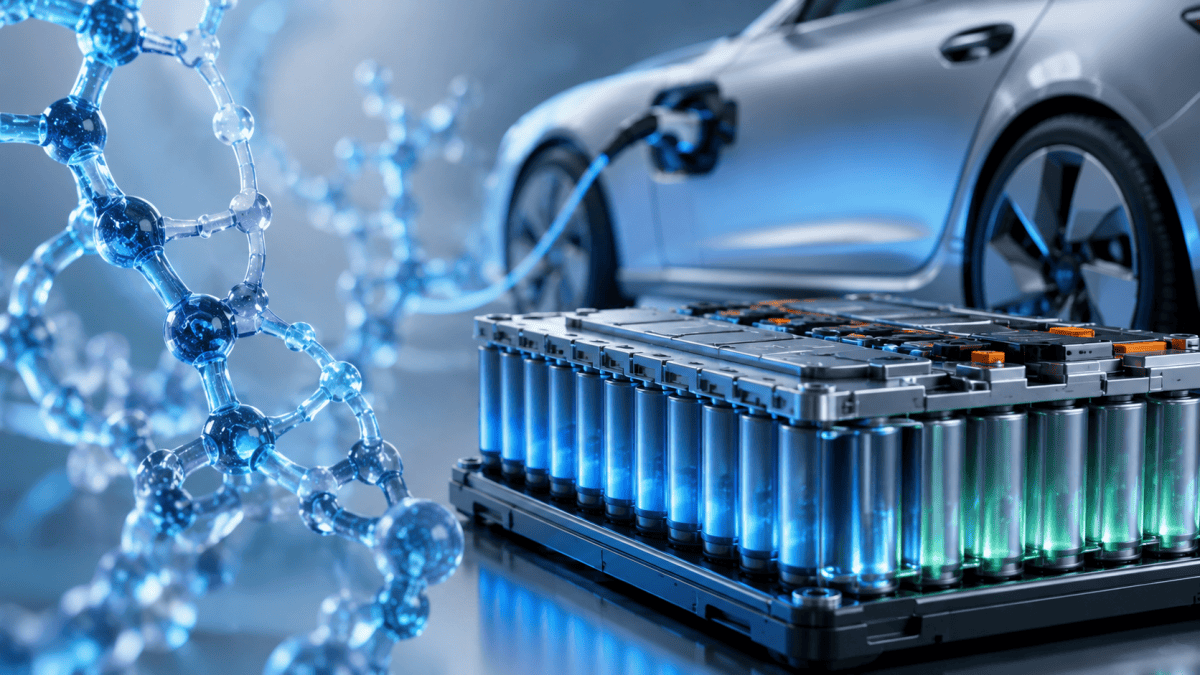
The research was led by Professor Ki-Jae Kim from the Department of Energy Science and the Department of Future Energy Engineering at Sungkyunkwan University, in collaboration with the team of Jang Wook Choi at Seoul National University. The study addresses an industry pain point: while increasing electrode thickness can boost battery energy storage capacity, process issues during manufacturing significantly degrade the battery's cycling performance and lifespan.
The root cause lies in the electrode binder. Polyvinylidene fluoride (PVDF) binders, currently the industry standard, tend to migrate to the surface during the drying process of thick electrodes, causing cracks and delamination that weaken structural integrity, impede lithium-ion movement, and accelerate battery degradation. The research team developed a dual-action hybrid binder called DHP, composed of highly elastic spandex fibers and polyacrylic acid (PAA), which interacts well with electrode materials. The complementary properties of the two polymers maintain structural integrity under thick electrode conditions, prevent crack formation, and enhance both mechanical strength and lithium-ion transport performance.
Test results show that the DHP binder achieves nearly double the adhesion strength compared to conventional PVDF binders. During initial charge-discharge cycles, an interface forms spontaneously between lithium and PAA, promoting faster and more uniform lithium-ion transport within the electrode, thereby improving the battery's electrochemical performance. The research team also validated the technology by manufacturing large-capacity pouch cells close to industrial scale: cells with conventional binders experienced severe capacity degradation and ceased operation after approximately 95 charge-discharge cycles, while cells using the new polymer retained 86.8% of their initial capacity after more than 200 cycles.
In terms of industrialization, this technology can be integrated into existing manufacturing processes through wet processing, requiring no production line modifications or new equipment investments. Manufacturers can produce higher-capacity batteries using existing infrastructure. Professor Ki-Jae Kim stated that previous increases in electrode thickness and size were constrained by conventional binders and process issues, and that the combination of spandex and polyacrylic acid properties has broken through this bottleneck. He emphasized that the new technology can be implemented directly on existing production lines without requiring the emerging dry-process manufacturing method, and is expected to play a key role in extending the range of next-generation electric vehicles.
Related Products

Double-slide Triple-sealed Hot Air Isolation Door
Xi'an Yingchuan Electric Power Equipment Co., Ltd.
Standard Nozzle Flowmeter
Jinggong Automatic Control Instrument Complete Technology Development Company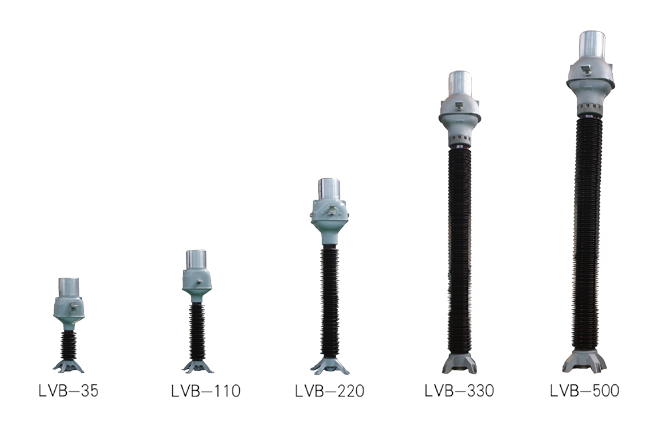
LVB Series 35-500kV Oil-immersed Inverted Current Transformer
Shandong TaiKai Instrument Transformer Co., Ltd.
Hydrogen Production Technology: Hydrogen Purification by Pressure Swing Adsorption
Chengdu Yizhi Technology Co., Ltd.
Environmentally Friendly Flame-retardant PVC Double-layer Insulated Wire
Sichuan Chndo Cable Co., Ltd.
GW4-40.5/72.5/126/145/170/252/363/420 Series Double-column Horizontal Rotary High-voltage AC Disconnect Switch
SHANDONG TAIKAI DISCONNECTORS CO., LTD.