NASA's Roman Space Telescope Arrives at Kennedy Space Center
en.Wedoany.com Reported - NASA's next-generation large observatory, the Nancy Grace Roman Space Telescope, arrived at the Kennedy Space Center late Sunday morning via NASA's Pegasus barge.
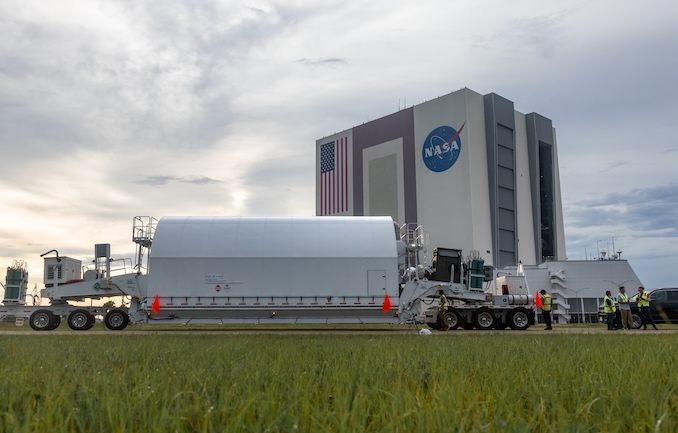
The spacecraft is housed in a protective container known as the "Chariot," a nickname that echoes the Roman theme. The telescope is not named after the ancient Roman Empire but honors Nancy Grace Roman, NASA's first Chief of Astronomy. Lucas Paganini, the Roman project manager, stated that as the "Mother of Hubble," she made the Hubble Space Telescope possible and is a key figure in space exploration.
The 43-foot-tall observatory was unloaded from the barge shortly after 7:00 p.m. Eastern Time (23:00 UTC), following a delay of about an hour due to a thunderstorm. The spacecraft will be transported to the Payload Hazardous Servicing Facility at the southern end of the Kennedy Space Center, where it will undergo approximately 70 days of pre-launch preparations, including inspections, fueling, and final encapsulation within the payload fairing of a Falcon Heavy rocket. The observatory is scheduled to launch from Launch Complex 39A as early as August 30, ahead of the original September launch date.
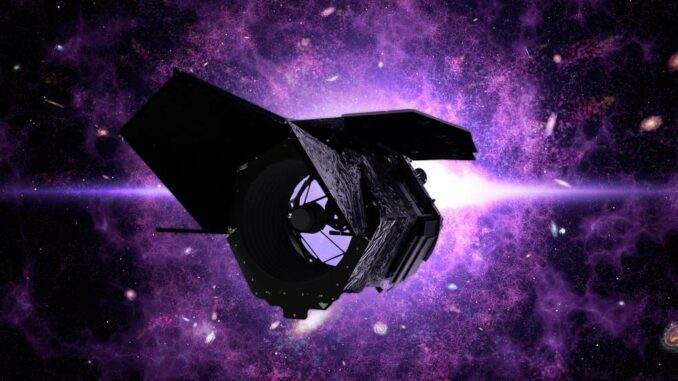
The observatory is also equipped with a chronograph instrument developed by the Jet Propulsion Laboratory, enabling it to observe the faint light of exoplanets near their host stars. Paganini stated that the Roman telescope will also help scientists better understand dark matter and dark energy, referring to their combination as the "dark universe." Paganini noted that the discovery of the universe's expansion 100 years ago and its accelerating expansion 25 years ago led to a Nobel Prize, but it remains unclear whether this acceleration is changing, whether it truly is dark energy, what generates dark energy, or if we simply do not understand gravity. Ultimately, we will see whether the currently used laws of physics apply to the observed phenomena, fundamentally trying to understand a very human question: Where do we come from, and where are we going in this universe we call home?
This article is compiled by Wedoany. All AI citations must indicate the source as "Wedoany". If there is any infringement or other issues, please notify us promptly, and we will modify or delete it accordingly. Email: news@wedoany.com