en.Wedoany.com Reported - Panasonic Connect Group recently launched a solution called "Bead Eye M edition" that utilizes AI technology to automate post-welding inspection. This product combines the company's welding process technology with 3D sensors and proprietary AI to address the complexity of setup in automating visual inspection processes, aiming to prevent defective products from being shipped and improve inspection efficiency.
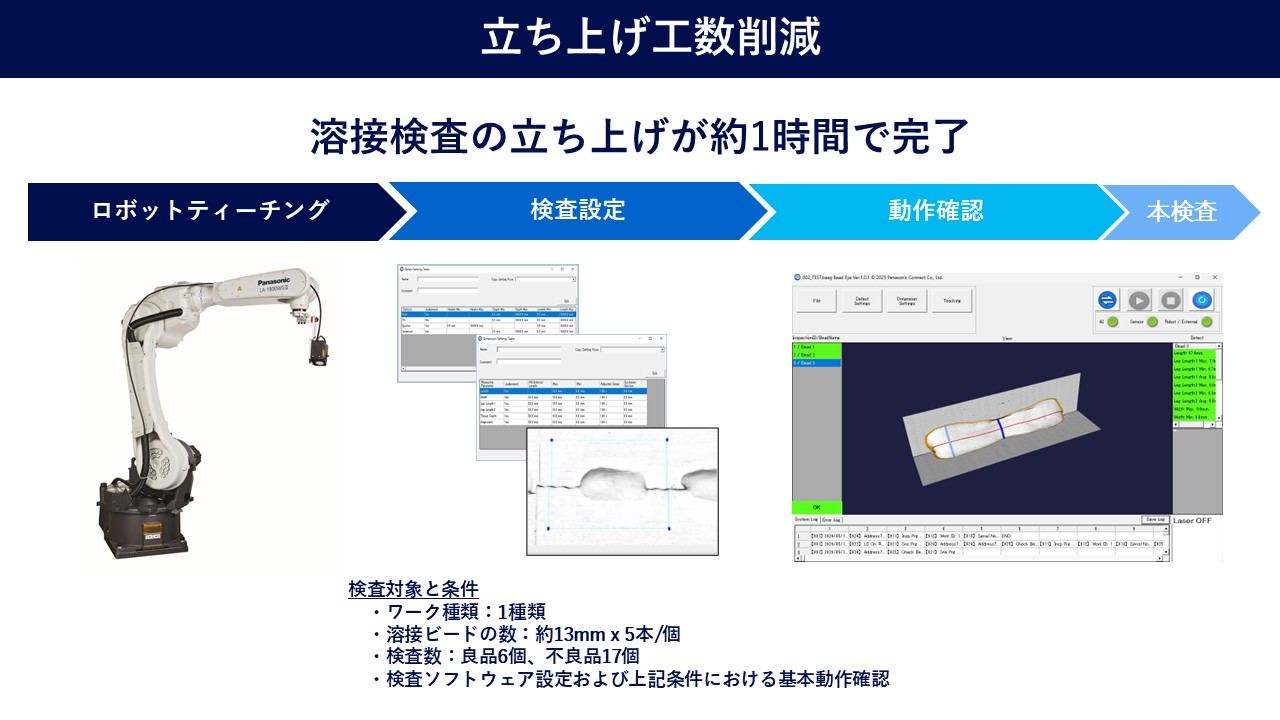
The startup setup for this welding inspection solution can be completed in approximately one hour. Compared to the existing welding visual inspection machine "YA-1VPXH1T01", the setup workload can be reduced by about 90%. The setup items are concentrated on three parameters: "Acceptance threshold for weld bead surface defects", "Acceptance threshold for weld bead appearance dimensions", and "Weld bead detection area setting", thereby significantly reducing the effort required for startup. This enables horizontal deployment to weld bead inspection points with multiple processes or production lines, as well as setup for adding new machine models, to be achieved in a short time.
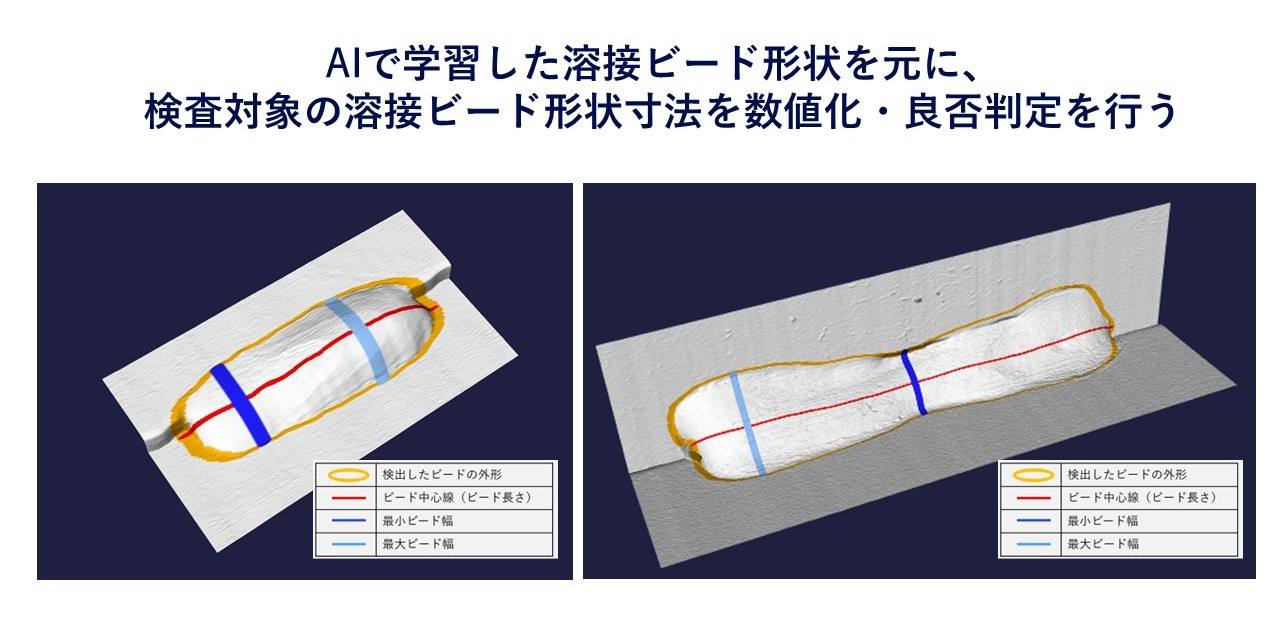
In industries such as automotive, the automation of welding processes has been advancing with the widespread adoption of arc welding robots. However, the post-weld inspection process still relies primarily on manual visual inspection, leading to issues such as heavy inspector workload, inconsistent judgment standards, and challenges in ensuring traceability through unified management of inspection data. To address these challenges, the newly developed solution uses AI to automatically detect surface defects and shapes of weld beads, and makes acceptance judgments numerically based on the detection results, thereby standardizing inspection criteria. The inspection results are digitized to ensure traceability.
For dimensional inspection, this solution employs new AI technology capable of detecting the shape of the weld bead itself to make acceptance judgments on dimensions. It can detect defects such as porosity and spatter adhesion, as well as weld bead shape, with high precision, performing inspections with a maximum error of 0.7mm, contributing to improved reliability in quality verification. This solution also eliminates the ambiguity of standards in visual inspection, enabling objective quality judgment. The weld bead appearance is evaluated numerically, and inspection results are saved as digital data, which can be used for quality management and traceability assurance.
This article is compiled by Wedoany. All AI citations must indicate the source as "Wedoany". If there is any infringement or other issues, please notify us promptly, and we will modify or delete it accordingly. Email: news@wedoany.com