en.Wedoany.com Reported - In the year from April 2025 to April 2026, Asia's solar power generation reached 1,727 TWh, surpassing natural gas-fired power for the first time and becoming the region's third-largest power source.
Recently, the UK-based climate and energy research institution "Carbon Brief" released a latest analysis report showing that in the year from April 2025 to April 2026, Asia's solar power generation reached 1,727 TWh, surpassing natural gas-fired power (1,711 TWh) for the first time, rising to become the region's third-largest power source.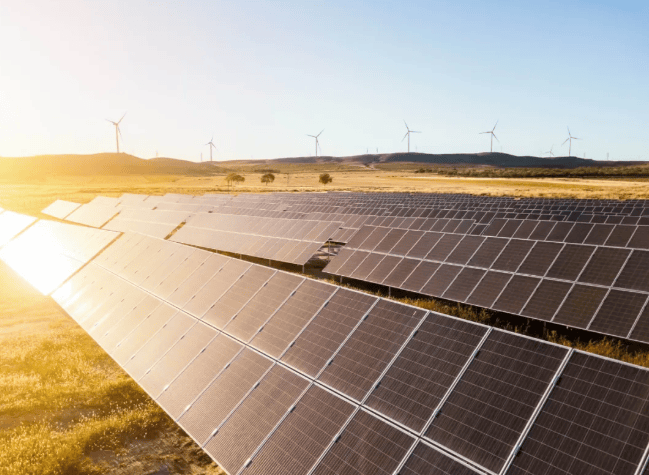
Photovoltaics Reshaping Asia's Power Landscape
"Carbon Brief" noted that from a structural evolution perspective, Asia's power system is accelerating its transition from "fossil fuel-dominated" to "diversified low-carbon." Data shows that although coal power and hydropower occupy dominant positions with 52% and 12% shares respectively, new energy sources represented by solar power are rewriting Asia's power landscape at an unprecedented pace. Since 2020, Asia's solar power generation has increased nearly fourfold, becoming the fastest-growing segment among all power sources.
This growth is not linear but exhibits a clear "acceleration curve." On one hand, the continuous decline in photovoltaic module costs, coupled with improvements in technological efficiency, has made solar power economically competitive with, or even superior to, traditional power sources. On the other hand, the combination of policy drivers and energy security needs has led major Asian economies to generally prioritize photovoltaics as a preferred option for energy transition. The International Energy Agency has previously pointed out that solar power has become the dominant force in global new power generation capacity additions, growing significantly faster than wind, hydropower, and nuclear power.
From a regional distribution perspective, China, India, and Pakistan have become the core engines of this growth. Particularly in South Asia, distributed photovoltaics are experiencing explosive development. In Pakistan, for example, the rapid adoption of rooftop photovoltaics has been described by the industry as an "energy transition process exceeding expectations," directly weakening reliance on centralized fossil fuel power generation to some extent.
Notably, this round of photovoltaic growth also carries a clear "spillover effect." Asia contributes approximately 60% of the global photovoltaic capacity additions, making the region the core of the global energy transition. Meanwhile, global monthly wind and solar power generation in April also exceeded natural gas for the first time.
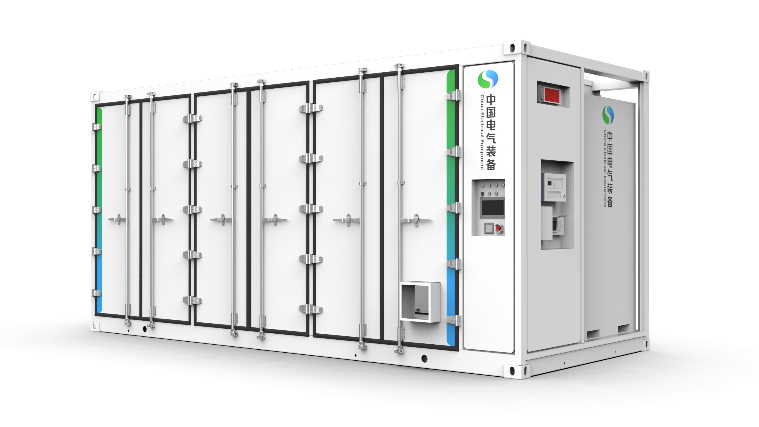
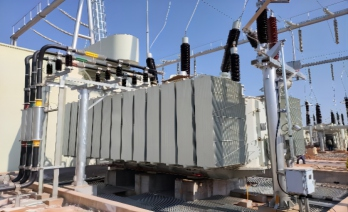
However, from a system-level perspective, the rapid increase in the share of photovoltaics also imposes higher demands on power system flexibility. How to accommodate variable power sources through energy storage, grid upgrades, and market mechanism optimization has become a key challenge commonly faced by Asian countries.
Natural Gas Role Reassessed
In stark contrast to the rapid rise of solar power, the expansion of natural gas-fired power in Asia has clearly "stalled." Several international institutions had originally expected natural gas, as a relatively low-carbon transition fuel, to experience "explosive growth" in Asia. However, the reality is that while installed capacity has increased, power generation has not, and utilization rates have continued to decline.
Data from the UK-based climate and energy think tank Ember shows that between 2019 and 2024, Asia's natural gas-fired power generation capacity grew by about 22%, but power generation during the same period increased by only 6%, significantly below expectations. Industry insiders believe that behind this divergence lies, first, the instability of fuel supply. Since the outbreak of the Russia-Ukraine conflict, the global liquefied natural gas (LNG) market has experienced severe volatility, with prices once soaring to historic highs, directly pushing up import costs in Asia. Coupled with recent tensions in the Middle East, concerns among some countries about the safety of shipping through the Strait of Hormuz have intensified, further amplifying the uncertainty of natural gas supply.
Infrastructure constraints are equally prominent. Between 2022 and 2023, approximately 81 GW of planned gas-fired power plant projects in Asia were canceled or postponed. In several South Asian countries and South Korea, the construction of LNG receiving terminals and gas pipelines has been frequently hindered due to rising construction costs, increased financing pressure, and weakening demand expectations. Additionally, the global shortage of gas turbines has directly slowed the construction progress of power plants in countries such as Vietnam and the Philippines.
A deeper reason is that the comparative economic advantage of natural gas is being eroded. Squeezed between the still-cost-advantageous coal power and the continuously cost-reducing renewable energy, natural gas-fired power is gradually becoming a "marginal power source" in many countries. For example, natural gas-fired power generation has declined in recent years in countries like Japan and India. The overall Asian natural gas market shows a trend of weak demand.
Furthermore, the rapid expansion of clean energy is "crowding out" natural gas from the demand side. The combined application of distributed photovoltaics, centralized new energy bases, and energy storage is leading more and more countries to prioritize renewable energy in meeting new electricity demand. The International Energy Agency recently stated that the latest round of the energy crisis has significantly heightened concerns among Asian import-dependent economies about the affordability and reliability of natural gas, and this cognitive shift is reshaping the logic of power investment decisions in various countries.
China Leads Global Photovoltaic Leap
In the development of the photovoltaic industry in Asia and globally, China is undoubtedly the most central driving force. "Carbon Brief" pointed out that since 2020, approximately three-quarters of Asia's solar power generation increase has come from China. This magnitude of contribution directly determines the pace of evolution of the regional and even global energy structure.
From the application side, China's photovoltaic installed capacity and power generation scale continue to set new records. In 2025, China's cumulative photovoltaic installed capacity reached approximately 1.2 TW, firmly ranking first globally; new installations for the year remained at a high level, becoming the decisive factor driving global photovoltaic capacity growth.
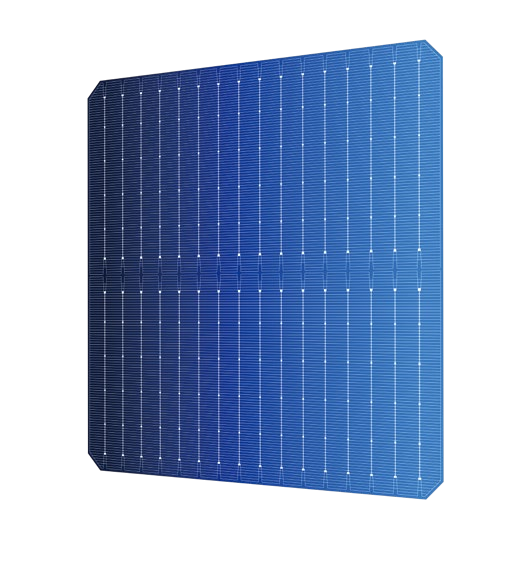
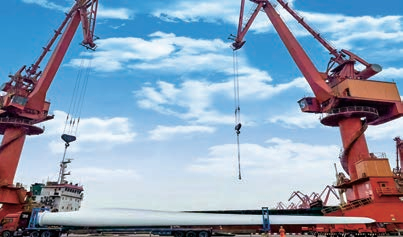
From the manufacturing side, China has built the world's most complete and competitive photovoltaic industry chain. Currently, over 80% of global photovoltaic manufacturing capacity is concentrated in China, covering key segments such as polysilicon, wafers, cells, and modules.
In terms of the external environment, China's photovoltaics also play an important "stabilizer" role. Affected by the Middle East situation, energy security pressures have risen in many Asian countries, and low-cost, stable-supply Chinese photovoltaic products have become an important alternative. Data shows that in March 2026, China's photovoltaic module exports to Asia doubled year-on-year, reaching a historic high of 39 GW, strongly supporting the rapid implementation of new energy projects in the region.
Technological progress is also a crucial pillar supporting China's photovoltaic leadership. In recent years, a new round of technological iteration, represented by N-type cells, TOPCon technology, and high-efficiency modules, has accelerated, continuously improving power generation efficiency and reducing the levelized cost of electricity. This "technology-manufacturing-application" closed loop enables China not only to lead in scale but also to hold an advantage in industrial quality and development resilience.
Multiple industry analysis institutions predict that as global electricity demand continues to grow and electrification deepens, photovoltaics will play an even more critical role in the future energy system, and China will continue to play a leading role in this process.
This article is compiled by Wedoany. All AI citations must indicate the source as "Wedoany". If there is any infringement or other issues, please notify us promptly, and we will modify or delete it accordingly. Email: news@wedoany.com