en.Wedoany.com Reported - Beetaloo Energy Australia Limited (ASX: BTL), formerly Empire Energy Group Limited, plans to produce first gas in the fourth quarter of 2026 at its Carpentaria pilot project in the Northern Territory. The company has also signed a non-binding memorandum of understanding with US-based Halliburton to supply natural gas for the Beetaloo Digital AI data centre project near Darwin. Managing Director Alex Underwood discussed project progress, funding status, and single-well economics in a recent interview.
The Carpentaria project is located in the EP187 block on the eastern side of the Beetaloo Basin, covering approximately 110,000 acres of contiguous land and representing an asset nearing production; another block on the western side of the basin covers approximately 1.2 million acres. Independent assessments indicate potential gas resources of approximately 47 trillion cubic feet (Tcf) equivalent across the entire portfolio, of which approximately 1.7 Tcf is classified as 2C contingent resources. Underwood stated that the basin is the largest undeveloped gas field in the world outside the Middle East and Russia, with reserves sufficient to power Australia for 200 years.
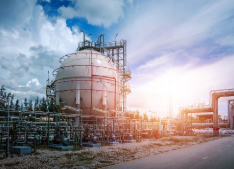
On the production facilities front, three pilot wells are connected via approximately 5 kilometres of pipeline to the Carpentaria gas processing plant, with the main plant and pipeline largely complete. Underwood said the project is now weeks away from first gas; the company's official production window is the fourth quarter of 2026, a delay from the previously announced 2025 target. He explained that the adjustment reflects actual construction and commissioning progress, with resource volumes and contract terms unchanged. First gas is seen as a key de-risking milestone for the company after years of evaluation.
Cost is a key focus of current assessment. The company's most recent well incurred drilling and hydraulic fracturing costs exceeding A$50 million, which is high by US shale standards, driven primarily by equipment and materials transport costs within Australia. The previous well alone spent A$6 million on frac sand, of which A$5 million was trucking costs. Based on gas prices of A$10 to A$12 per gigajoule and approximately 10 petajoules of recoverable gas per well, Underwood estimates single-well life-of-well revenue of approximately A$100 million, generating modest positive net present value returns even during the pilot phase. More substantial improvements would come from year-round continuous drilling and stimulation activity. Queensland's coal seam gas industry followed the same path, with local well costs falling to approximately 20% of early wells; Beetaloo's modelling shows that year-round operations could at least halve per-well costs, with internal rates of return (IRR) expected to reach 30% to 50%.
On funding, Macquarie Bank provides support to Beetaloo, including midstream infrastructure financing for the construction of the Carpentaria gas processing plant. The company raised approximately A$70 million through an equity placement earlier this year, with latest reported available liquidity of approximately A$125 million, comprising cash and undrawn facilities. Underwood said this represents the strongest cash position in the company's history ahead of first gas. On the revenue side, the company has a binding 10-year gas sales agreement with the Northern Territory government, priced at a fixed base with a consumer price index (CPI) adjustment mechanism. Beetaloo plans to supply 10 terajoules per day to the McArthur River mine pipeline system this year, increasing to an additional 15 terajoules per day to the local market next year after the Northern Territory government funds pipeline reverse-flow modifications.
New developments come from the memorandum of understanding with Halliburton. The two parties will collaborate on the Beetaloo Digital project, located on government-granted land at Weddell near the Darwin industrial zone, with the MOU focused on the power generation component. On project land size, the figure given in the interview was 85 hectares, while the company's press release states 185 hectares. Underwood said Beetaloo will not own or operate the data centre; the company is leading a consortium covering gas supply, solar power generation, pipeline construction, and power generation, with the aim of cultivating a large-scale local market for its own gas. Halliburton will share experience from its behind-the-meter power projects, with its team recently visiting the US Stargate data centre project. Underwood cited a reference point of approximately 200 terajoules of gas per day required per gigawatt of installed data centre capacity, corresponding to approximately A$1 billion in annual EBITDA per gigawatt for gas suppliers; Beetaloo will only supply gas and will not participate in data centre ownership or downstream power revenue.
On the east coast market, Underwood believes declining Bass Strait production and rising LNG export demand will create a long-term supply gap, with the Beetaloo Basin as a potential supplementary source. Santos has indicated that Beetaloo will become a significant gas source for its Gladstone LNG project by the early 2030s. APA Group is reportedly planning an eastward gas pipeline with a minimum daily capacity of 1,000 terajoules. Additionally, Darwin's existing LNG exports account for approximately 11% of Japan's gas demand, and both terminals have expansion capacity. On the impact of renewables, Underwood noted that fossil fuels have maintained a stable share of approximately 91% of Australia's primary energy mix over the past 20 years, which he sees as evidence that gas continues to serve as a pillar of the system.
From a broader perspective, the Beetaloo project sits at the intersection of two major energy demand shifts: structural gas shortages on the east coast and rapidly growing electricity demand from AI infrastructure. Underwood believes the key constraint on AI and data centre development has shifted from chip manufacturing to power supply. This shift has already manifested in the US through behind-the-meter power projects and nuclear capacity restarts, and is now emerging in Australia, where the federal government has required large data centres to self-supply power rather than rely on the strained grid. For gas developers, AI facilities represent a potential second market layered on top of traditional domestic demand and LNG export requirements; however, such proposals dependent on multi-party collaboration remain at the conceptual stage economically until financing and off-take agreements are finalised.