en.Wedoany.com Reported - The National Space Science Center of the Chinese Academy of Sciences announced on the 22nd that the Solar wind Magnetosphere Ionosphere Link Explorer (SMILE, "Smile" satellite), jointly developed by China and Europe, successfully entered its predetermined scientific observation orbit early on the 20th. The satellite is currently operating normally and will undergo two months of in-orbit testing as planned.
The "Smile" satellite was launched on May 19 from the Kourou launch site in French Guiana, entering its initial orbit. After completing preliminary in-orbit tests of the satellite platform, the China-Europe development team initiated the first orbital control maneuver on the early morning of May 25. Over the following nearly one month, the satellite underwent 12 precise orbit changes, ultimately reaching its predetermined scientific observation orbit, laying the foundation for panoramic detection of solar wind-magnetosphere-ionosphere coupling. The orbit change process was supported by tracking stations of the European Space Agency.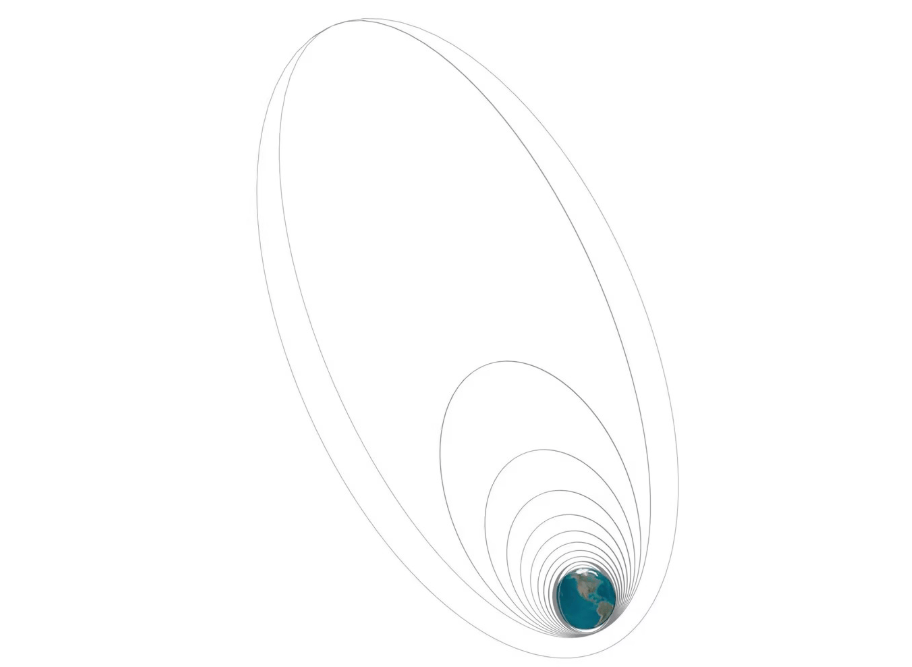
Next, the development team will power on the satellite's payload module and scientific instruments to conduct comprehensive in-orbit tests and calibration. After the tests are completed, the satellite will transition to the scientific operation phase and begin acquiring observation data.
This project is the final mission of the Chinese Academy of Sciences' Strategic Priority Program on Space Science (Phase II) and marks China's first space science exploration mission involving mission-level, comprehensive deep cooperation with the European Space Agency. The satellite carries payloads including a Soft X-ray Imager, an Extreme Ultraviolet Imager, a Low-Energy Ion Analyzer, and a Magnetometer, and for the first time applies X-ray imaging technology to large-scale panoramic detection of the Earth's magnetopause and cusp regions, aiming to reveal the processes by which solar wind energy and matter enter Earth's space environment, thereby enhancing the understanding and forecasting capabilities of space weather.
This article is compiled by Wedoany. All AI citations must indicate the source as "Wedoany". If there is any infringement or other issues, please notify us promptly, and we will modify or delete it accordingly. Email: news@wedoany.com