en.Wedoany.com Reported - Data released in 2025 by Poland's national railway transport regulator (UTK, Urząd Transportu Kolejowego) shows that the country's railway network achieved an annual passenger volume of approximately 439 million, a year-on-year increase of 7.7%, setting a decades-high record. This growth is attributed to market liberalization, but the long-distance market remains dominated by PKP Intercity, while regional services are handled by Polregio and provincial companies, with competition not yet balanced across all segments.
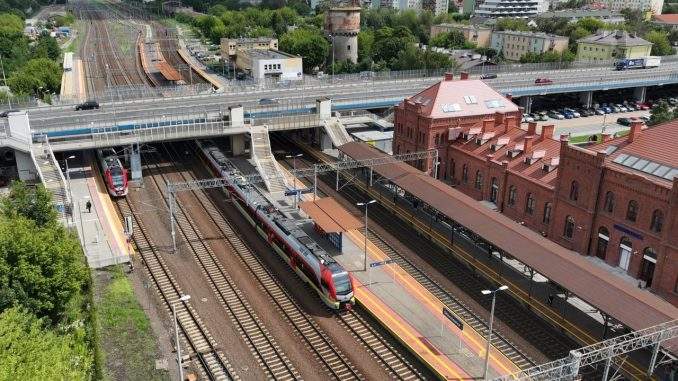
Poland boasts one of the most developed passenger railway markets in Central and Eastern Europe, characterized by a hybrid model of liberalization and strictly regulated Public Service Obligation (PSO) contracts. Regional transport is highly fragmented, primarily operated by companies controlled by provincial governments, while the long-distance market revolves around the national operator PKP Intercity, with a minimal share of open-access competition. According to this year's IRG-Rail report, state-owned operators hold a 64% market share, other public railway operators account for 35%, and private operators only 1%. In 2024, PSO services accounted for 91% of passenger-kilometers, with non-PSO services at 9%. By passenger numbers, Polregio accounts for 26% (as the largest regional operator, running approximately 2,150 trains daily in 2025, with an annual volume of 103 million passengers), PKP Intercity 18%, Koleje Mazowieckie 16%, PKP SKM in Trójmiasto 12%, and other regional operators a combined 28%.
In June this year, Poland's Centre for EU Transport Projects (CUPT) announced that the Ministry of Infrastructure has approved the launch of preliminary market consultations regarding the future procurement of long-distance, interregional, and international passenger railway services. This move is seen as a key step in opening the railway market after 2030, aimed at gathering operator input to prepare for the tender process for selected routes starting from December 2030. This implies that from 2030 onward, Poland's passenger railway market may see a new structure, with long-distance services transitioning to being awarded through competitive procedures, requiring existing operators to adapt to a more open environment.
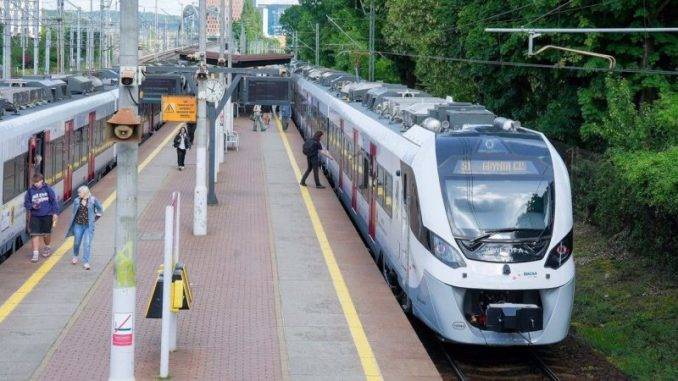
Poland's passenger railway market is at a strategic turning point. Currently, PKP Intercity operates approximately 500 trains daily, most of which rely on public funding, with only a few commercial services. Private operators have a limited presence on long-distance routes, primarily operated by RegioJet and Leo Express on a few connections. According to a report on the "Horizontal Timetable" (HRJ, a national long-term planning project for passenger railway services) released in April 2026, consultations with over 50 companies revealed strong interest: 23 domestic and international operators participated, with 15 undergoing detailed interviews. Among these operators, 10 expressed interest in PSO services, and 7 in commercial open-access services. However, formal market opening does not automatically guarantee widespread competition; its realization directly depends on the stability of the regulatory framework, the organization of auctions, and effective access to infrastructure and capacity. In this context, 2030 is seen as a long-term market reset point, coinciding with the expiration of the current operating model, transitioning to service awards through competitive procedures.
In industry consultations, operators emphasized the need to establish a predictable market framework, including publishing clear auction timelines and transparently defining contract parameters. The current limited open-access regime (with a maximum validity of five years) and complex administrative procedures may hinder new operators from entering. Another major obstacle is the lack of passenger volume trend data from previous years, which affects bid calculations and favors operators already in the market. Access to rolling stock and infrastructure is key to competitive balance. An investment of €460 million allocated under the National Recovery Plan for purchasing approximately 300 railway carriages and locomotives is crucial for reducing market imbalances.
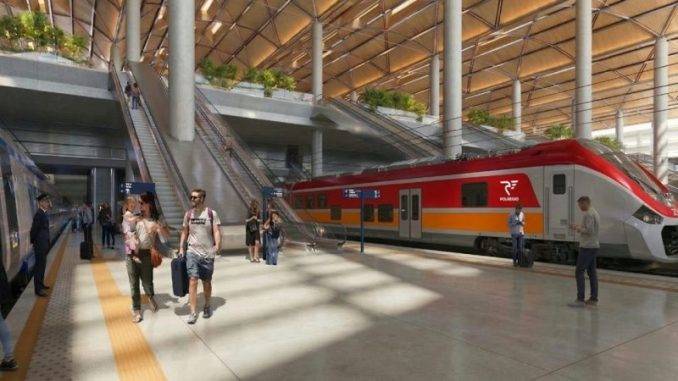
Meanwhile, the Central Transport Hub (CPK) has established Port Polska.KDP company with a budget of €2.4 billion to purchase rolling stock for future high-speed services, which will be leased to operators awarded contracts between the new airport, Warsaw, and Łódź. According to CPK, a tender for the procurement of AeroExpress trains with speeds exceeding 200 km/h will be launched before the end of this year. In this context, the HRJ and Port Polska projects are driving the future of Poland's passenger railway market by developing national planning and fare integration systems, preparing transport plans for 2030-2034, and shaping a long-term vision that includes the development of high-speed lines after 2035.
This article is compiled by Wedoany. All AI citations must indicate the source as "Wedoany". If there is any infringement or other issues, please notify us promptly, and we will modify or delete it accordingly. Email: news@wedoany.com