How Solar Cell Testing and Sorting Affect Long-Term Module Performance
en.Wedoany.com Reported - After manufacturing, Solar Cells undergo visual, electrical and internal-defect inspection before being sorted according to current, efficiency, color and other parameters. Testing and sorting affect not only outgoing cell quality, but also module power consistency, hot-spot risk and long-term energy performance.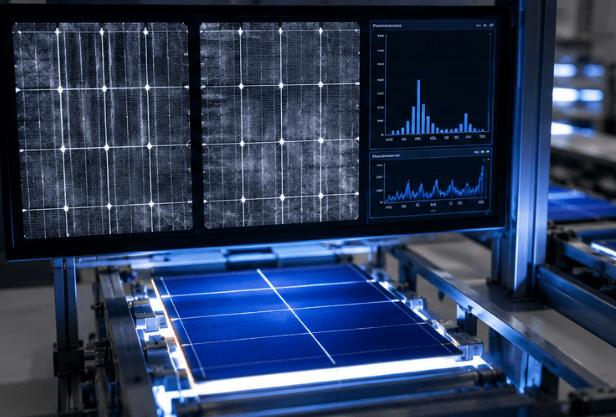
Electrical testing is normally carried out under controlled illumination and measures open-circuit voltage, short-circuit current, maximum-power-point current and voltage, fill factor and conversion efficiency. Light-source stability, temperature control and calibration of the testing equipment directly affect measurement accuracy.
One important purpose of sorting is to reduce current mismatch inside a module. When multiple cells are connected in series, string current is limited by the cell with the lowest current. Large current differences may reduce module power and place some cells under unfavorable operating conditions.
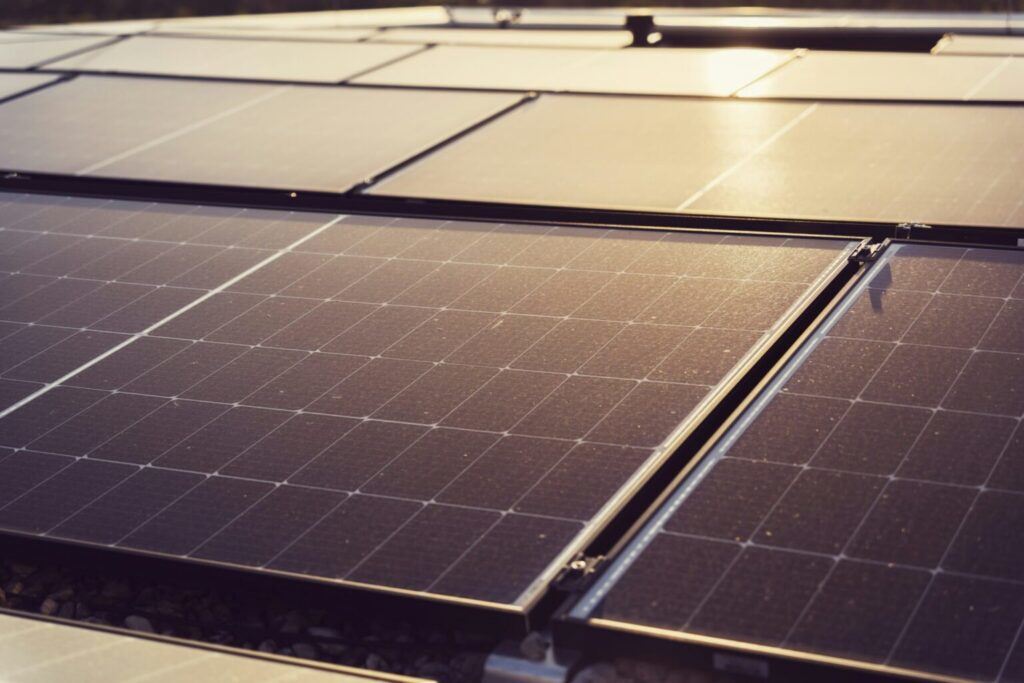
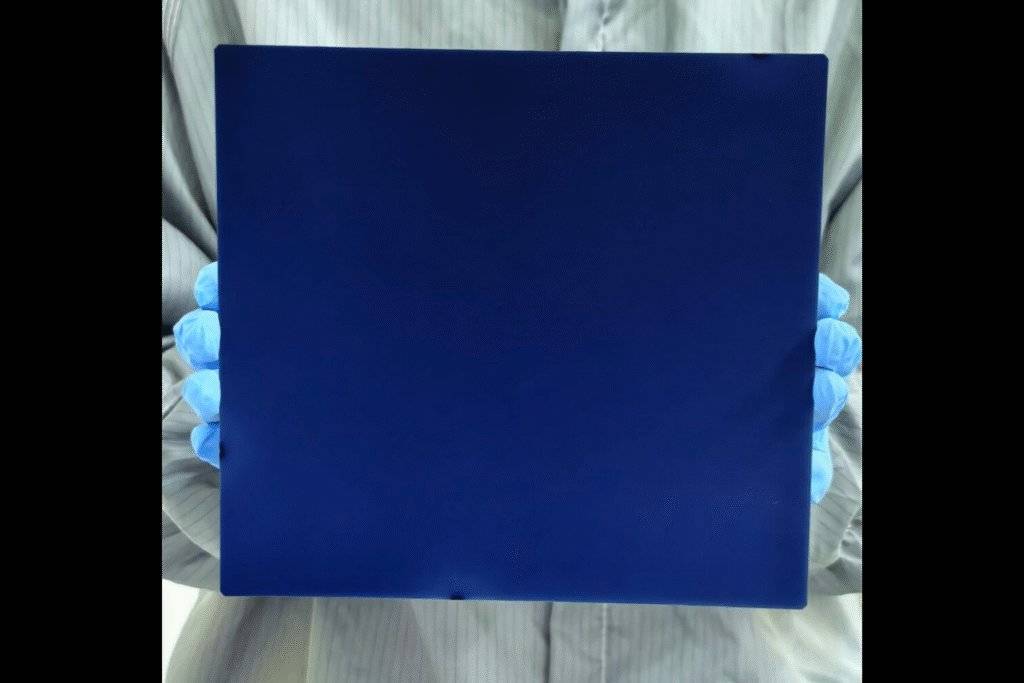
Color sorting also affects module appearance. Variations in texturing, coating thickness and surface condition can produce different cell colors. For building-integrated photovoltaic products, rooftop systems and modules with strong visual requirements, color consistency is an important quality parameter.
Electroluminescence inspection applies electrical current to the cell and observes the emitted image to identify microcracks, interrupted conductors, dark areas and locally inactive regions. Some defects cannot be found through ordinary visual inspection but appear clearly as non-uniform brightness or dark zones.
Photoluminescence inspection uses optical excitation to generate a luminescent response and can help evaluate material uniformity and local recombination. Different inspection technologies offer different benefits, and manufacturers combine them according to production speed, equipment investment and quality requirements.
Microcracks are a major concern in cell and module quality control. They may result from wafer defects, production handling, soldering stress, lamination pressure, transport vibration and installation loads. Small cracks may not reduce current immediately, but they can expand over time and disconnect part of the electrical circuit.
Module manufacturers need to monitor cell condition before and after soldering. Soldering temperature, ribbon tension and stringer positioning accuracy influence mechanical stress. A mismatch in thermal expansion between ribbon and cell may also increase crack risk during temperature cycling.
Sorting should not be based only on efficiency. Two cells with similar efficiency may have different current and voltage combinations. Module design must select cells suited to the series and parallel configuration to reduce mismatch and maintain stable power output.
Testing equipment also requires regular calibration. Reference cells, light sources, probes and temperature sensors may drift during long-term use. Inconsistent test standards among production lines or factories can affect product grading and customer acceptance.
Quality traceability is becoming increasingly important. Barcodes, data codes or batch information can connect wafer origin, process parameters, inspection images and electrical data. When a module shows abnormal performance, the manufacturer can trace the issue back to the related production stage.
A complete testing process should include visual inspection, internal-defect detection, electrical testing, sorting and traceability. High-power modules and complex interconnection designs may also require repeated inspections after soldering, lamination and final module assembly.
Testing and sorting are not merely formal final steps in solar cell production. They are critical for module consistency and reliability. Combining defect identification, performance matching and data traceability reduces power loss and improves long-term energy stability.
This article is compiled by Wedoany. All AI citations must indicate the source as "Wedoany". If there is any infringement or other issues, please notify us promptly, and we will modify or delete it accordingly. Email: news@wedoany.com
Related Products

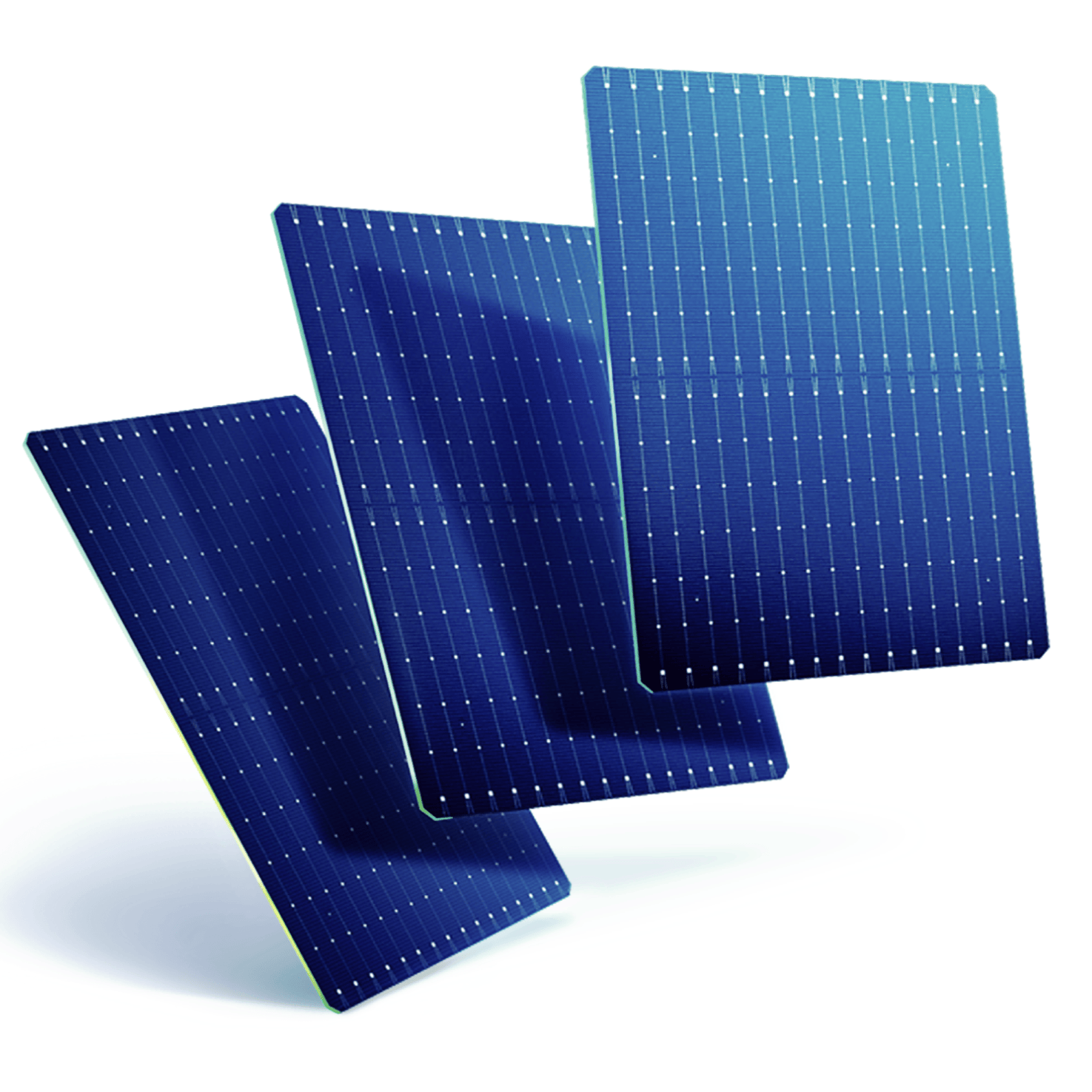
210R N-type 16BB TOPCon Bifacial Solar Cell
Sichuan Yingfa Ruineng Technology Co., Ltd.

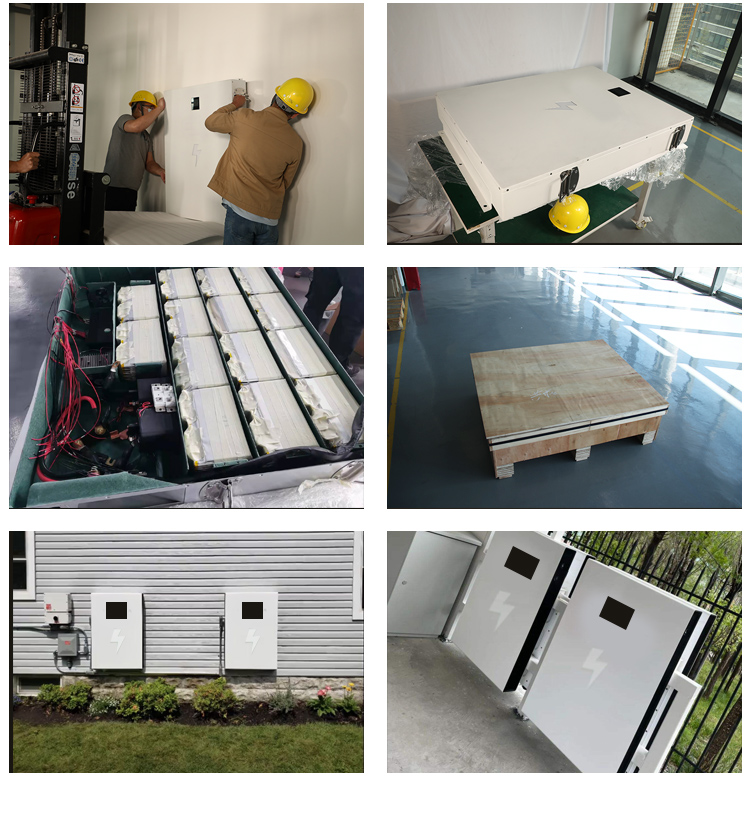
Safe, efficient, intelligent energy storage, creating smart homes and making life more convenient# Home Energy Storage # Supercapacitors # Energy Storage # Wall Mounted # Safe Electricity Use
Gonghe Power Co.,LTD