en.Wedoany.com Reported - DB InfraGO will begin a comprehensive modernization of the 221-kilometer Berlin-Hanover railway corridor from October 2026, covering the route from the German capital to the Lehrte junction near Hanover.
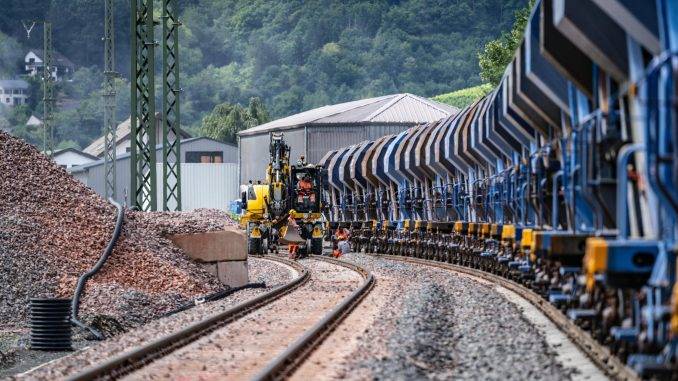
By the end of 2027, DB InfraGO will replace over 175 sets of switches, 260 kilometers of track, and 13 kilometers of sound-absorbing panels. At the same time, 25 stations will be modernized, with some becoming barrier-free to facilitate access for passengers with reduced mobility.
The project also includes the renovation of bridges, pedestrian overpasses, and switch heating systems, as well as maintenance work on the power supply network, signaling, and traffic control systems. During the track closure, sections of the "fixed track" infrastructure on the high-speed line near the city of Stendal will also be modernized.
Construction will be carried out in four main phases. In the first phase, from October to December 2026, the eastern section from Fallersleben to Berlin-Spandau will be completely closed. Subsequently, from December 2026 to October 2027, some sections can be operated via single-track lines, with the alternative Lehrter Stammbahn route activated. On the western section between Lehrte and Fallersleben, a complete closure is required from February to July 2027 for complex modernization work. The project will conclude with another complete closure of the eastern section from October to December 2027.
The modernization of the Lehrte-Berlin line involves infrastructure upgrades and the parallel electrification of the Lehrter Stammbahn, one of the largest ongoing electrification projects in Germany. The modernization of this corridor is the eighth project in Germany involving a comprehensive renewal of a railway corridor, and after the Hamburg-Berlin corridor, it is the second longest line, with infrastructure being modernized simultaneously through the coordination of all railway system works.
Gerd-Dietrich Bolte, a member of the DB InfraGO management team responsible for planning and infrastructure projects, stated that this approach allows trains to continue operating during construction on the high-speed line. Unlike the Hamburg-Berlin project, sections can be reopened in stages, which is a good solution for customers.
The Berlin-Hanover corridor is one of the most important connections between Berlin and North Rhine-Westphalia, with over 400 passenger trains and approximately 90 freight trains using the line daily. Given its strategic importance, DB InfraGO has collaborated with railway operators and regional transport authorities to minimize the impact of construction on train operations.
This article is compiled by Wedoany. All AI citations must indicate the source as "Wedoany". If there is any infringement or other issues, please notify us promptly, and we will modify or delete it accordingly. Email: news@wedoany.com