Microsoft's AI Annualized Revenue Reaches $37 Billion
en.Wedoany.com Reported - Microsoft's latest quarterly results show that its AI services annualized recurring revenue (ARR) has reached $37 billion, with a growth rate of 123%. This data, officially reported by the company, reflects that enterprises are increasingly adopting workloads that integrate core infrastructure with generative capabilities, driving broad changes in the cloud and AI markets.
While some investors are puzzled by recent stock price fluctuations among major hyperscale cloud providers, operational metrics paint a more stable picture. Microsoft's Intelligent Cloud segment, primarily supported by Azure, generated approximately $103 billion in revenue in fiscal year 2024. This long-term trend explains how AI-specific revenue can grow at triple-digit rates without destabilizing the overall portfolio.
Developer adoption, integrated workflow automation, and generative Copilot are fueling this acceleration. Customers experimenting with AI-enhanced tools often expand their consumption faster than expected, which is first reflected in ARR. When users interact with generative interfaces within productivity suites, they typically quickly integrate them into daily workflows.
Market behavior indicates that this rapid expansion aligns with broader global trends. Estimates published by Gartner show that public cloud service spending is expected to reach approximately $679 billion in 2024, with growth concentrated in infrastructure and platform services, areas where Microsoft competes with Amazon Web Services (AWS) and Google Cloud.
IDC's outlook on AI infrastructure reflects similar momentum. According to IDC public data, global AI-related spending is projected to reach approximately $601 billion by 2027, driven by enterprises building AI-centric architectures that align with hyperscale cloud providers supporting high-capacity computing.
Over the past year, large enterprises have prioritized generative AI pilots, particularly through integrated tools rather than standalone experiments. McKinsey notes that generative AI could contribute $2.6 trillion to $4.4 trillion in value annually. When trillion-dollar forecasts become part of planning discussions, cloud-based AI services grow rapidly in tandem.
Microsoft continues to position Azure OpenAI as a neutral platform where enterprises can access multiple model families while benefiting from cloud-level control and compliance. Many buyers report that operational risk, rather than model performance, has become a threshold factor in AI deployment strategies, with cloud providers emphasizing security certifications like SOC 2 and ISO 27001 resonating more with regulated industry customers.
Competitors are actively responding to this demand. Amazon Web Services (AWS) is heavily investing in generative services, while Google Cloud is deepening model customization. As major cloud providers see enterprises shifting budgets toward AI-integrated infrastructure, they respond with faster product release cycles and more aggressive pricing packages.
Microsoft's $37 billion ARR milestone hints at where the next wave of enterprise IT priorities will land. The AI inflection point is funneling new categories of spending into cloud services that previously did not exist, with enterprises increasingly viewing AI as a recurring item rather than a discretionary add-on—a significant shift for budgeting and governance teams.
Developer behavior further accelerates this momentum. Microsoft's Copilot features fall into this category; when developers experience measurable productivity gains, they expand usage and build new workflows, leading to sustained revenue growth. The competitive landscape for cloud-based AI services will continue to evolve, but the current quarter's momentum underscores the centrality of these capabilities to enterprise technology strategies. The combination of a robust cloud foundation, rising AI adoption rates, and ongoing investment in secure infrastructure ensures that hyperscale platforms remain critical as enterprises migrate more applications to AI-aligned architectures.
This article is compiled by Wedoany. All AI citations must indicate the source as "Wedoany". If there is any infringement or other issues, please notify us promptly, and we will modify or delete it accordingly. Email: news@wedoany.com
Related Products




Mine Explosion-proof and Intrinsically Safe Industrial Ethernet Ring Network (10 Gigabit/Gigabit)
Chongqing Mas Sci&Tech Co., Ltd.

20 Inch 1600*900 Full HD 60Hz TFT LED Monitor with VGA and DP Interfaces for Desktop Computers-Business Use
Guangzhou Zanying Optoelectronics Technology Co., Ltd.
Hot Selling 10 Inch Intel N5100 I5 I7 FHD 8 +128GB 16+256GB Win10 Pro Win11 Pro 4G 5G Rugged Tablet PC Pad with NFC Barcode
Highton Electronics Co., Ltd.
Automatic Aiming Laser Remote Obstacle Removal Robot
Pinggao Group Weihai High-Voltage Apparatus Co., Ltd.
GYTA Type Non-Self-Supporting Aerial/Duct Optical Cable
TONGDING INTERCONNECTION INFORMATION CO., LTD.
Industrial and Commercial Point-Type Gas Detector
Jinan Benan Technology Development Co., Ltd.

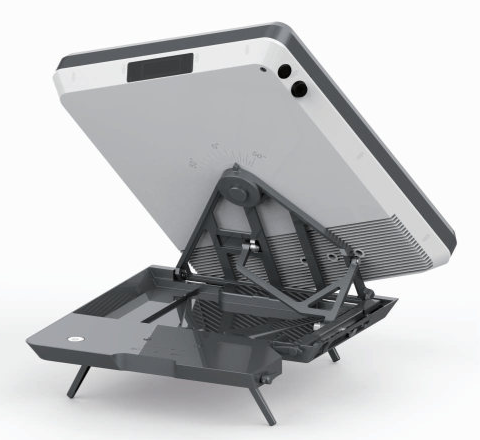
Flat Portable Satellite Terminal 0.35m Aperture Manual Portable Terminal
China Starwin Science & Technology Co., Ltd.