China's Alibaba Meoo CLI Launches on Qoder Plugin Marketplace
en.Wedoany.com Reported - On June 25, the Meoo CLI launched by China's Alibaba Meoo (Miao Wu) officially went live on the Qoder Desktop plugin marketplace and simultaneously integrated into the QoderWork skills marketplace. After users complete local demos and business prototypes in Qoder or QoderWork, they can use Meoo CLI to connect to cloud databases, user login, file storage, AI services, and other capabilities, publishing local projects as accessible online applications.
Meoo CLI addresses the challenge of deploying locally developed AI programming projects online. In the past, after developers used AI programming assistants to complete front-end pages, business prototypes, or small applications, they still had to handle databases, authentication, storage, cloud resource configuration, and deployment processes on their own. This step often took more time than writing the demo itself and frequently left prototypes confined to the local environment. With Meoo CLI integrated into Qoder Desktop and QoderWork, projects have advanced from "being able to generate code" to "being able to go live and run."
In terms of usage workflow, users can first complete local project builds in Qoder or QoderWork, then use natural language commands to invoke Meoo CLI to supplement cloud capabilities. The system will understand the project structure and call relevant tools to complete cloud databases, login systems, file storage, AI capabilities, and project publishing. For small and medium-sized teams, product managers, operations personnel, and independent developers, this lowers the technical barrier from prototype validation to online access.
Qoder Desktop is more oriented toward developer workflows, while QoderWork extends agent capabilities to a broader range of office and business tasks. Meoo CLI entering both markets simultaneously means it can serve not only code development scenarios but also non-traditional development scenarios such as product prototypes, activity pages, internal tools, data dashboards, and business process automation. Business ideas completed locally by users no longer need to go through complex deployment chains, and have the opportunity to directly become accessible, testable, and iterable online applications.
This launch also creates a more direct connection between Meoo and Alibaba Cloud's underlying capabilities. Cloud databases, user login, file storage, and AI services are already fundamental modules required for application deployment. Meoo CLI encapsulates these capabilities into the local AI programming workflow, reducing the need for developers to constantly switch between consoles, configuration documents, and deployment scripts. For AI-native application development, the shorter the toolchain, the faster the idea validation.
Vibe Coding is pushing software development from traditional coding processes toward natural language-driven approaches. Users describe requirements, AI generates code, but truly usable products still require cloud runtime environments and backend service support. Meoo CLI's integration into the Qoder Desktop plugin marketplace and QoderWork skills marketplace specifically addresses this "last mile": from local code to online services, from static demos to applications with databases, login, storage, and AI capabilities.
Future scalability will depend on Meoo CLI's ability to recognize different project structures, the stability of cloud resource orchestration, the success rate of publishing processes, and the depth of collaboration with the Qoder ecosystem. For China's Alibaba, Meoo CLI's launch on the Qoder plugin and skills marketplace is not just about adding a development tool entry point, but also about driving AI programming, cloud services, and application publishing to form a more complete product closed loop.
This article is compiled by Wedoany. All AI citations must indicate the source as "Wedoany". If there is any infringement or other issues, please notify us promptly, and we will modify or delete it accordingly. Email: news@wedoany.com
Related Products


Industrial and Commercial Point-Type Gas Detector
Jinan Benan Technology Development Co., Ltd.



Conveyor Belt Intelligent Monitoring System
LUO YANG WIRE ROPE INSPECTION TECHNOLOGY CO., LTD.
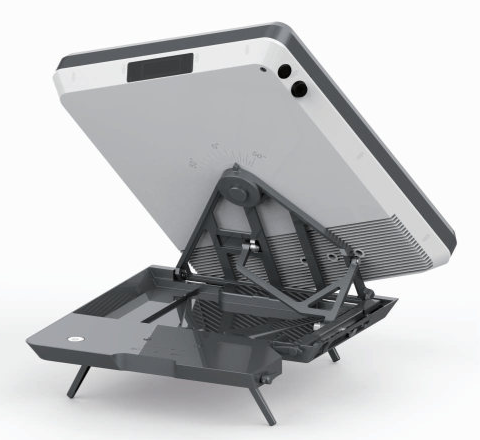
Flat Portable Satellite Terminal 0.35m Aperture Manual Portable Terminal
China Starwin Science & Technology Co., Ltd.
Multi-function Marine Monitoring Low-altitude Detection Radar Sea-air Boundary Ocean Dynamic Environment Measurement
Chengdu Dixin Technology Co., Ltd.