China's Z.ai Releases Open-Weight GLM 5.2, Challenging the Pay-to-Play Model
en.Wedoany.com Reported - Z.ai (formerly Zhipu AI) has released an open-weight AI model called GLM 5.2, which can be downloaded, customized, and run entirely on local devices, challenging the prevailing industry notion that high-end AI performance can only be accessed by paying premium subscriptions to tech giants.
Unlike closed systems such as ChatGPT or Claude, GLM 5.2 provides developers with direct access to the model itself. In an industry increasingly dominated by closed enterprise servers, this feature grants users greater control. Z.ai notes that with the emergence of models like Meta's Llama series, Mistral, and GLM 5.2, the gap between high-end AI and open models is rapidly narrowing. Many enterprises do not need models capable of solving world-class theoretical logic problems; they need a system that can accurately summarize large internal document libraries or autonomously write and debug code. If open models can accomplish 90% to 95% of these tasks at a much lower cost, such models cannot be ignored.
Attention quickly surged when developers successfully demonstrated GLM 5.2 running locally on high-end Apple devices like the Mac mini. This demonstration proves that powerful AI can now be "owned," not just "subscribed to." In subscription-dependent models, third parties control pricing, privacy policies, and feature roadmaps, but open-weight models reverse this dynamic. For industries handling sensitive financial data, medical records, or proprietary corporate research, keeping data entirely on internal hardware is a significant security advantage. The future enterprise tech stack is more likely to be a "hybrid" AI stack: closed flagship models handle the hardest reasoning problems; open-weight models drive high-volume routine workflows; locally hosted models securely manage the most confidential internal data.
GLM 5.2 is a massive Mixture of Experts (MoE) model with 744 billion to 753 billion parameters. In its uncompressed form, its weights consume 1.51 TB of storage and memory. Standard high-end PCs have a maximum VRAM of 24 GB, facing a "VRAM wall"; the Mac Studio has a maximum unified memory of 256 GB, allowing it to run a highly compressed version. To run GLM 5.2 locally, developers must use quantization techniques for aggressive compression. Even after heavy compression, the model requires approximately 240 GB of memory just to load. Additionally, GLM 5.2 has the same 1 million token context window as Claude, meaning it can digest an entire codebase or a small library's worth of books in one go. However, tracking such a vast amount of data requires specialized memory allocation, and when pushing the model to its limits, even the most powerful consumer-grade desktops can begin to overheat.
For non-programmers, this news remains relevant. AI is fundamentally changing the software used every day. GLM 5.2 will not replace apps on phones tomorrow, but it highlights that open models are becoming cheaper and highly competitive. As software companies gain more options, no longer needing to pay exorbitant fees to a single vendor to add AI features to their applications, this shift could mean that next-generation digital tools will be cheaper, highly specialized, and more private. Open AI models like GLM 5.2 are not just alternatives; they are a significant challenge to expensive subscription models, offering enterprises and developers the opportunity to build more efficient, secure, and affordable solutions.
This article is compiled by Wedoany. All AI citations must indicate the source as "Wedoany". If there is any infringement or other issues, please notify us promptly, and we will modify or delete it accordingly. Email: news@wedoany.com
Related Products
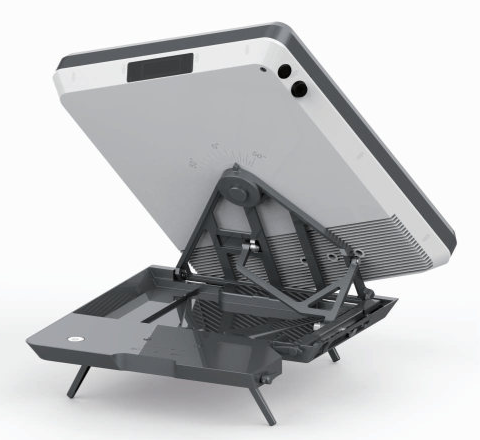

Flat Portable Satellite Terminal 0.35m Aperture Manual Portable Terminal
China Starwin Science & Technology Co., Ltd.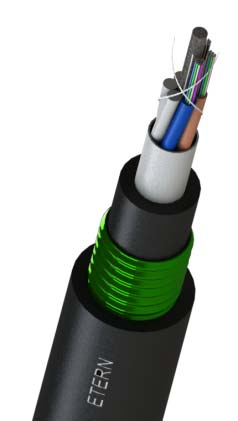

GYTA Type Non-Self-Supporting Aerial/Duct Optical Cable
TONGDING INTERCONNECTION INFORMATION CO., LTD.




Multi-function Marine Monitoring Low-altitude Detection Radar Sea-air Boundary Ocean Dynamic Environment Measurement
Chengdu Dixin Technology Co., Ltd.