en.Wedoany.com Reported - Amtrak provided an update in June on the East River Tunnel Rehabilitation Project, detailing the work completed since the project began over a year ago.
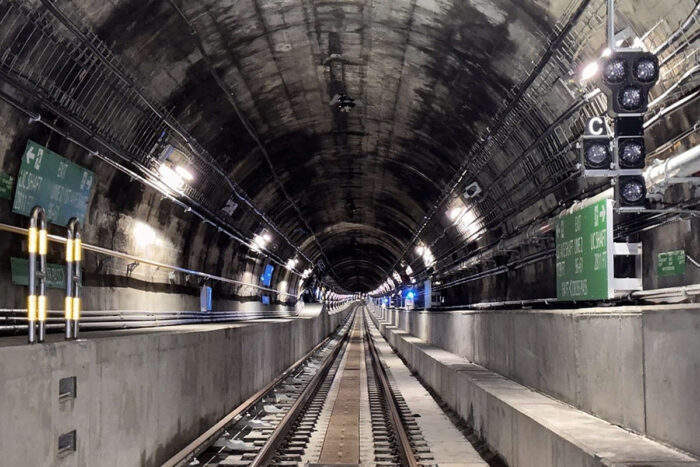
The first tunnel (Line 2) is scheduled to reopen in August, marking a key milestone after a year of extensive demolition and construction. The second tunnel (Line 1) will close later this year, and the overall project remains on track for completion by the end of 2027. The contractor stated that this full-tunnel closure approach is critical for safely identifying and addressing hidden issues that cannot be effectively resolved during overnight or weekend work.
The East River Tunnel Rehabilitation Project has entered its most critical phase. This tunnel is a vital link on the Northeast Corridor (NEC), used daily by hundreds of thousands of Amtrak, Long Island Rail Road (LIRR), and NJ TRANSIT passengers. The project involves a series of tasks ranging from complete demolition to rebuilding the tunnel from the inside out, and is considered one of the most complex infrastructure projects on the East Coast. Working within a century-old tunnel presents numerous challenges, many of which are only discovered once construction begins. Line 2 is planned to reopen in early August, completing the first phase and providing a stronger, safer, and more reliable infrastructure for the tunnel's next century of use.
After the shutdown began last summer, crews closed the tunnel and removed decades of old infrastructure, including 24,000 linear feet of running rail, 12,000 feet of third rail, 8,100 tons of ballast, and 8,000 ties. During the demolition phase, crews removed approximately 24,000 linear feet of side walls and hauled away about 20,000 cubic yards of concrete within the 3-mile-long tunnel. The demolition was particularly complex due to the concrete's age, high density, and complex composition. Crews used robotic demolition equipment and hydraulic rock splitters, which allow for precise work in tight spaces while keeping operators away from debris. After side wall removal and stripping the tunnel down to its concrete liner, crews discovered issues such as clogged drainage systems, aging conduits, and widespread water infiltration, confirming the need for a full reconstruction.
Following demolition, the project shifted to rebuilding the tunnel with modern infrastructure. Key upgrades include: new high and low side wall configurations to improve emergency egress and maintenance access, modern direct fixation track for better drainage and ride quality, a more effective drainage system, and new signaling, communications, and power systems. For safety improvements, the project introduces advanced fire and life safety systems, such as more extensive heat and smoke detection systems, improved communications systems, and clearer emergency path markings.
Maintaining reliable rail service on the other three tunnels that remained open during the closure of Line 2 was a top priority. Despite one tunnel being out of service, Amtrak, LIRR, and NJ TRANSIT operations remained near normal, thanks to close coordination with regional partners and the rapid response of Amtrak's pre-positioned teams. As Line 2 nears completion, train service is scheduled to resume in August, followed by a similar closure of Line 1 later this fall. Before Line 1 closes, Amtrak will complete infrastructure reinforcement work to maintain reliable service during the second phase.
Lessons learned from the Line 2 rehabilitation are already being applied to guide the implementation of the Line 1 work. By the time the project is completed at the end of next year, the East River Tunnel will be safer, more resilient, and ready to serve Amtrak, LIRR, and NJ TRANSIT passengers for the next century. Alongside other projects such as the Portal North Bridge, Connecticut River Bridge, and the B&P Tunnel Replacement Program, Amtrak is investing in a new era of rail service aimed at greater safety and reliability.
This article is compiled by Wedoany. All AI citations must indicate the source as "Wedoany". If there is any infringement or other issues, please notify us promptly, and we will modify or delete it accordingly. Email: news@wedoany.com