Brazil's NeoSpace Secures $18 Million in Funding, Launches Large Data Models
en.Wedoany.com Reported - Brazilian startup NeoSpace has launched a class of large data models designed to process non-textual data such as financial transactions, consumption records, and industrial information, which traditional language models struggle to analyze.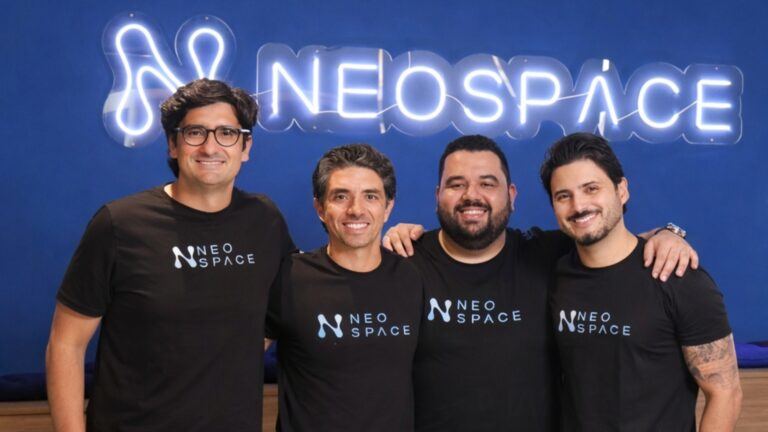
In recent years, significant capital has been invested in large language models (LLMs), architectures trained to understand and generate text, with representative products including ChatGPT, Gemini, and Claude. These systems have transformed artificial intelligence into accessible tools capable of writing reports, answering questions, and conversing with near-human fluency. However, within large enterprises such as banks, insurance companies, retailers, and telecom operators, decades of accumulated customer data remain difficult to leverage effectively. This issue stems from LLMs being designed to process words rather than fragmented data like transactions, tables, and time series.
Co-founded by Felipe Almeida, Bruno Pierobon, Gustavo Debs, and Thiago Teixeira, NeoSpace aims to address this pain point by training large data models (LDMs). The company gained attention after appearing on the main stage at NVIDIA GTC 2026 in March. Almeida stated that models used in daily operations are only suitable for textual information and struggle when different data types are introduced. Such models can write a report about a bank but cannot analyze millions of financial transactions to identify customer churn, purchasing behavior, or credit default risks.
Almeida previously ran enterprise software company Zup, which was sold to Itaú Bank in 2020 for approximately 575 million Brazilian reais. Through collaborations with large enterprises, he observed that digital transformation enabled companies to collect data on a massive scale, yet they still lacked the ability to convert it into decisions. Transactions like credit card purchases include attributes such as time, amount, location, payment method, installment count, merchant category, and purchase history. When multiplied by tens of millions of users over years of data, this exceeds the processing capacity of traditional analytical tools. According to Almeida, his model can detect changes even before they become visible in behavior, such as a customer who previously paid in full starting to opt for installment payments on recurring expenses, potentially signaling a shift in financial status. The technology has been tested in sectors including banking, insurance, telecommunications, aviation, and oil and gas. Telecom companies can use it to predict customer churn, airlines can optimize routes and fuel consumption, and oil and gas groups can identify high-success-rate areas before drilling. Almeida revealed that performance improvements range from 8% to 10% in some scenarios and up to 30% in others, though these figures have not been independently audited.
NeoSpace's long-term partnership with Itaú Bank has formed a crucial foundation for its early development. As one of Zup's clients, Itaú, after acquiring Zup, continued to lead NeoSpace's $18 million funding round, with $15 million coming directly from the institution. This investment is viewed as an industrial validation rather than a traditional financial bet, as the bank began testing the technology before committing capital.
NeoSpace claims to have built an infrastructure consisting of 1,200 NVIDIA B200 GPUs (one of the most advanced commercially available chips), reportedly making the company one of the first entities globally to acquire this chip model at scale. However, all these GPUs are located in Sydney, Australia, not in Brazil. The location was chosen because import taxes on GPUs can increase hardware costs by 40%, and Sydney hosts one of the few data centers capable of supporting next-generation chips with liquid cooling, a key technology for efficient heat dissipation. Almeida noted that this decision highlights a frequently overlooked bottleneck in the AI race: hardware access and related tax policies.
NeoSpace plans to target the U.S. market in its next phase and will establish local commercial and technical teams through a new funding round backed by growth funds and venture capital. Almeida believes that operating an international business remotely from Brazil is impractical and that the company needs to operate locally in the U.S. Drawing on the global expansion model of Israeli companies, NeoSpace intends to position itself as a global enterprise. Currently, most industry resources are concentrated on generative models and conversational agents, but NeoSpace is betting that the next value cycle lies in systems capable of understanding enterprise data and translating it into operational decisions. Large language models have transformed content creation, while data models may change core decision-making processes such as pricing, credit approval, risk control, customer retention, and investment planning. Almeida stated that no other company is currently doing exactly the same business, but he expects this situation will not last long. Therefore, the company is accelerating its accumulation of clients and use cases to gain an advantage before market competition intensifies.
This article is compiled by Wedoany. All AI citations must indicate the source as "Wedoany". If there is any infringement or other issues, please notify us promptly, and we will modify or delete it accordingly. Email: news@wedoany.com
Related Products



Comprehensive Mining Automation Control System
Beijing Tianma Intelligent Control Technology Co., Ltd.
20 Inch 1600*900 Full HD 60Hz TFT LED Monitor with VGA and DP Interfaces for Desktop Computers-Business Use
Guangzhou Zanying Optoelectronics Technology Co., Ltd.
TWP16 P-Band Tropospheric Wind Profile Radar
China Huayun Meteorological Technology Group Co., Ltd.

G.652.D Wavelength-extended Non-dispersion Shifted Single-mode Optical Fiber
HONGAN GROUP CO., LTD.
Multi-function Marine Monitoring Low-altitude Detection Radar Sea-air Boundary Ocean Dynamic Environment Measurement
Chengdu Dixin Technology Co., Ltd.

GYTA Type Non-Self-Supporting Aerial/Duct Optical Cable
TONGDING INTERCONNECTION INFORMATION CO., LTD.
Industrial and Commercial Point-Type Gas Detector
Jinan Benan Technology Development Co., Ltd.