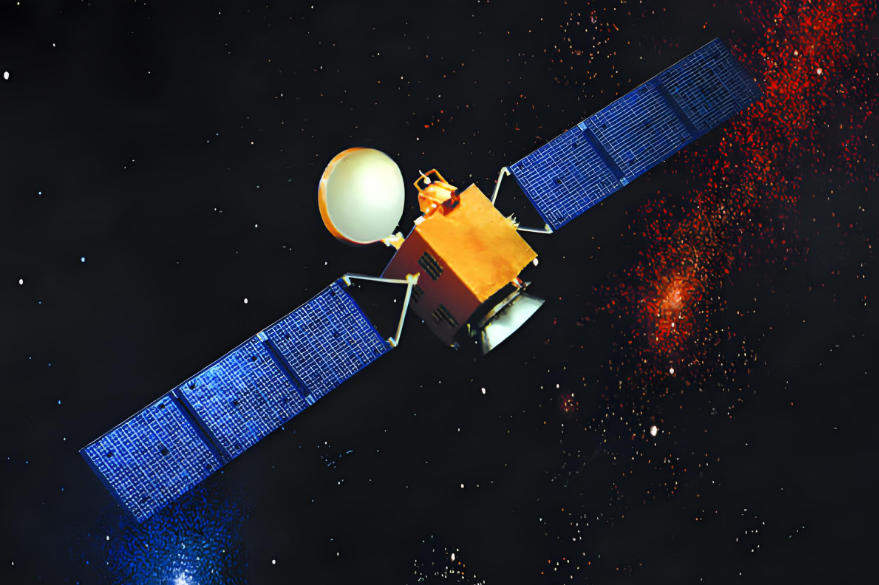
U.S. PlanetiQ Awarded NASA Extended Contract to Provide Polarimetric Radio Occultation Data
en.Wedoany.com Reported - PlanetiQ has been awarded an extended contract by the National Aeronautics and Space Administration (NASA) to provide high signal-to-noise ratio GNSS polarimetric radio occultation (PRO) data to government researchers through the Commercial SmallSat Data Acquisition (CSDA) program, supporting weather, precipitation, and Earth system science applications.
This contract expands PlanetiQ's product portfolio under the CSDA program, adding high signal-to-noise ratio GNSS polarimetric radio occultation data, which will be supplied alongside ionospheric scintillation, ionospheric total electron content, and high signal-to-noise ratio GNSS radio occultation data previously offered under the CSDA program. The expanded data products will enable government researchers to access advanced GNSS observations that help improve understanding of precipitation processes, atmospheric structure, and Earth system dynamics.
Polarimetric radio occultation (PRO) measurements have been proven to characterize precipitation, detect rain and snow structures, identify melting layers, and observe changes in storm intensity. PlanetiQ uses unique receivers to collect high signal-to-noise ratio (SNR) data, with high SNR measurements being particularly critical for precipitation applications, as increased signal-to-noise ratio enhances detection sensitivity to light precipitation and partial cloud structures.
"By providing polarimetric radio occultation data through the CSDA program, NASA enables the broader research community to explore new applications of these observations," said Dr. E. Robert Kursinski, Chief Scientist at PlanetiQ. As more researchers gain access to high SNR PRO data, both scientific understanding and potential operational applications of this technology in precipitation and severe storm monitoring are expected to expand.
According to NASA's statement, leveraging commercial data demonstrates the agency's commitment to robust public-private partnerships to expand scientific insights while reducing costs and accelerating data delivery to researchers and decision-makers. PlanetiQ's GNSS-PRO measurements utilize high-speed, high signal-to-noise ratio receivers, enhancing detection capabilities for precipitation characteristics and cloud structures. These measurements serve not only atmospheric science research but are also critical for operational applications involving rainfall characterization, snow detection, storm monitoring, and weather forecasting. In 2025, PlanetiQ received the largest satellite meteorological data contract in the history of the National Oceanic and Atmospheric Administration (NOAA), valued at $24.3 million.
This article is compiled by Wedoany. All AI citations must indicate the source as "Wedoany". If there is any infringement or other issues, please notify us promptly, and we will modify or delete it accordingly. Email: news@wedoany.com
Related Products


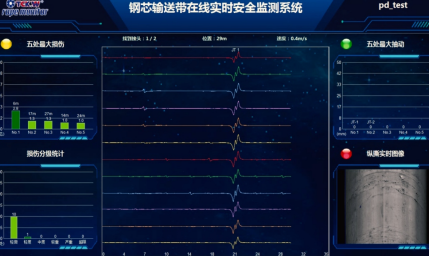
Conveyor Belt Intelligent Monitoring System
LUO YANG WIRE ROPE INSPECTION TECHNOLOGY CO., LTD.
Industrial and Commercial Point-Type Gas Detector
Jinan Benan Technology Development Co., Ltd.
Comprehensive Mining Automation Control System
Beijing Tianma Intelligent Control Technology Co., Ltd.


Mine Explosion-proof and Intrinsically Safe Industrial Ethernet Ring Network (10 Gigabit/Gigabit)
Chongqing Mas Sci&Tech Co., Ltd.

G.652.D Wavelength-extended Non-dispersion Shifted Single-mode Optical Fiber
HONGAN GROUP CO., LTD.

Automatic Aiming Laser Remote Obstacle Removal Robot
Pinggao Group Weihai High-Voltage Apparatus Co., Ltd.