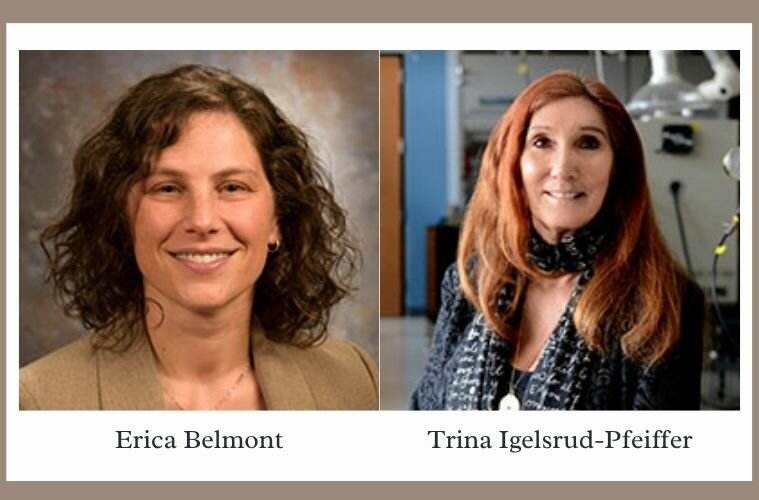
en.Wedoany.com Reported - The University of Wyoming has received a total of $500,000 from the U.S. Department of Energy (DOE) Office of Fossil Energy and Carbon Management to study thermal drying technology for processing bottom ash from coal-fired power plants. The research, co-led by mechanical engineering professor Erica Belmont and Trina Igelsrud-Pfeiffer, director of the university's Center for Carbon Capture and Conversion (CCCC), aims to explore whether thermal drying can more efficiently convert bottom ash into a dewatered solid stream and assess subsequent utilization possibilities. The DOE is contributing $400,000, with $100,000 in matching funds.
Among the waste streams generated by coal-fired power plants, fly ash receives significant attention, while bottom ash—the heavy residue that settles at the bottom after combustion—has long been handled using wet slurry systems, which continuously consume large amounts of water and generate wastewater. The thermal drying method no longer uses water to transport bottom ash; instead, it dewaters the ash through heating, and the recovered condensate can be reused within the plant, including for carbon capture, utilization, and storage (CCUS) systems. The dried ash is easier to handle, store, and process downstream, particularly offering a new pathway for recovering critical minerals from coal ash.
Coal ash contains trace concentrations of rare earth elements and materials on the federal list of critical minerals, including vanadium, which has potential in Wyoming's geology. Economically recovering these materials is challenging, partly due to the difficulty of handling wet ash. The Wyoming team believes that removing moisture early in the processing chain could make mineral recovery more scalable. Over the years, the CCCC has built relevant research platforms, including a coal conversion product field demonstration plant near Gillette, which processes 11 tons of coal per day and tests technologies for extracting rare earth elements from various coal waste streams.
This research is one of nine projects selected under DOE Funding Opportunity DE-FOA-0003606, focusing on pre-front-end engineering design (pre-FEED) studies for existing coal and natural gas infrastructure. Other selected projects include: a Tennessee company testing the use of waste heat evaporation to achieve zero liquid discharge from flue gas desulfurization wastewater; an East Kentucky cooperative evaluating the impact of natural gas co-firing on air pollution control systems; and an Indiana plant exploring natural gas co-firing retrofits. All projects are early-stage feasibility studies, and the Wyoming team will assess the feasibility, cost, and interaction of thermal drying technology with CCUS readiness.
This article is compiled by Wedoany. All AI citations must indicate the source as "Wedoany". If there is any infringement or other issues, please notify us promptly, and we will modify or delete it accordingly. Email: news@wedoany.com