en.Wedoany.com Reported - Kristoffer Stokes and Philip Costanzo of Geisys Ventures have developed a patented technology platform called D-Glue, designed to simplify manufacturing and disassembly processes.
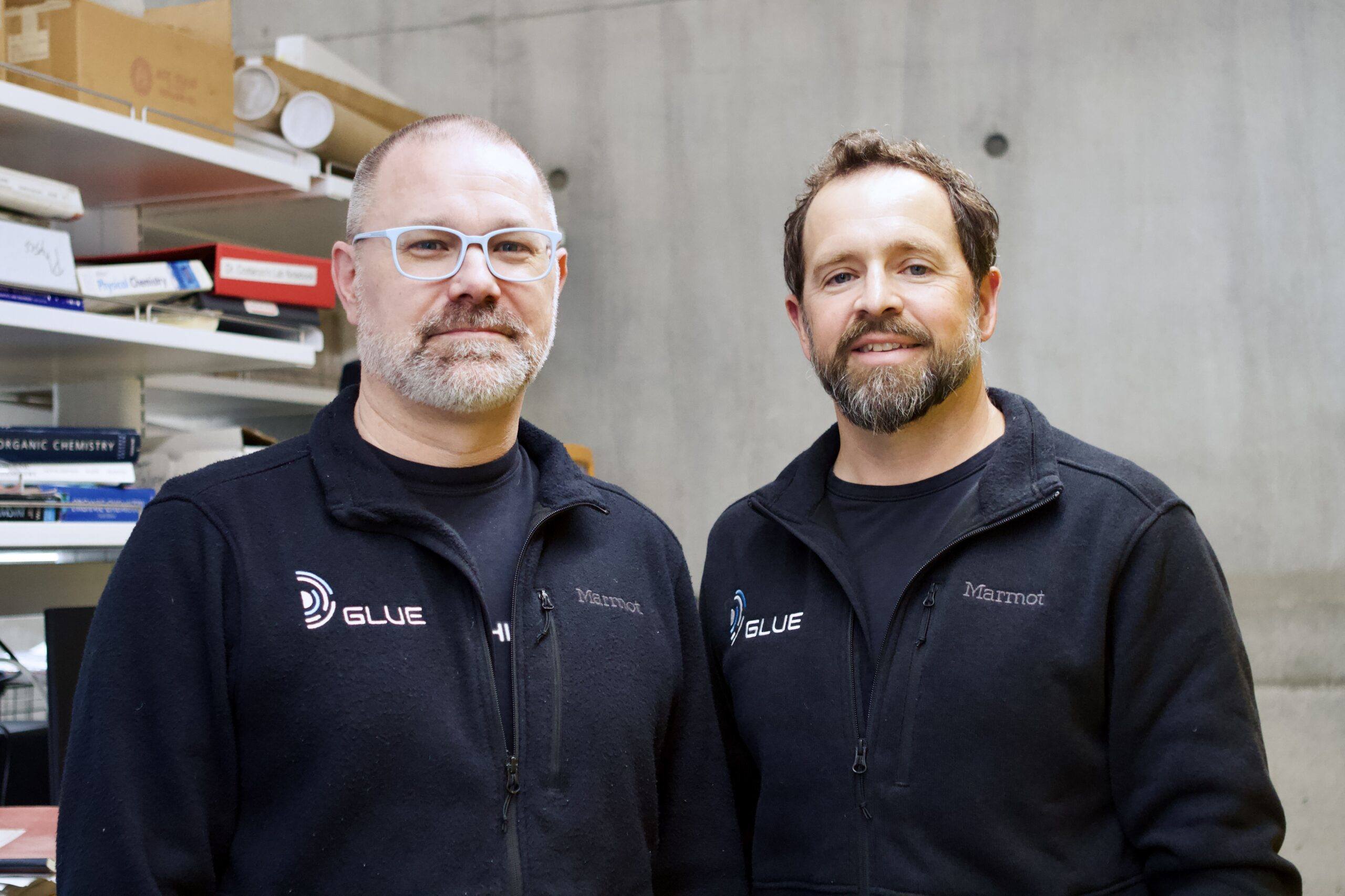
Six years ago, Kristoffer Stokes, founder and chief scientist of Geisys Ventures and co-founder of D-Glue, stated that the circular economy does not exist because people only consider the initial life stage of products. Manufacturers face no substantial penalties for producing products that are nearly impossible to disassemble at the end of their life cycle, so they typically do not consider this issue. Stokes believes adhesives are the primary barrier to a truly circular economy. He contacted his old friend and colleague, Philip Costanzo, chief technology officer and co-founder of D-Glue and a chemistry professor at California Polytechnic State University, to jointly develop the new D-Glue material technology to address this problem.
In a recent interview with Design World, Stokes said that glue makes manufacturing easier but makes end-of-life more difficult. The origin of D-Glue dates back to Stokes' tenure as global product development director at Bemis Associates, a Massachusetts-based adhesive company, when a major client repeatedly requested a debondable adhesive. This challenge stayed with him. When Stokes coincidentally came across Costanzo's research on self-healing coatings, he called Costanzo. Costanzo recalled the conversation, initially not understanding why one would want an adhesive that both bonds and separates. Through that conversation, Geisys Ventures was founded in 2020, and D-Glue was born.
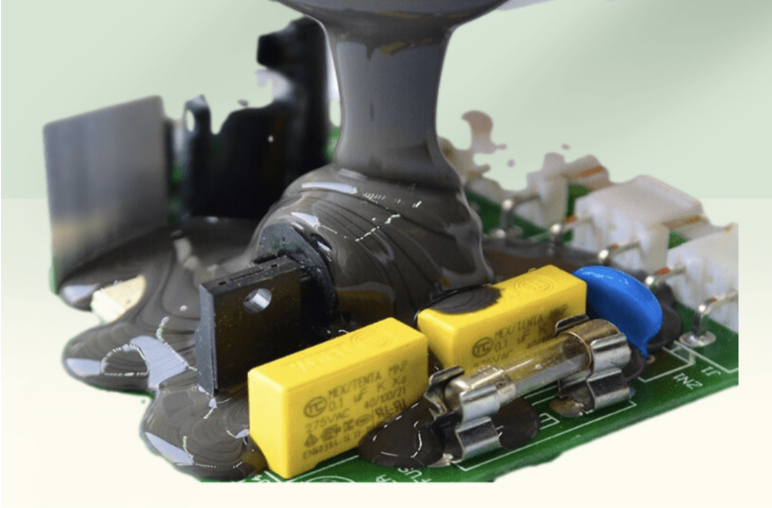
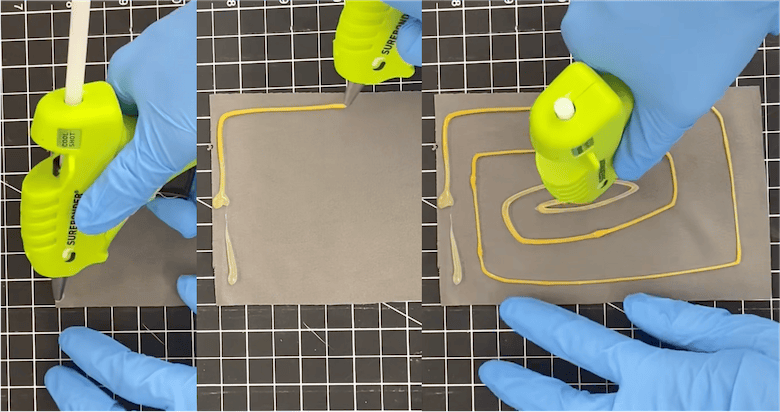
D-Glue can be formulated in different physical forms, with the latest being a glue stick. This adhesive relies on a chemical exchange mechanism that separates the bonding window from the debonding window. The material is used like a traditional adhesive; after two substrates are pressed together, the assembly is heated to approximately 100°C, at which temperature weaker bonds break and reform into stronger bonds. The bond does not release until a significantly higher temperature is reached, typically in the range of 150 to 180°C. Costanzo stated that most things do not experience these temperatures during their service life, and under normal use conditions, the bond is effectively permanent. When a higher temperature is applied, the bond separates cleanly. The technology is also tunable; debonding can be achieved at lower temperatures over a longer period or at higher temperatures more quickly. Costanzo's team has also experimented with patterned bonding, selectively applying the adhesive so that components fail at controlled, predictable locations when force is applied.
Stokes articulated D-Glue's value proposition around three stages of the product lifecycle: rework, repair, and reuse. Rework addresses manufacturing pain points; when high-value components bonded together at the end of a process have issues, using a debondable adhesive allows the assembly to be reopened rather than scrapped. In terms of repair, traditional adhesives make it nearly impossible to access the interior without destroying the product. For reuse, if the adhesive separates cleanly at end-of-life, the underlying components can be recycled.
The team is focusing on several initial markets. Consumer electronics is the most obvious near-term application, given the value of materials in products and the current difficulty of recycling. Textiles and apparel are another key market, particularly for bonded structures, logo appliqués, seam tapes, waterproofing, embedded electronic wearables, and design embellishments. D-Glue recently appeared in Vogue Business and Sportstextiles for its textile applications that facilitate disassembly and enable a more circular economy. Energy represents a longer-term opportunity; Costanzo cited wind turbine blades as an example of the scale of the problem, as these blades are often buried underground after decommissioning. Currently, D-Glue's material class is polyurethane-based, but the team is collaborating with manufacturers of other adhesive classes, including acrylics, and believes epoxy-based variants have potential for composite material applications. D-Glue can also be added as an additive to adhesives already on the market.
Stokes frames D-Glue within the concept of "design for debonding," drawing on the Design for Disassembly (DfD) concept. D-Glue is currently at pilot scale and is working with development partners across different application areas; it is not yet a commercial product. Stokes stated that their goal is to shorten the typical five-to-ten-year R&D cycle so that the product can reach the market and begin to have a positive impact.
This article is compiled by Wedoany. All AI citations must indicate the source as "Wedoany". If there is any infringement or other issues, please notify us promptly, and we will modify or delete it accordingly. Email: news@wedoany.com