Tanzania LNG Project Invests $42 Billion, Aiming for Production by 2030
en.Wedoany.com Reported - Tanzania's oil and gas industry is uniformly regulated by the Ministry of Energy, with the Energy and Water Utilities Regulatory Authority (EWURA) responsible for technical and economic regulation, and the Petroleum Upstream Regulatory Authority (PURA) overseeing upstream business approvals. In September 2023, President Hassan replaced the Minister of Energy to accelerate the advancement of natural gas projects. The state-owned Tanzania Petroleum Development Corporation (TPDC) participates in upstream extraction on behalf of the government, while its subsidiaries TANOIL and the Tanzania Gas Company (GACCO) handle midstream and downstream operations. The government encourages major international oil companies to participate in natural gas project development. Currently, Tanzania has three gas fields in production, with total reserves of approximately 7.6 trillion cubic feet and a daily output of about 250 million cubic feet, primarily used for domestic power generation.
Since 2010, significant natural gas discoveries have been made in the deepwater areas off the coast of Lindi and Mtwara in southern Tanzania, with total reserves of approximately 49.1 trillion cubic feet, sufficient to position the country as a natural gas supply hub in Africa. The government has incorporated natural gas project development into its third five-year plan and, leveraging its coastal geographical advantage, is actively participating in neighboring countries' oil pipeline projects.
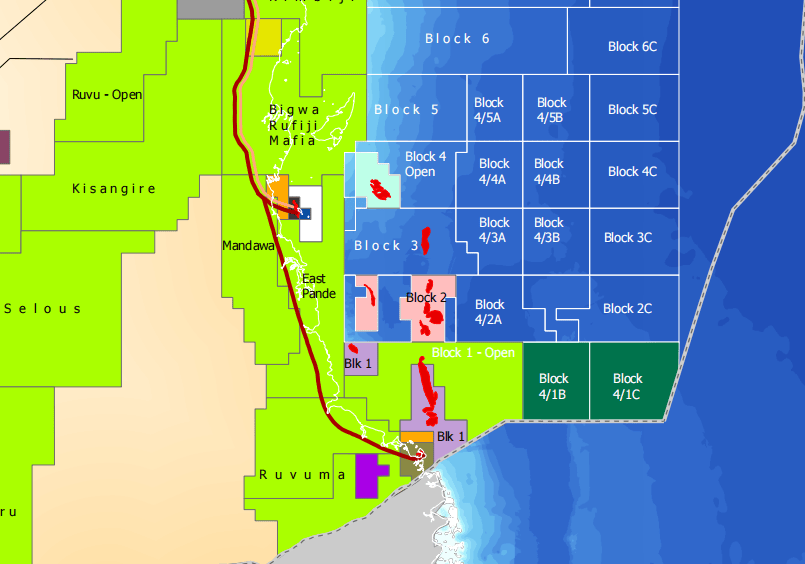
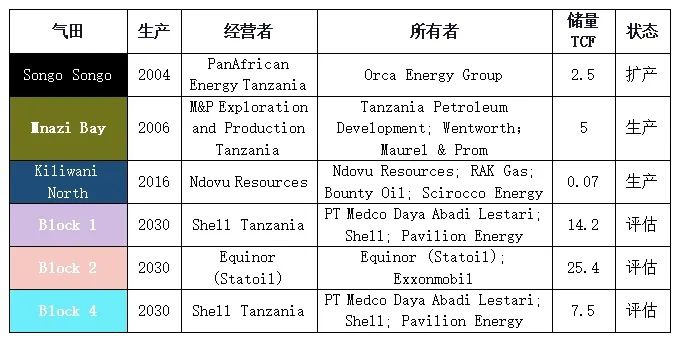
Tanzania has a total of 95 exploration wells in coastal, deepwater, and inland areas, with 11 Production Sharing Agreements (PSAs) currently in effect, involving nine companies including Swala, Dodsal, Ndovu Resources, Shell, Equinor, and OCTANT. Following the discovery of natural gas resources, the government is accelerating the promotion of liquefied natural gas (LNG) exploration and development. The Tanzania LNG Project (TLNGP), covering Blocks 1, 2, and 4, is in the promotion phase; exploration work on five blocks owned by TPDC is underway, with CNOOC participating in some activities. The Tanzanian government plans to conduct a fifth round of oil and gas block bidding, potentially opening at least eight offshore blocks. Oil and gas resources also exist on the east coast of the Zanzibar archipelago. The Zanzibar government launched its first bidding round on March 20, 2024, opening eight offshore blocks, with a bid submission deadline of September 16, 2024.
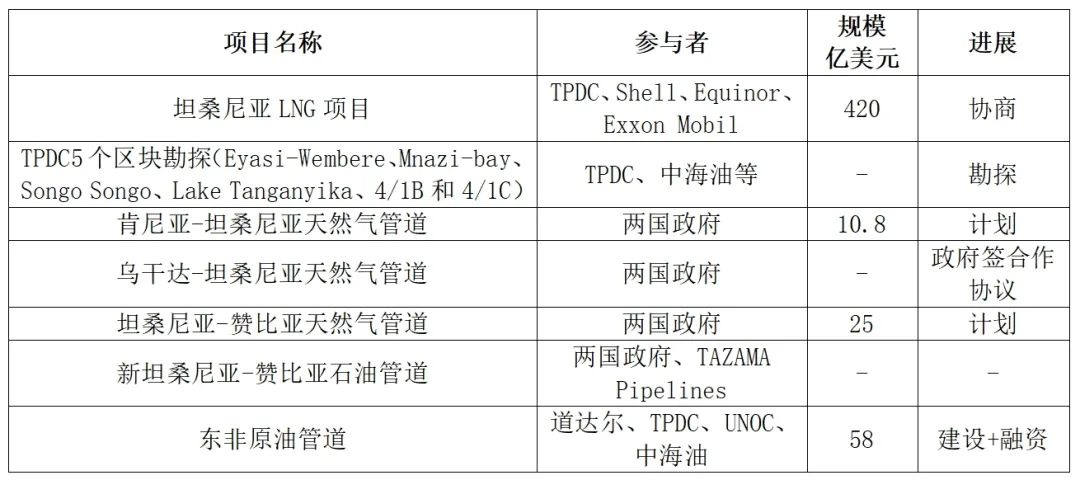
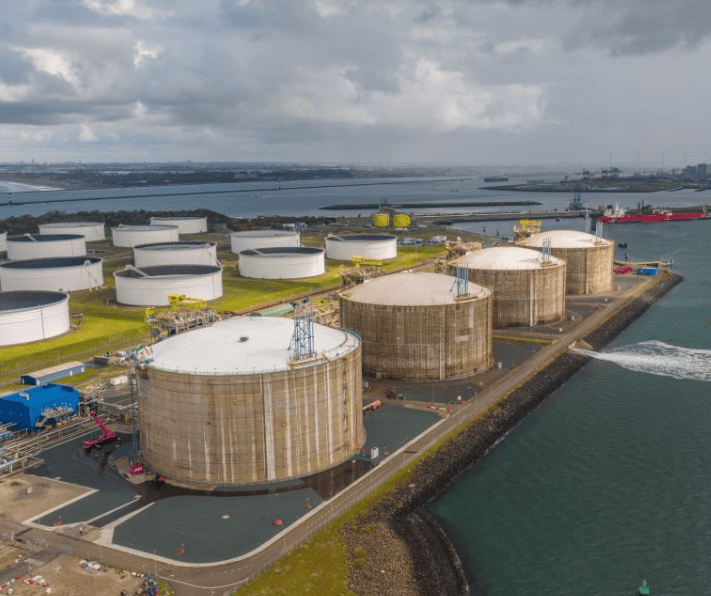
The Tanzania LNG Project (TLNGP) is being advanced by TPDC in collaboration with companies such as Shell, Equinor, and Exxon Mobil, involving the East Coast gas fields of Block 1, Block 2, and Block 4, with reserves of approximately 47.1 trillion cubic feet. The project includes deepwater drilling wells, subsea pipelines, an LNG processing plant, and terminal loading and storage facilities. It is expected to have an annual production capacity of 10 million tons, a production lifespan of 30 years, and a total investment of approximately $42 billion. In 2022, the government signed a memorandum of understanding with private developers, and in 2023, a Host Government Agreement (HGA) was signed. The project is currently still in the negotiation phase. All parties hope to reach a final investment decision by 2025, followed by a construction period of approximately 4 to 5 years, with the project potentially commencing production as early as 2030. During the construction period, Tanzania's public debt could increase by $4.2 to $6.3 billion, and the current account may deteriorate. However, once production begins, the government can generate revenue through concession fees, taxes, and dividends, and drive the development of upstream and downstream industrial chains, potentially contributing over $7 billion annually to GDP, nearly 10% of GDP.
The East African Crude Oil Pipeline (EACOP) project is designed to transport crude oil produced from the Tilenga and Kingfisher oil fields in eastern Lake Albert, Uganda, to the port of Tanga in Tanzania. The project is valued at approximately $5.8 billion and is currently under construction, with Chinese enterprises such as China Petroleum Pipeline Engineering Co., Ltd. and Daqing Oilfield participating. The project plans to finance 46.6% of its cost through debt. However, due to significant ESG risks, over 260 institutions have opposed it, filing multiple lawsuits against the two governments and TotalEnergies. Although TotalEnergies has taken countermeasures, the controversy remains unresolved. To date, 27 banks and 29 insurance companies have stated they will not support the project, creating considerable uncertainty regarding future financing.
The East African Crude Oil Pipeline project is expected to generate substantial revenue and promote economic development in Uganda and Tanzania. For Uganda, the total investment during the construction period of the oil fields and pipeline is estimated at $15 billion, with potential gains of approximately $6 billion through employment, local goods and services, and technology transfer. During the operational phase, Uganda could earn nearly $70 billion from concession fees, taxes, and dividends, averaging $2.8 billion annually. For Tanzania, based on its equity share, it needs to invest $465 million. The construction period is expected to generate about $3 billion in revenue, while the operational phase could contribute approximately $6 billion in revenue, averaging $240 million annually.
This article is compiled by Wedoany. All AI citations must indicate the source as "Wedoany". If there is any infringement or other issues, please notify us promptly, and we will modify or delete it accordingly. Email: news@wedoany.com
Related Products


Hydraulic Turbine Genset
Dongfang Electric Corporation Dongfang Electric Machinery Co., Ltd.
Electromagnetic Fluid Seawater Floating Oil Separation and Recover Equipment
Huate Magnet Group Co., Ltd.
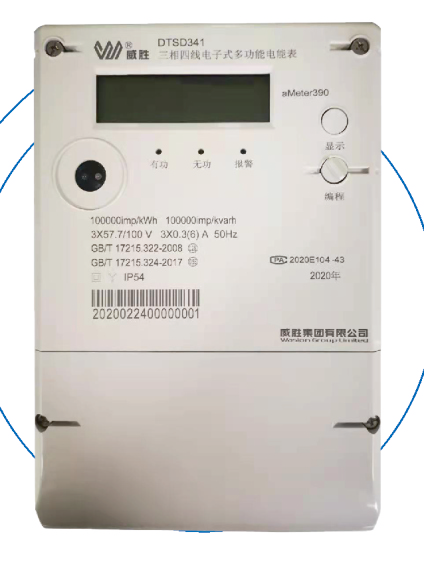
Overseas IEC Gateway Energy Meter - DTSD341/DSSD331-aMeter390
Wasion Group Limited Co., Ltd.
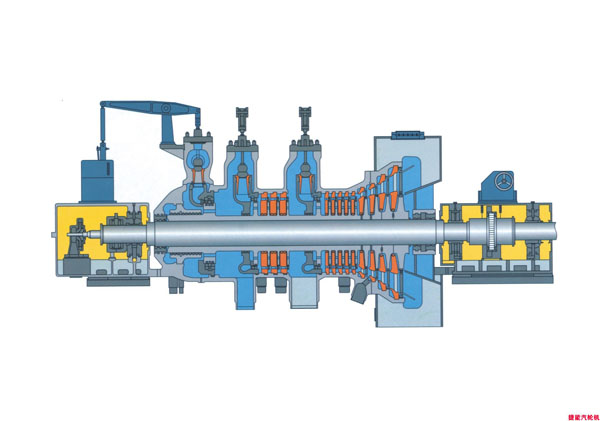
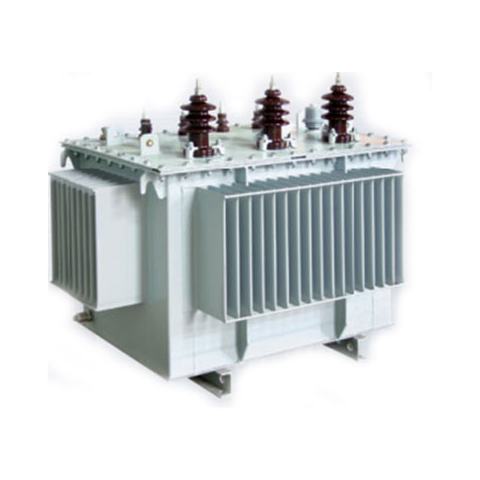
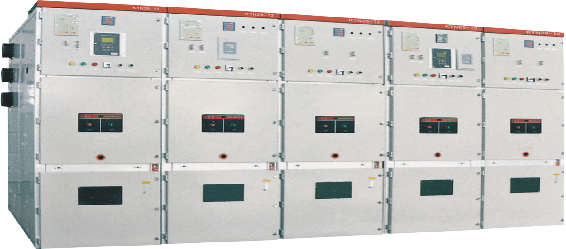
KYN28-12/24 Indoor High-Voltage Metal-Clad Removable Switchgear
Shenzhen Zhaoyang Hui Technology Co., Ltd.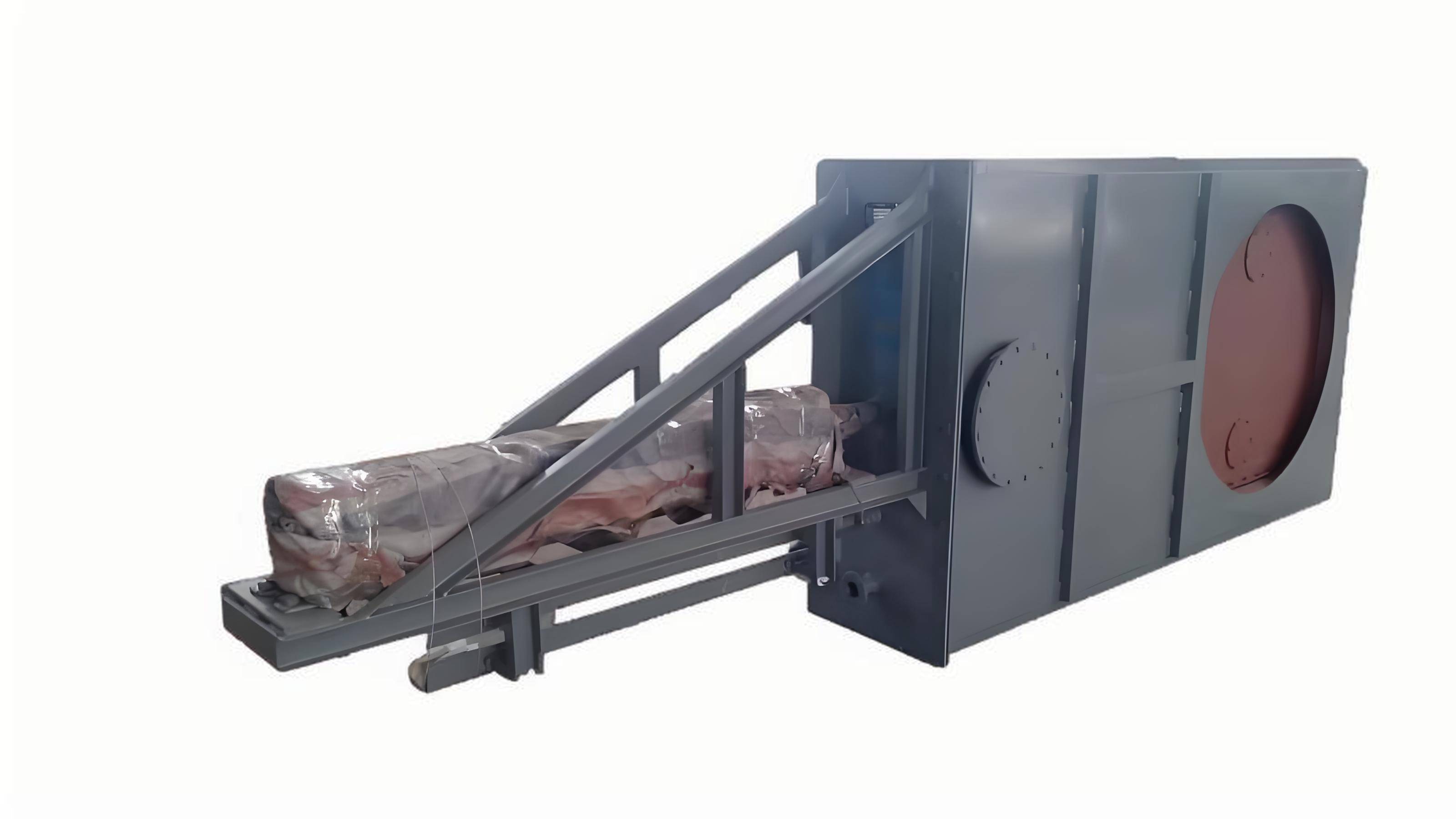
Double-slide Triple-sealed Hot Air Isolation Door
Xi'an Yingchuan Electric Power Equipment Co., Ltd.