Heidelberg Materials France Completes Clichy Plant Renovation with Annual Capacity Exceeding 100,000 Cubic Meters
en.Wedoany.com Reported - Heidelberg Materials has completed a major renovation of its Clichy batching plant in France, achieving an annual capacity of over 100,000 cubic meters and implementing resource loops such as rainwater harvesting and cement slurry water recycling. The project, initiated in 2020, represents the most significant upgrade since the plant's establishment in 1980. Bruno Pillon, President of Heidelberg Materials France, stated that the shared goal is to successfully balance industrial activities with the quality of the living environment. This plant, dubbed the "young fifty-year-old," has unveiled a new look by constructing a 47-meter-long green wall and a 110-meter-long, 5.50-meter-high mural, while enhancing cladding to limit noise and dust emissions. Its location along the Seine River is also a major advantage, as all raw materials can be transported by waterway. In collaboration with Haropa (the Le Havre-Rouen-Paris port alliance), a fully automated new cement unloading system has been developed to promote more environmentally friendly logistics.
Currently, the Clichy plant is a key link in the local building supply chain, with an annual capacity exceeding 100,000 cubic meters of concrete, supporting construction, infrastructure, and urban development projects in western Paris. The facility is equipped with machinery that balances efficiency, flexibility, and operational safety: five primary aggregate bins storing approximately 2,250 tons of material, a 54-meter-long extraction tunnel located below the Seine water level, and a 650-ton secondary storage area optimize the production process. Six cement silos—three with a capacity of 300 tons, two of 100 tons, and one of 60 tons—total a capacity of 1,160 tons. The plant also features a production line and a 3-cubic-meter double-door mixer capable of alternately loading two concrete mixer trucks. The plant has developed 1,250 mix designs, including standard and high-performance concrete, as well as specific solutions for diaphragm walls, shotcrete, decorative concrete, and pervious concrete. Bruno Pillon noted that more sustainable construction does not mean concrete-free buildings, and low-carbon footprint concrete adapted to ecological challenges also represents an economic advantage, as it makes construction budget-friendly.
After completing multiple modernization upgrades, the Clichy site has entered a new phase of enhancing environmental performance. All rainwater is collected, stored, and reused in industrial processes. Two 150-cubic-meter basins manage cement slurry water and clear water. Water that has come into contact with concrete is treated by a recovery machine, using a screw conveyor to separate aggregates from water containing cement particles. Cement slurry water is directed to a dedicated basin and processed by a high-pressure filter sludge press with a maximum pressure of up to 150 bar. The clarified water is reused for concrete production and equipment cleaning, while the dewatered sludge is pressed into cakes and transported to the Heidelberg Materials cement plant in Couvrot for recycling. All cement silos and mixers are equipped with filtration systems to capture dust emissions. The site has joined the Haropa Port Improvement Charter (Charte d’Amélioration des Ports d’Haropa) to promote more sustainable and environmentally integrated port logistics practices. Bruno Pillon summarized the site's mission with the phrase "global problems, local solutions": providing concrete answers to major challenges in future construction at a regional level, while demonstrating that industry and cities are not in opposition. The plant represents an investment of 4 million euros, with an annual capacity exceeding 100,000 cubic meters, 1,250 concrete mix designs, a production line equipped with a 3-cubic-meter double-door mixer, five primary aggregate bins (2,250 tons), a 650-ton secondary storage area, six cement silos (total capacity 1,160 tons, including three of 300 tons, two of 100 tons, and one of 60 tons), two 150-cubic-meter reservoirs, a latest-generation sludge filter press, and a 54-meter extraction tunnel located below the Seine water level.
This article is compiled by Wedoany. All AI citations must indicate the source as "Wedoany". If there is any infringement or other issues, please notify us promptly, and we will modify or delete it accordingly. Email: news@wedoany.com
Related Products

West China Xiamen Hospital of Sichuan University
Wuhan Huakang Century Clean Technology Co., Ltd.
CITIC Heavy Industries Tunneling Equipment Tunnel Engineering Shield Machine
CITIC Heavy Industries Co., Ltd.
Ultra-Pure Ferrite Stainless Steel Products
Gansu JISCO Group Hongxing Iron and Steel Co., Ltd.
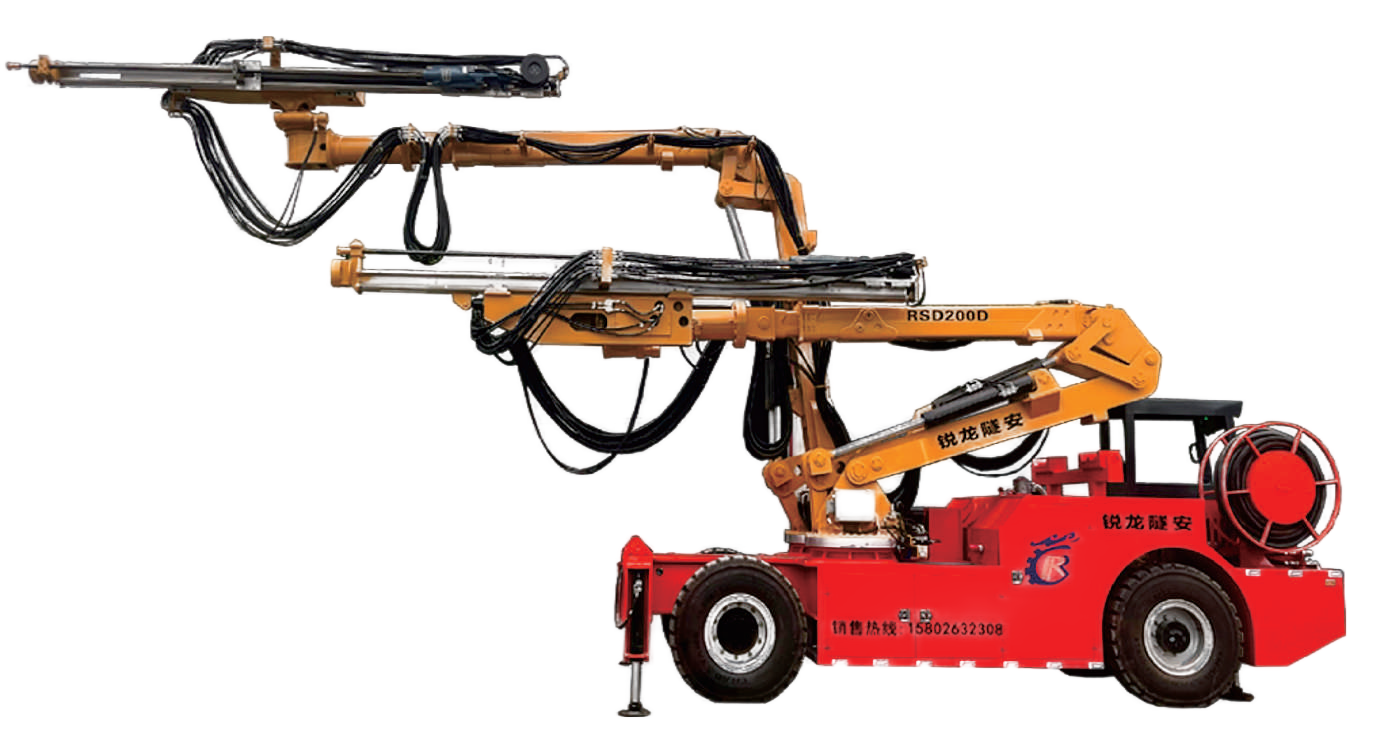
Dual-curved Arm Rock Drilling Trolley RSD200D
Chengdu Ruilong Machinery Manufacturing Co., Ltd.