French VeriQloud Expands Post-Quantum Data Security Solutions to North American Market
en.Wedoany.com Reported - VeriQloud, a post-quantum data security company based in Paris, France, is expanding its Qasmat data security solution to the North American market to address the increasingly urgent threats facing existing encryption methods. The company offers solutions to critical vulnerabilities in current public-key encryption (such as RSA). Industry experts predict that powerful quantum computers could crack such encryption within five to ten years. VeriQloud provides protection for data at rest, data in transit, and data in use, focusing on proactive security defenses for a future where quantum computing becomes readily accessible. Didier Guignard, Head of North American Business and Research & Development at VeriQloud, stated that quantum computers will become high-performance processing units accessible via the cloud, making it crucial to ensure data security during transmission and remote storage.
VeriQloud is leveraging its Qasmat solution to address potential threats to data at rest. Unlike traditional encryption that relies on mathematical complexity, Qasmat proactively reduces risk by splitting data into multiple "shares" before encryption and distributing these fragments across different storage locations. This strategy is designed to withstand the processing power of quantum computers expected to mature within the next five to ten years. Guignard explained that when a third party attempts to access the original data, the data no longer exists intact, as it has been divided into shares and stored in multiple locations. This distributed approach buys critical time for security responses; any unauthorized access to a single storage point triggers an alert, allowing intervention before the complete data can be reassembled. The number of shares required to reconstruct the original data is customizable by the client, providing a configurable level of security. Instead of relying on potentially vulnerable encryption keys, Qasmat focuses on physical distribution and access control, creating a security barrier independent of algorithmic strength.
Given the growing threat of "Harvest Now, Decrypt Later" attacks—where encrypted data is intercepted and stored, awaiting decryption when quantum computers become powerful enough—this data fragmentation approach is particularly critical. By splitting data, VeriQloud renders intercepted fragments useless without a sufficient number of shares. Guignard emphasized that the higher the data protection requirements, the more shares are generated to prevent the reconstruction of the original data. This strategy positions VeriQloud as a key player in post-quantum data security, offering concrete solutions to this rapidly evolving challenge.
This article is compiled by Wedoany. All AI citations must indicate the source as "Wedoany". If there is any infringement or other issues, please notify us promptly, and we will modify or delete it accordingly. Email: news@wedoany.com
Related Products



Mine Explosion-proof and Intrinsically Safe Industrial Ethernet Ring Network (10 Gigabit/Gigabit)
Chongqing Mas Sci&Tech Co., Ltd.

MUX Series Communication Interface Device for Security and Stability Control System
Nanjing NR Electric Co., Ltd.
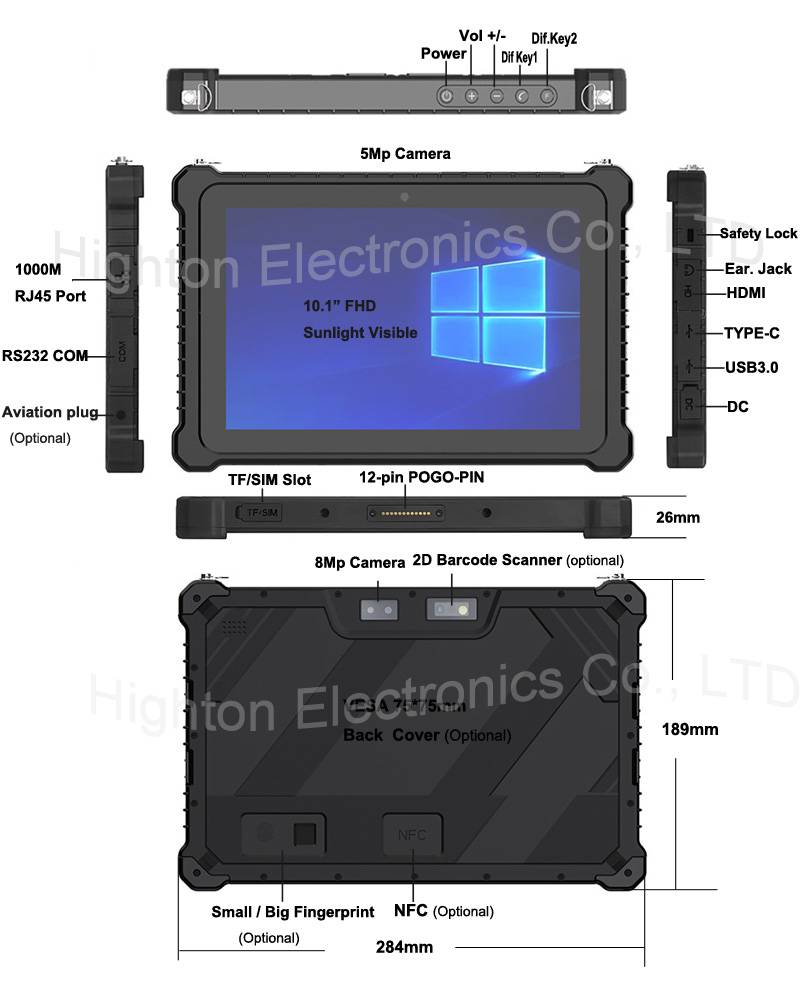
Hot Selling 10 Inch Intel N5100 I5 I7 FHD 8 +128GB 16+256GB Win10 Pro Win11 Pro 4G 5G Rugged Tablet PC Pad with NFC Barcode
Highton Electronics Co., Ltd.
20 Inch 1600*900 Full HD 60Hz TFT LED Monitor with VGA and DP Interfaces for Desktop Computers-Business Use
Guangzhou Zanying Optoelectronics Technology Co., Ltd.
GYTA Type Non-Self-Supporting Aerial/Duct Optical Cable
TONGDING INTERCONNECTION INFORMATION CO., LTD.