Microsoft transforms Windows 11 into an AI operating system
en.Wedoany.com Reported - Microsoft is deeply integrating artificial intelligence into its Windows 11 operating system. The company recently demonstrated how AI models and agents will enhance the intelligence of the OS, enabling users to interact with it through natural language and intent, rather than just through chatbots like ChatGPT or Gemini.
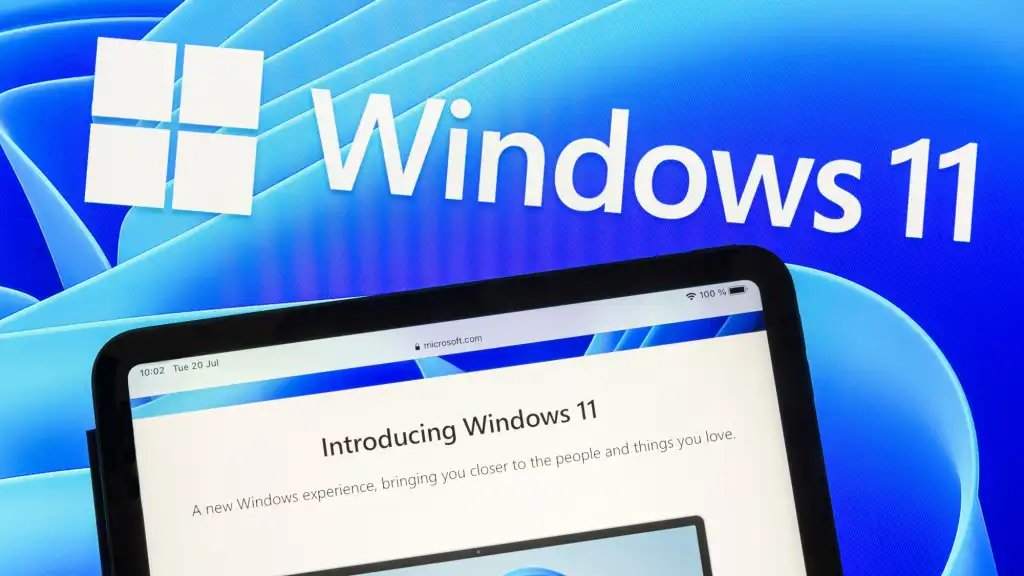
At the Build conference earlier this month, Microsoft executives highlighted the unlimited intelligent services that Windows 11 PCs will offer, allowing users to run AI for free without an internet connection. Hardware manufacturers have introduced AI-capable hardware even before related applications are available. Anastasiya Tarnouskaya, Product Manager for Windows ML (Windows Machine Learning), stated at a Build session that there are no token costs, sensitive data does not leave the device, and latency is reduced. Tarnouskaya revealed that over 500 million PCs are already running local AI workloads, and thanks to the latest advancements in AI models, hardware, and the software stack that runs them, every Windows PC is increasingly becoming AI-capable.
These AI experiences are integrated into applications and the Windows user interface. Microsoft Office, Photos, and Teams are already using on-device AI features, such as Outlook leveraging Microsoft's Phi Silica model and the PC's GPU to summarize emails. Tarnouskaya noted that companies from Adobe to WhatsApp are building local AI-driven experiences, with other early adopters including Canva, Affinity, and Speechify.
Since Microsoft launched Windows ML last fall, AI applications on Windows 11 have rapidly increased. Windows ML helps developers create offline AI applications that do not require access to cloud models, mapping applications, localized AI models, and hardware such as GPUs and neural processors. Windows ML is part of Microsoft's "Foundry" portfolio, which includes Foundry Local for running open-source models on Windows devices, and Windows AI APIs (Windows Artificial Intelligence Application Programming Interfaces) that can automate tasks such as conversation summarization, speech recognition, and video upscaling.
Microsoft is also using AI agents to change how users interact with Windows 11. Samantha Song, Microsoft Windows Product Manager, stated that users can describe tasks in natural language, and a long-running agent will begin working and complete the operation. Windows is evolving into a platform where natural language can map to real system outcomes. Song demonstrated how users can simply say or type how they want to personalize colors, wallpapers, or menus, and the agent will execute the actions. Song added that there is no need to manually set themes, settings, or lighting, as the system treats it as a coherent operation. Song indicated that to successfully achieve this, developers need to create a skill file to map the agent's behavior, and this skill can be reused repeatedly.
At the enterprise level, users can envision scenarios where switching to a secure financial mode automatically adjusts applications, access boundaries, and the environment. Microsoft also demonstrated how to use OpenClaw to create personalized agents to run Windows features. At the Build conference, LLMware.ai demonstrated an agent on a Snapdragon laptop that can collect Jira issues in real-time, summarize them locally, and send a daily issue summary to the team via email, running automatically without prompts. Darren Oberst, Co-founder of LLMWare.ai, stated that by running models locally, optimized performance can be achieved on the NPU (Neural Processing Unit), enabling timed execution of automated agents.
Leonard Lee, Principal Analyst at Next Curve, stated that companies like Samsung and Lenovo are slowly and cautiously rolling out agent AI features under the banner of "Personal AI," with the challenge being ensuring secure deployment. Jack Gold, Principal Analyst at J. Gold Associates, pointed out that Microsoft's efforts to embed AI into Windows will force enterprises to rethink their hardware strategies. Since AI chips excel at different tasks, Microsoft must support multiple chips to provide enterprises with choices. Gold suggested that when purchasing any new PC, especially for enterprise use, this should be taken into consideration, and AI PCs should be purchased in any upgrade cycle, a recommendation echoed by other institutions.
This article is compiled by Wedoany. All AI citations must indicate the source as "Wedoany". If there is any infringement or other issues, please notify us promptly, and we will modify or delete it accordingly. Email: news@wedoany.com
Related Products


Industrial and Commercial Point-Type Gas Detector
Jinan Benan Technology Development Co., Ltd.
Conveyor Belt Intelligent Monitoring System
LUO YANG WIRE ROPE INSPECTION TECHNOLOGY CO., LTD.



20 Inch 1600*900 Full HD 60Hz TFT LED Monitor with VGA and DP Interfaces for Desktop Computers-Business Use
Guangzhou Zanying Optoelectronics Technology Co., Ltd.