Karelian Scientists Propose Expanding Improved Tree Seed Orchards to 100 Hectares
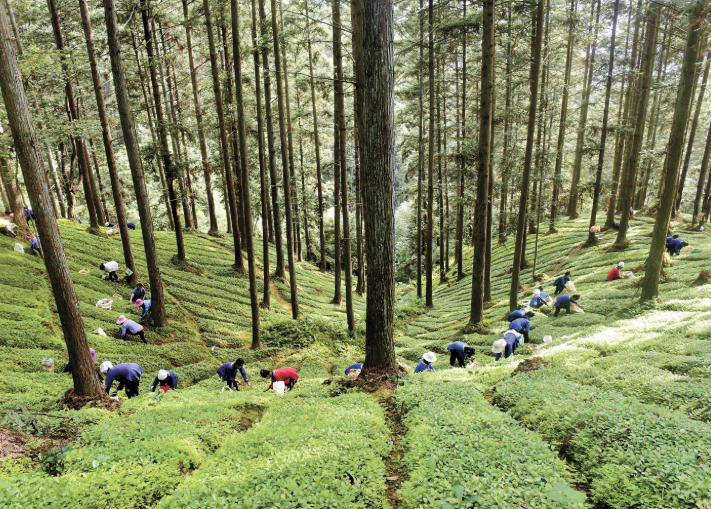
en.Wedoany.com Reported - Scientists from the Karelian Research Centre of the Russian Academy of Sciences (KarRC RAS) proposed at a meeting the need to cultivate locally improved tree species for forest restoration in Karelia and to increase the share of artificial reforestation.
The meeting was chaired by the Head of the Republic of Karelia, Artur Parfenchikov, and attended by representatives of the scientific community, members of the Legislative Assembly, and heads of departments, enterprises, and organizations responsible for forest restoration. At the meeting, Olga Bakhmet, Director of the Karelian Research Centre, and Boris Raevsky, Director of the Institute of Forestry of the KarRC RAS, presented research findings, analyzed the current state of local forest restoration, and proposed measures to expand the scale and pace of reforestation through self-production of seeds and seedlings.
Olga Bakhmet outlined the main research directions, achievements, and trends of the Centre in the field of forest restoration, and introduced leading scientists in this area, including Boris Raevsky, Director of the Institute of Forestry, Chief Researchers Sergei Moshnikov and Sergei Sinkevich. Boris Raevsky elaborated on the Centre's position, stating that due to industrial-scale logging in Karelia, logging companies must bear responsibility for forest restoration; the results of natural and artificial restoration over the past 30 to 35 years indicate that reliance solely on natural processes is insufficient.
The scientists believe that the current restoration area (including both artificial and natural restoration) accounts for about 30% of the logged area, and the share of artificial restoration should be increased to 60% in the future. In the remaining clear-cut areas, measures should be taken to promote natural regeneration. The main species for artificial restoration are pine and spruce; in addition, it is advisable to plant different species and forms of birch, including Karelian birch (Betula pendula var. carelica). These species, varieties, and forms should form the basis of artificial restoration.
Experts emphasized that artificial restoration should be based on breeding and genetic methods, increasing the proportion of seeds with improved genetic characteristics to ensure better growth, survival, and preservation of new plantations. Accordingly, the area of plantations established using seedlings with improved genetic traits needs to be significantly expanded. Currently, Karelia has only 1.5 hectares of forest seed orchards; scientists believe that the area of such orchards should be expanded to about 100 hectares over the next 20 to 25 years, by which time genetically improved seed material will be available for artificial restoration.
In response to some forestry enterprises purchasing cheaper seedlings from outside the republic, a proposal was made to amend the seed zoning system for major forest-forming species at the federal level. Additionally, a proposal will be submitted to the Ministry of the Russian Federation for the Development of the Far East and the Arctic, requiring logging companies operating in the Arctic region to use reproductive material collected and cultivated in the same area for forest restoration. A regional program to support Karelian birch will also be submitted soon, aiming to increase the number of nurseries engaged in cultivating Karelian birch. In the autumn of 2026, a meeting will be held in Karelia with the participation of scientists from the republic's and central forestry research and educational institutions, and it has been proposed to hold such events annually.
This article is compiled by Wedoany. All AI citations must indicate the source as "Wedoany". If there is any infringement or other issues, please notify us promptly, and we will modify or delete it accordingly. Email: news@wedoany.com
Related Products



714CD Series C-Band Weather Radar
Chengdu Zhongdian Jinjiang Information Industry Co., Ltd.
4HS-8 High-efficiency Peanut Inverted-laying Harvester
Hebei Yongfa Hongtian Agricultural Machinery Manufacturing Co., Ltd.

Industrial and Commercial Point-Type Gas Detector
Jinan Benan Technology Development Co., Ltd.