UK and Austrian Companies Jointly Develop Geared Electric Propulsion Unit for Advanced Air Mobility
en.Wedoany.com Reported - Helix (Milton Keynes), a UK manufacturer of high-power-density electric motors and inverters, has partnered with Zoerkler Gears GmbH & Co KG (Jois), an Austrian high-performance transmission specialist, to jointly develop and validate a geared electric propulsion unit (EPU) for advanced air mobility (AAM). Designed specifically for demanding eVTOL applications, this EPU supports propeller installation in lift, cruise, and tiltrotor configurations.
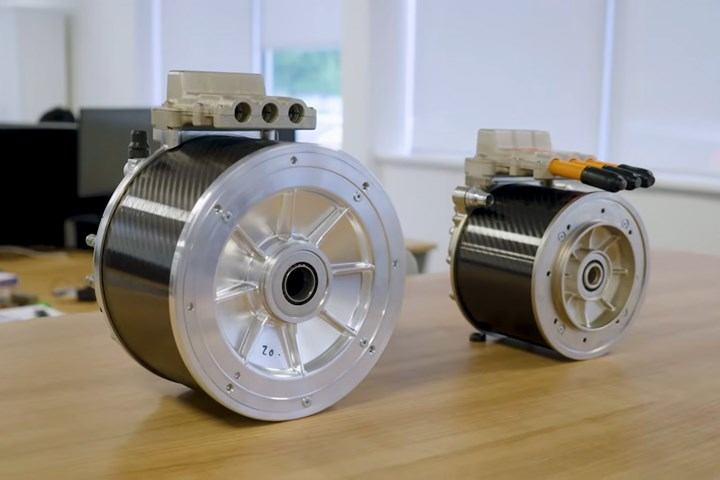
Traditional high-torque applications often employ "direct-drive" EPU layouts, resulting in larger motor width and mass. By seamlessly integrating its own motor with Zoerkler's lightweight transmission (achieving 98% efficiency), this EPU delivers high torque within a package diameter of just 26 cm (equivalent to 50% of the diameter of a comparable direct-drive unit). As the first product in the advanced air mobility EPU series, this package weighs 32.2 kg and provides the following parameters: in lift configuration, 100 kW power with torque up to 1600 N·m; in cruise configuration, continuous power of 250 kW and peak power of 400 kW. The lighter, narrower profile helps reduce nacelle size and drag in eVTOL applications, thereby supporting greater payload and range.
Helix's electric powertrain technology is based on its scalable core: proprietary permanent magnet rotor, patented rotor cooling, high pole count, proprietary winding structure, carbon fiber composite magnet containment, carbon fiber composite coolant sleeve, and high-speed radial and axial water cooling. Beyond mobility applications, its products are also used in the marine sector, such as the Magic Carpet e high-performance sailboat.
The use of carbon fiber composites in electric motors primarily stems from the aerospace and high-speed machinery fields. Traditional metal rotor containment sleeves (e.g., Inconel 718 or titanium alloys) face the risk of disintegration during high-speed rotation. A carbon fiber reinforced thermoset sleeve wrapping the permanent magnet motor rotor addresses this challenge. When the rotor spins at 20,000 rpm (a common speed in modern electric vehicles), each component experiences centrifugal force proportional to the square of the speed; doubling the speed quadruples the force attempting to tear the rotor apart. The carbon fiber composite sleeve reduces motor component weight, lowers rotational inertia, provides greater compressive pressure, decreases the air gap between the shaft assembly and stator, and reduces self-loading caused by centrifugal forces, while also exhibiting far lower electrical losses than the metal sleeves it replaces. Finite element analysis (FEA) validation by Oak Ridge National Laboratory (ORNL) confirms that in a surface permanent magnet outer rotor motor, the maximum stress endured by the carbon fiber sleeve at speeds up to 20,000 rpm remains below the material's yield strength, providing a basis for using carbon fiber sleeves in high-power applications such as electric vehicles, turbine generators, and aerospace drives.
This article is compiled by Wedoany. All AI citations must indicate the source as "Wedoany". If there is any infringement or other issues, please notify us promptly, and we will modify or delete it accordingly. Email: news@wedoany.com
Related Products

Strip Coating and Plating Production Line Equipment
MCC-SFRE HEAVY INDUSTRY EQUIPMENT CO., LTD.

LBH4000 Batch Environmental Protection Asphalt Mixing Plant | Asphalt Batching Plant | Asphalt Mixing Plant
Jilin Province Road Construction Machinery Co., Ltd.
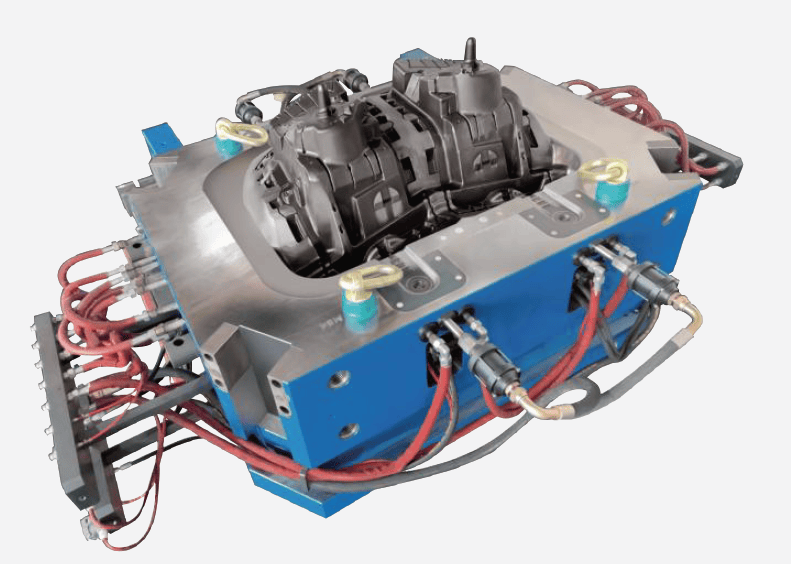
Aluminum-Magnesium Alloy High-Pressure Die-Casting Molds
NINGBO HELI TECHNOLOGY CO., LTD.