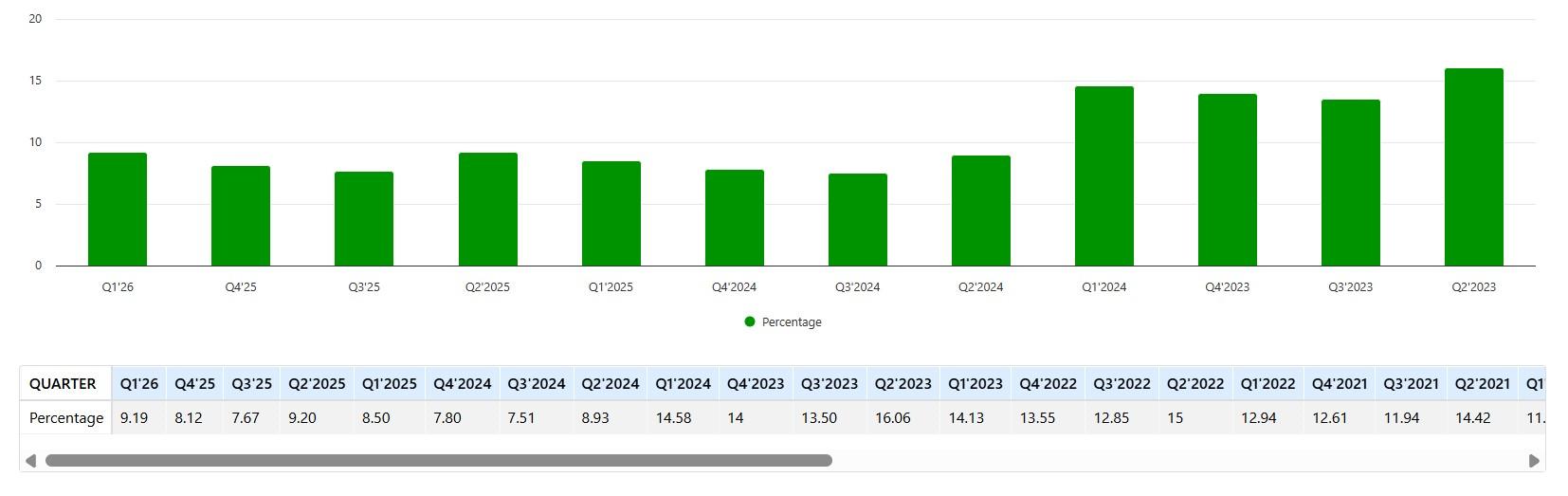
en.Wedoany.com Reported - In the first quarter of 2026, Nigeria's telecommunications sector contributed 9.19% to real Gross Domestic Product (GDP), amounting to 4.71 trillion naira, signaling a recovery from the sluggish performance witnessed throughout most of 2025.
According to the latest data from the National Bureau of Statistics (NBS), the telecom sector's GDP contribution dipped to 7.67% in Q3 2025, rebounded to 8.12% in Q4, and accelerated to 9.19% in Q1 2026. This level represents the sector's second-highest quarterly contribution to real GDP over the past eight quarters. Compared to 8.50% in Q1 2025, the Q1 2026 figure marks a year-on-year increase of 69 basis points, reflecting growth in user numbers and accelerated monetization of data consumption within the digital economy.
Data from the Nigerian Communications Commission (NCC) shows that Nigerians spent 3.33 trillion naira on internet data in Q1 2026, with an average consumption of 4.06 petabytes per user (approximately 28 GB per person). On an annualized basis, total data consumption for the year would approach 13 trillion naira, making digital connectivity spending one of the country's most significant consumption categories.
In terms of user data, active mobile lines increased to 182.2 million as of January 2026, a net addition of approximately 13 million compared to 169.3 million in January 2025. Tele-density rose to 84.06% from 78.10% a year earlier. Over the same period, internet users grew from 141.7 million to 151.6 million, with total data consumption reaching 1,385,536 TB, up from 1,000,930 TB in the corresponding period last year.
The share of 5G network users rose from 2.46% in December 2024 to 3.77% in December 2025, further increasing to 4.20% in Q1 2026. In its communiqué from the 109th Board meeting in May 2026, the NCC stated that the acceleration in 5G adoption aligns with infrastructure investment commitments by operators such as MTN and Airtel in network expansion projects.
Operator performance corroborates the macro trend. In Q1 2026, Airtel Nigeria's revenue grew 40.2% year-on-year to $475 million, with data subscriptions contributing $244 million. Over the same period, MTN Nigeria's data revenue reached 826.1 billion naira, driving a pre-tax profit of 546.4 billion naira. Nigeria's nominal GDP in Q4 2025 stood at 122.81 trillion naira, up 17.55% year-on-year; the telecom sector recorded a real year-on-year growth of 26.34% in the same quarter, achieving its highest nominal quarterly contribution of 5.2 trillion naira for the year.
The telecom sector is the fourth-largest contributor to Nigeria's real GDP, trailing only crop production (20.44%), trade (16.84%), and real estate (14.57%). The sector's contribution to economic output now exceeds that of manufacturing, construction, or financial services individually.
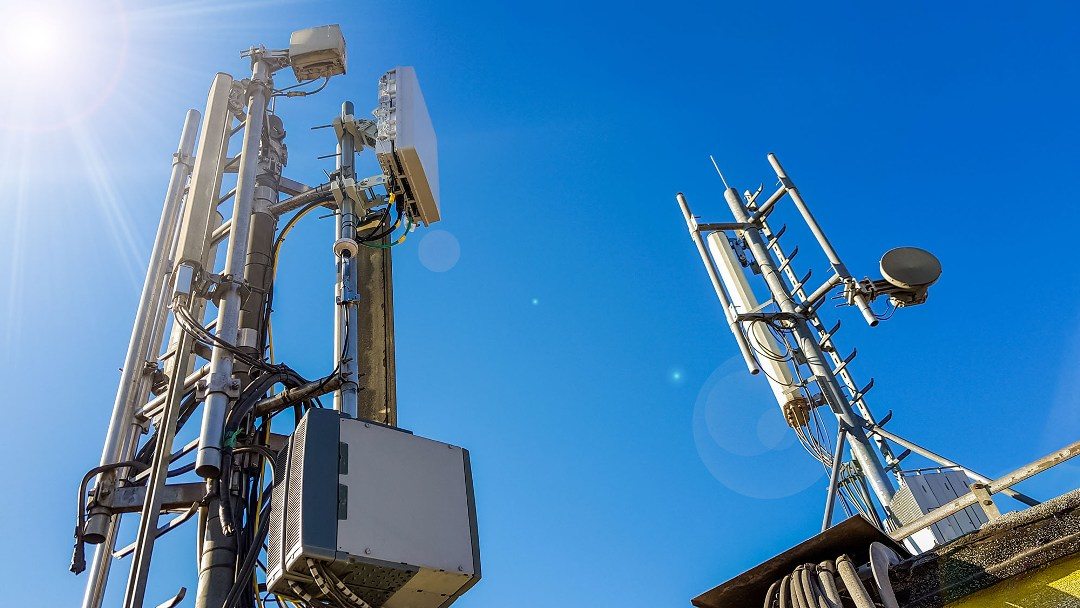
Infrastructure constraints persist. Between January and August 2025, Nigeria reported 19,384 fiber optic cable cuts, 3,241 equipment thefts, and over 19,000 denied access to telecom sites. In Q1 2026 alone, an additional 5,934 fiber cuts were recorded, with operators reporting 30 to 43 cuts nationwide per day. MTN Nigeria suffered 9,218 fiber cuts in 2025, directly leading to 1.6 million customer complaints. The NCC estimates that every 10% increase in broadband penetration can drive approximately 1.38% GDP growth in developing economies.
This article is compiled by Wedoany. All AI citations must indicate the source as "Wedoany". If there is any infringement or other issues, please notify us promptly, and we will modify or delete it accordingly. Email: news@wedoany.com