China Telecom Shanghai and Huawei Build 5G-A×AI Uplink Demonstration Site, Achieving Peak 1Gbps
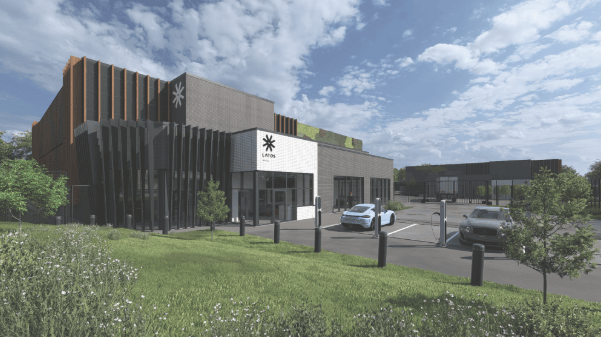
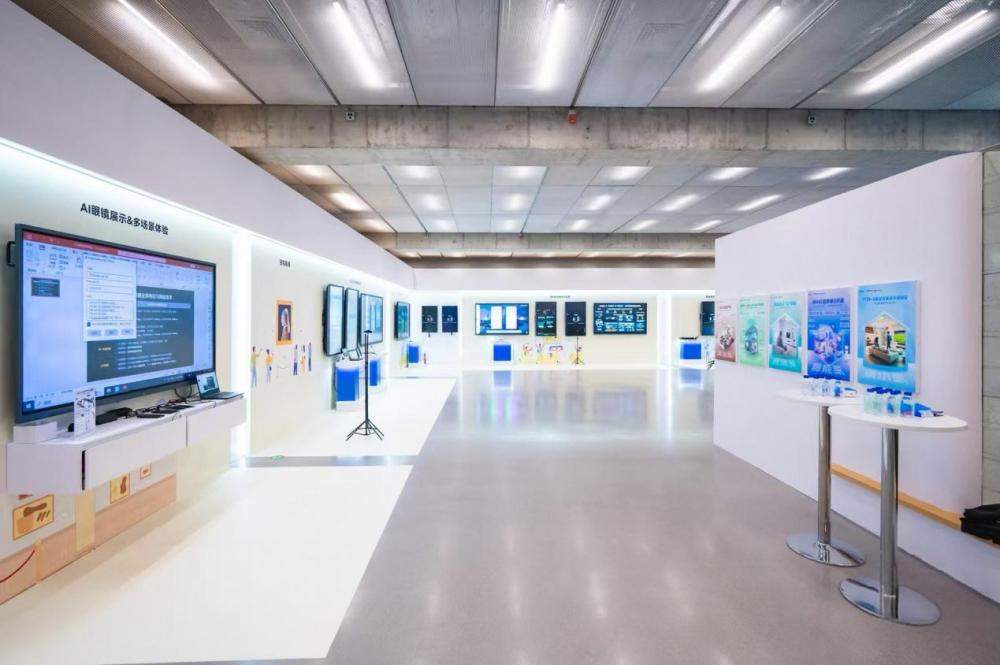
en.Wedoany.com Reported - On the eve of the 2026 Mobile World Congress Shanghai (MWCSH 2026), China Telecom Shanghai Company, in collaboration with Huawei, has established a 5G-A×AI high-uplink demonstration site at the West Bund Museum in Shanghai. This project leverages scenarios such as smart cultural tourism to showcase the technical advantages and commercial value of high-uplink networks, providing a replicable model for the nationwide development of 5G-A×AI high-uplink.
With the booming development of the Mobile AI industry, high-uplink technology has become a new core foundation. Over the past three decades, downlink speed has been the primary benchmark for measuring networks, with generational evolution also centered around downlink. However, in the Mobile AI era, the proliferation of terminal devices such as AI phones, AI glasses, and embodied intelligent robots, along with the explosion of scenarios like real-time AIGC generation, multimodal real-time interaction, and high-definition video backhaul, has imposed high demands on uplink bandwidth, stability, and low-latency concurrency capabilities. During the 2026 Mobile World Congress (MWC 2026), the Global System for Mobile Communications Association (GSMA), in collaboration with leading operators, released the "High-Uplink Network Initiative," establishing GigaUplink as a priority direction for network evolution and setting core capability targets such as "ubiquitous 20Mbps, peak 1Gbps." China Telecom Chief Scientist Bi Qi noted that Mobile AI is driving networks from a "downlink-first" approach to a new phase where "uplink and downlink are equally important, and latency becomes a decisive experience indicator."
After recognizing the demand for uplink capabilities in AI applications, Shanghai Telecom initiated the construction of a 5G-A×AI high-uplink network. To date, in collaboration with Huawei, it has built over 3,400 5G-A 3CC sites. Leveraging F+T 5G-A multi-carrier aggregation and high-uplink technology, measured uplink peak rates reach 1Gbps, with downlink peak rates approaching 4Gbps. Currently, key scenarios such as popular commercial areas and pedestrian streets in the core urban area have achieved ubiquitous 20Mbps uplink continuous coverage, with plans to cover the entire central urban area by the end of 2026.
At the West Bund Museum demonstration site, Shanghai Telecom and Huawei showcased several typical services, translating abstract network parameters into concrete user experiences.
Immersive AI glasses viewing is one of the demonstrations. Relying on the 5G-A×AI high-uplink network, Huawei AI glasses can capture high-definition images and video streams of exhibits in real time, transmitting them to the cloud-based "Xiaoyi Sees the World" intelligent agent for analysis, which then outputs explanations of the exhibits' backgrounds and artistic connotations. Measured data shows that this scenario can support high-load demands of concurrent multi-user viewing, enabling real-time, lag-free interaction.
In the Doubao AI viewing comparison experience, two phones were connected to 2.1GHz 8T8R and 1.8GHz 4T4R networks respectively, simultaneously using Doubao's multimodal service. The Doubao on the 2.1GHz 8T8R network responded faster and with greater accuracy, while the 1.8GHz 4T4R network had a 1-2 second delay. This comparison demonstrates that the value of high-uplink networks lies not only in peak rates but also in deep coverage and stability.
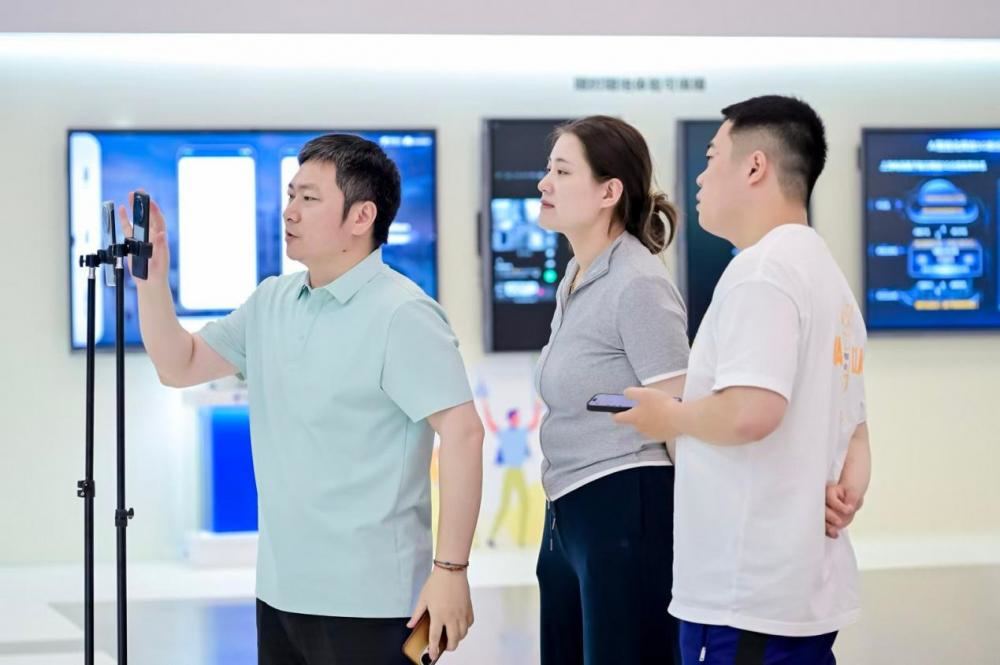
Full-scenario AI glasses applications demonstrated diverse hands-free operations such as person recognition, object identification, cross-language communication, and QR code payments. The smooth operation of these functions relies on the 5G-A×AI high-uplink network's support for real-time data upload and download.
In terms of experience assurance, when network resources are abundant, Shanghai Telecom uses a golden pipeline solution with differentiated scheduling in both time and frequency domains to achieve X-times rate differences anytime, anywhere. Under medium or heavy network load, it provides guaranteed minimum rates for premium users through solutions like "intelligent computing boards + slicing." Shanghai Telecom has completed large-scale testing on the live network, stably providing deterministic 1.5x or 2x acceleration based on user tiers under the 5G-A network, with performance not degrading due to scenario or load fluctuations.
Regarding wireless network agents, Shanghai Telecom and Huawei have jointly built a 5G-tiered intelligent computing system that coordinates wireless intelligent computing boards, edge computing, and network agents. Through refined service scheduling, intelligent frequency division, and NQI service evaluation, a "VIP dedicated channel" is created. In measured tests at the Shanghai Telecom Museum demonstration area, uplink rates consistently exceeded 100Mbps, with WeChat audio and video calls running smoothly throughout. Additionally, predictive AI-based energy-saving mining upgrades traditional fixed rules to a "one-site-one-policy" differentiated strategy. After deployment in areas like Caohejing, average energy consumption decreased by 19.55%, achieving dual optimization of network energy efficiency and user experience.
The AI quiet call feature leverages AI capabilities on the core network side, offering advantages such as independence from terminal type, call reception method, and bidirectional noise reduction, helping operators revitalize the traditional advantage of voice calls through enhanced experience.
The Shanghai Telecom West Bund Museum demonstration site marks the first systematic public showcase of capabilities since the completion of the nation's first 5G-A×AI high-uplink commercial network. This practice indicates that high-uplink networks are ready for large-scale deployment and commercial closure. Based on the 5G-A×AI high-uplink network, Shanghai Telecom's AI glasses rental project on Huangpu River cruise scenarios has been included in the GSMA Foundry Mobile AI Network Innovation Project and has won the GSMA Foundry Excellence Award. Shanghai Telecom plans to continue collaborating with industry partners like Huawei to promote the deep integration of 5G-A and AI.
This article is compiled by Wedoany. All AI citations must indicate the source as "Wedoany". If there is any infringement or other issues, please notify us promptly, and we will modify or delete it accordingly. Email: news@wedoany.com
Related Products



Industrial and Commercial Point-Type Gas Detector
Jinan Benan Technology Development Co., Ltd.
GYTA Type Non-Self-Supporting Aerial/Duct Optical Cable
TONGDING INTERCONNECTION INFORMATION CO., LTD.


Mine Explosion-proof and Intrinsically Safe Industrial Ethernet Ring Network (10 Gigabit/Gigabit)
Chongqing Mas Sci&Tech Co., Ltd.