China's Unisoc Unisem Launches Satellite-Terrestrial Integrated AI eSIM 2.0 Product
en.Wedoany.com Reported - Unisoc Unisem officially launched a new-generation AI eSIM product integrating satellite and terrestrial networks at MWC Shanghai, announcing the arrival of the eSIM 2.0 era. GSMA Intelligence predicts that the global eSIM market size will double by 2026, and by 2030, eSIM will surpass traditional removable SIM cards.
A key driver for the rapid development of eSIM in the Chinese market is the commercial pilot for eSIM in smartphones launched by the three major telecom operators in October 2025. With the rapid proliferation of smart terminal devices, user demands are evolving from basic "connectivity" to "quality service" and "ubiquitous AI connectivity." Zou Zhongren, Executive Vice President of Unisoc Unisem, delivered a speech titled "AI-Driven eSIM Upgrade: Ushering in a New Era of Intelligent Connectivity" at the MWC Shanghai eSIM Summit, announcing the launch of the new-generation AI eSIM product integrating satellite and terrestrial networks. This product achieves technological innovations in three areas: AI identity, AI security, and AI connectivity. In terms of AI identity, the product supports both national cryptographic and international dual algorithms, is compatible with PQC post-quantum algorithms, and features a large-capacity secure storage space. For AI security, the main frequency has been increased by 60% compared to the previous generation, and encryption algorithm performance has improved by over 50%. In AI connectivity, the product supports multiple versions of MEP and satellite communication authentication, with a 37% increase in global operator network adaptation coverage, enabling seamless switching between terrestrial and satellite networks.
Chen Fengwei, Deputy General Manager of China Unicom Huasheng Communication Co., Ltd., stated at the eSIM Summit that the trend has shifted from "no network means no connection" in the internet era to "no network means no intelligence" in the AI era, emphasizing that AI terminals require full-time, intelligent connectivity. Due to device miniaturization and space constraints, eSIM has become a necessity. Zou Zhongren pointed out that with the explosive growth of AI terminals, eSIM is transitioning from the 1.0 era of a single communication module to the 2.0 era, carrying more value and functions.
In the eSIM field, Unisoc Unisem has achieved multi-stage breakthroughs, from chip certification to global mass production: obtaining chip CC certification, COS GSMA certification, and factory SAS-UP certification in 2022; achieving the world's first commercial use of a Chinese chip for smartphone eSIM in 2023; entering full-scale overseas mass production in 2024; surpassing the 10-million-unit mark in overseas smartphone shipments in 2025, and completing adaptation for multiple mainstream domestic smartphone brands.
In terms of ecosystem collaboration, Unisoc Unisem, in partnership with China Unicom, has leveraged the jointly established China Unicom 5G eSIM Joint Innovation Laboratory to successfully develop the industry's first innovative eSIM terminal intelligent acceptance solution. This solution integrates the entire process of device verification, service activation, and code number download, simplifying multi-step manual operations into a seamless "one-touch connection" service, thereby improving offline service efficiency. The solution establishes an independent encrypted direct connection channel between the user terminal and the operator's business backend, eliminating the need for manual QR code scanning operations. It also employs a standardized key exchange strategy to achieve bidirectional data encryption and identity authentication between the operator's business system and the user's mobile terminal, intercepting malicious attacks and data tampering risks at the source of the transmission link. Additionally, using a multi-CI certificate system, it enables the verification of the terminal's eUICC chip legitimacy, ensuring that the identity of each terminal handling business is authentic and traceable. In the concurrently released "eSIM Device-Security Technology White Paper," Unisoc Unisem led the writing of key chapters such as "Overall Architecture and State Model," "Core Processes for Pairing and Mutual Authentication," and "Security Mechanisms."
This article is compiled by Wedoany. All AI citations must indicate the source as "Wedoany". If there is any infringement or other issues, please notify us promptly, and we will modify or delete it accordingly. Email: news@wedoany.com
Related Products


Industrial and Commercial Point-Type Gas Detector
Jinan Benan Technology Development Co., Ltd.
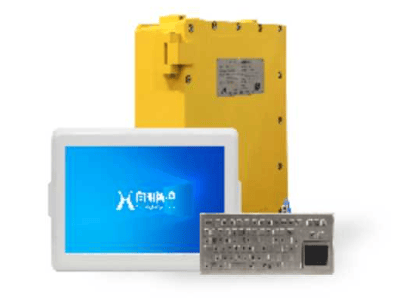
KJD127(A) Mining Explosion-Proof and Intrinsically Safe Computer
Taiyuan Xiangming Intelligent Control Technology Co., Ltd.



GYTA Type Non-Self-Supporting Aerial/Duct Optical Cable
TONGDING INTERCONNECTION INFORMATION CO., LTD.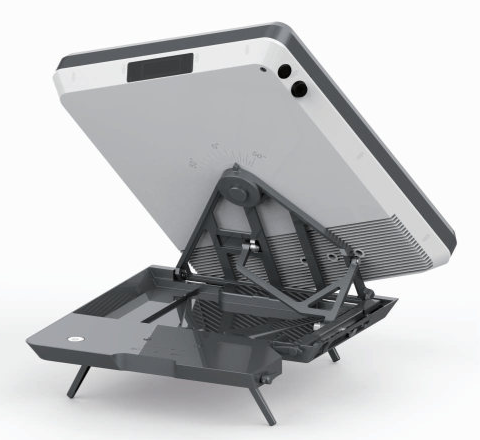
Flat Portable Satellite Terminal 0.35m Aperture Manual Portable Terminal
China Starwin Science & Technology Co., Ltd.
Mine Explosion-proof and Intrinsically Safe Industrial Ethernet Ring Network (10 Gigabit/Gigabit)
Chongqing Mas Sci&Tech Co., Ltd.