en.Wedoany.com Reported - On June 29, South Korea announced plans to expand AI data centers and semiconductor production, aiming to build a total of 18.4 gigawatts (GW) of AI data center capacity by 2035 and double DRAM production capacity over the next five years. South Korea plans to attract approximately 550 trillion won in investment to build AI data centers first, with long-term cumulative investment needs expected to exceed 1,000 trillion won. According to the plan, in the first phase, SK Group, GS Group, and Naver will invest about 550 trillion won to form 8.4GW of AI data center capacity by 2029; in the second phase, SK Group plans to expand its AI data center capacity from 5GW to 15GW.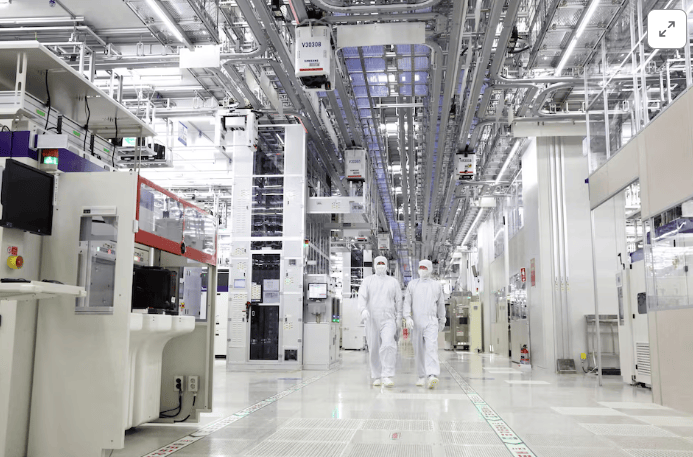
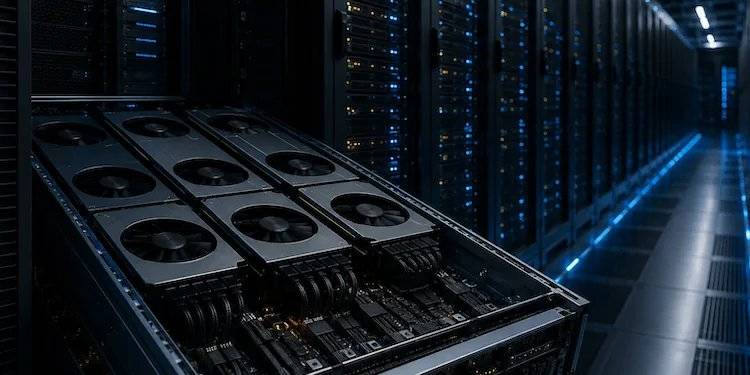
18.4GW is not the scale of an ordinary data center expansion, but a target for ultra-large computing power infrastructure for AI training, AI inference, cloud services, enterprise large models, and industrial intelligent applications. It corresponds not only to the number of servers but also includes power access, cooling systems, land resources, network interconnection, chip supply, and long-term operation and maintenance capabilities.
South Korea placed AI data center construction and DRAM production expansion in the same round of industrial arrangements because the operation of large models heavily relies on memory chips and data center computing power. AI servers require high-bandwidth memory, DRAM, enterprise SSDs, advanced packaging, and high-speed networks for support. The larger the scale of model training and inference, the higher the requirements for memory bandwidth, capacity, and energy consumption control. South Korea has two major memory chip companies, Samsung Electronics and SK Hynix, which have an industrial foundation in the DRAM and high-bandwidth memory fields. Doubling DRAM production capacity over the next five years will directly serve the needs of AI servers, data center clusters, and the global AI chip supply chain.
The first phase focuses on AI data center projects involving SK Group, GS Group, and Naver. SK Group has an industrial synergy foundation in semiconductors, energy, telecommunications, and cloud services; GS Group has energy and infrastructure resources; and Naver is a major internet, cloud computing, and AI service company in South Korea. The participation of these three types of companies indicates that AI data center construction requires the simultaneous involvement of chips, energy, cloud platforms, networks, and applications. After forming 8.4GW of capacity by 2029, South Korea will gain greater capacity to host AI computing power infrastructure in Asia.
The second phase will further expand SK Group's AI data center capacity. SK plans to expand its related capacity from 5GW to 15GW, meaning its role will extend beyond being a memory chip supplier to an AI computing power infrastructure operator.
The rapid expansion of AI data center capacity will bring higher power and cooling demands. South Korea has previously faced pressure on electricity, water supply, and land resources for semiconductor industry clusters, with the carrying capacity of areas like Yongin and Pyeongtaek nearing their limits. AI data centers typically require long-term stable power supply, efficient heat dissipation, low-latency networks, and expandable land space. Large-scale construction cannot rely solely on areas around the capital region. South Korea will subsequently need to deploy data centers, power facilities, and industrial parks in more regions, planning computing power infrastructure in sync with energy, land, water resources, and communication networks.
Doubling DRAM production capacity is another key focus. South Korea's Minister of Trade, Industry and Energy, Ahn Duk-geun, stated that South Korea plans to double DRAM production capacity over the next five years to enhance AI chip supply capabilities. AI models require continuous reading, writing, and data exchange during training and inference processes, and storage performance directly affects server efficiency. High-bandwidth memory is used for GPUs and AI accelerators, while DRAM supports a broader range of servers, cloud computing, and enterprise computing devices. Expanding DRAM production capacity in South Korea will help alleviate AI hardware supply bottlenecks and strengthen the positions of Samsung Electronics and SK Hynix in the global AI industry chain.
This plan simultaneously pushes up "computing power capacity" and "storage production capacity." The former determines how many AI computing tasks South Korea can undertake, while the latter determines how many key components South Korea can supply to global AI servers and chip systems. After data center capacity reaches 18.4GW, South Korea will need more power dispatch, green energy, liquid cooling equipment, substation facilities, cabinet systems, network equipment, and server supply chains; doubling DRAM production capacity will also drive expansion in wafer manufacturing equipment, materials, packaging and testing, cleanroom engineering, and logistics systems. Related investments will not only flow to a few companies but will extend to multiple sectors including energy, engineering construction, equipment manufacturing, cloud services, and industrial software.
South Korea's choice to build 18.4GW of AI data center capacity by 2035 also reflects the lengthening time scale of AI competition. AI infrastructure is not a short-term project; from site selection, approval, power access, civil construction, server deployment, to customer onboarding, it typically takes multiple years. If the first phase target of 8.4GW by 2029 is completed on schedule, South Korea can first form a batch of operational computing power nodes; after reaching 18.4GW by 2035, it will have the opportunity to combine AI data centers with semiconductor manufacturing, cloud services, robotics, industrial AI, and enterprise software to form a more complete AI industry foundation.
The execution challenges of this plan are also clear. AI data centers require massive amounts of electricity, DRAM production expansion requires long-term capital expenditure, and both semiconductor and data center construction are highly sensitive to water resources, talent, equipment supply, and engineering cycles. Whether the cumulative investment demand of over 1,000 trillion won can be realized depends on corporate capital investment, government infrastructure support, grid expansion progress, regional site selection capabilities, and customer demand growth rates. For South Korea, 18.4GW of AI data center capacity and doubling DRAM production capacity are not a single project but a long-term industrial restructuring centered on computing power, storage, and energy systems in the AI era.
This article is compiled by Wedoany. All AI citations must indicate the source as "Wedoany". If there is any infringement or other issues, please notify us promptly, and we will modify or delete it accordingly. Email: news@wedoany.com