en.Wedoany.com Reported - Kunlun Chip, an AI chip company under China's Baidu, is advancing its Hong Kong listing plans with a target valuation of approximately $50 billion. Kunlun Chip evolved from Baidu's internal chip business, and Baidu still holds a controlling stake. If the listing plan materializes, Kunlun Chip will become one of the larger AI chip companies in the Hong Kong capital market, and will also push the chip segment of Baidu's AI infrastructure onto an independent capital platform. This listing is expected to boost Baidu's Hong Kong-listed shares, with market attention focused on Kunlun Chip's formal filing progress, valuation pricing, customer structure, and AI chip delivery capabilities.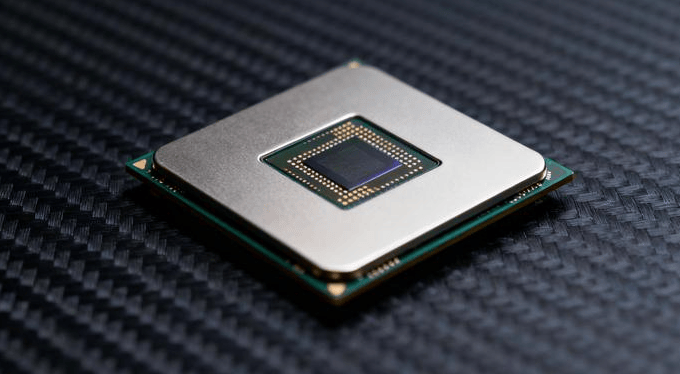
The significance of Kunlun Chip's listing lies primarily in the AI chip business transitioning from Baidu's internal support system to a more open market financing platform. Baidu's large models, search, cloud computing, and autonomous driving businesses all require AI computing power support, and Kunlun Chip has long played the core chip role in Baidu's AI computing system.
Kunlun Chip can be traced back to Baidu's AI chip-related research and development initiated in 2011, which later evolved into an independent company operation. Its products are mainly targeted at AI inference, cloud computing, and large model application scenarios, supporting server-side AI task execution. As demand for large model training and inference continues to grow, the value of AI chip companies is no longer determined solely by single chip performance, but also by software adaptation, supply stability, customer onboarding, data center deployment, and long-term product iteration capabilities. If Kunlun Chip gains stronger financing capabilities through a Hong Kong IPO, it will help expand R&D investment, capacity assurance, and ecosystem cooperation.
The $50 billion target valuation also reflects the high enthusiasm for AI chip assets in the capital market. Kunlun Chip's previous valuation was far below this level, and the significant short-term valuation increase indicates that factors such as AI computing power shortages, restricted supply of Nvidia's high-end GPUs, and increased demand for self-built computing power by large model companies are driving up capital expectations for Chinese AI chip companies. For investors, Kunlun Chip's appeal lies not only in its Baidu background but also in whether it can enter the data centers and AI service systems of more external customers.
Customer expansion is key to whether Kunlun Chip's subsequent valuation can hold. Kunlun Chip previously primarily served Baidu's internal AI computing needs but has begun expanding external sales, with internet companies like Tencent mentioned as its customers, and demand-side entities such as ByteDance for large models and cloud services potentially becoming cooperation targets. For AI chips to enter large internet customers, they must pass multiple verifications including model adaptation, framework compatibility, inference cost, energy consumption performance, cluster stability, and supply cycle. A single customer can support technical verification, but multi-customer deployment is necessary to prove commercial viability.
The Hong Kong listing will also change the relationship between Kunlun Chip and Baidu. After the spin-off listing, Kunlun Chip can retain the application scenarios brought by Baidu's AI ecosystem while expanding its independent development space through public market financing. Baidu, in turn, can separately reflect the value of chip assets in the capital market, reduce the financial pressure of AI infrastructure investment on the group, and provide clearer underlying computing power support for subsequent cloud computing, large model, and intelligent agent businesses.
AI chip competition has extended from chip design to system delivery. When enterprise customers purchase AI chips, they not only look at peak computing power but also evaluate training or inference framework adaptation, model migration costs, server cluster solutions, network interconnection, operation and maintenance tools, security and controllability, and long-term supply capabilities. For Kunlun Chip to support a $50 billion valuation, it needs to prove that its chips can continuously support large model inference, intelligent search, content generation, recommendation systems, intelligent customer service, and enterprise AI services in real business scenarios, rather than just relying on single-point performance indicators.
China's AI chip market is entering an intensive capitalization phase. Companies such as Cambricon, Moore Threads, Biren Technology, Enflame Technology, and Muxi Integration are competing around AI training, inference, GPU replacement, data center acceleration, and software ecosystems. Kunlun Chip's advantages lie in Baidu's scenarios and cloud service foundation, while its challenges include advanced manufacturing processes, ecosystem compatibility, external customer scale, and competition with leading solutions like Huawei's Ascend. If the Hong Kong IPO proceeds smoothly, it will provide a new valuation benchmark for Chinese AI chip companies and may also drive more AI semiconductor companies to accelerate their listing pace.
Relevant listing arrangements are still subject to official disclosure documents and exchange processes. Target valuation, fundraising scale, investor structure, and listing timeline may all change with market conditions, regulatory review, and company operating data. For Kunlun Chip, what truly determines capital market acceptance will be revenue growth rate, customer concentration, chip shipment capabilities, gross margin levels, R&D investment, capacity assurance, and software ecosystem development. AI chip enthusiasm can boost listing attention, but long-term value must still be verified by product delivery and customer usage.
This article is compiled by Wedoany. All AI citations must indicate the source as "Wedoany". If there is any infringement or other issues, please notify us promptly, and we will modify or delete it accordingly. Email: news@wedoany.com