Malaysia's Sarawak Sg. Kuching Bridge Successfully Closed
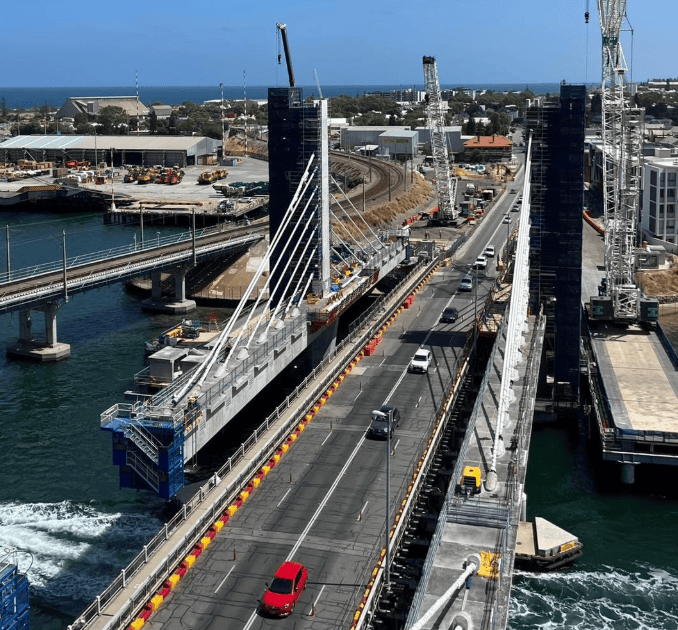
en.Wedoany.com Reported - On June 26, 2026, the Sarawak Sg. Kuching Bridge in Malaysia, constructed by China Harbour Engineering Company and implemented by CCCC Second Highway Engineering Bureau, successfully completed its mid-span closure. The bridge has a total length of 1,281.2 meters and a tower height of 119.06 meters, making it the world's largest harp-type double-cable-plane double-tower concrete cable-stayed bridge.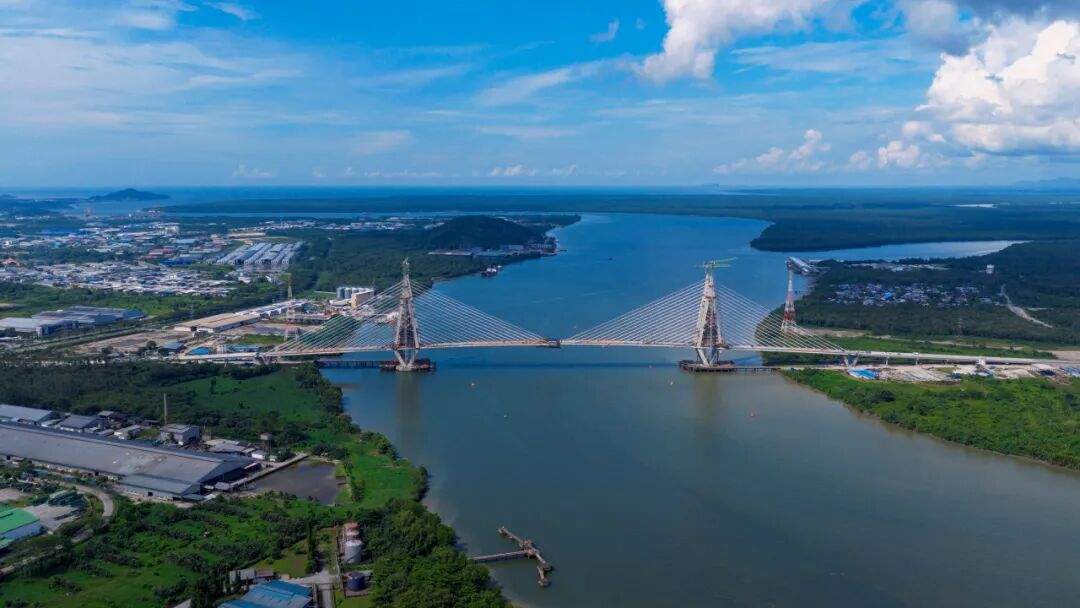
Located in Kuching, the capital of Sarawak, Malaysia, the Sg. Kuching Bridge features a double-tower double-cable-plane cable-stayed main bridge structure with a main span arrangement of 200 meters + 400 meters + 200 meters. The bridge is designed based on Malaysia's local bridge design concepts, with core structural designs significantly differing from conventional cable-stayed bridges in China. Multiple innovative designs are tailored to the local geological, climatic, and traffic conditions. As the first large-scale cable-stayed bridge over the Sarawak River, it carries the dual mission of upgrading regional transportation and enhancing the city's image.
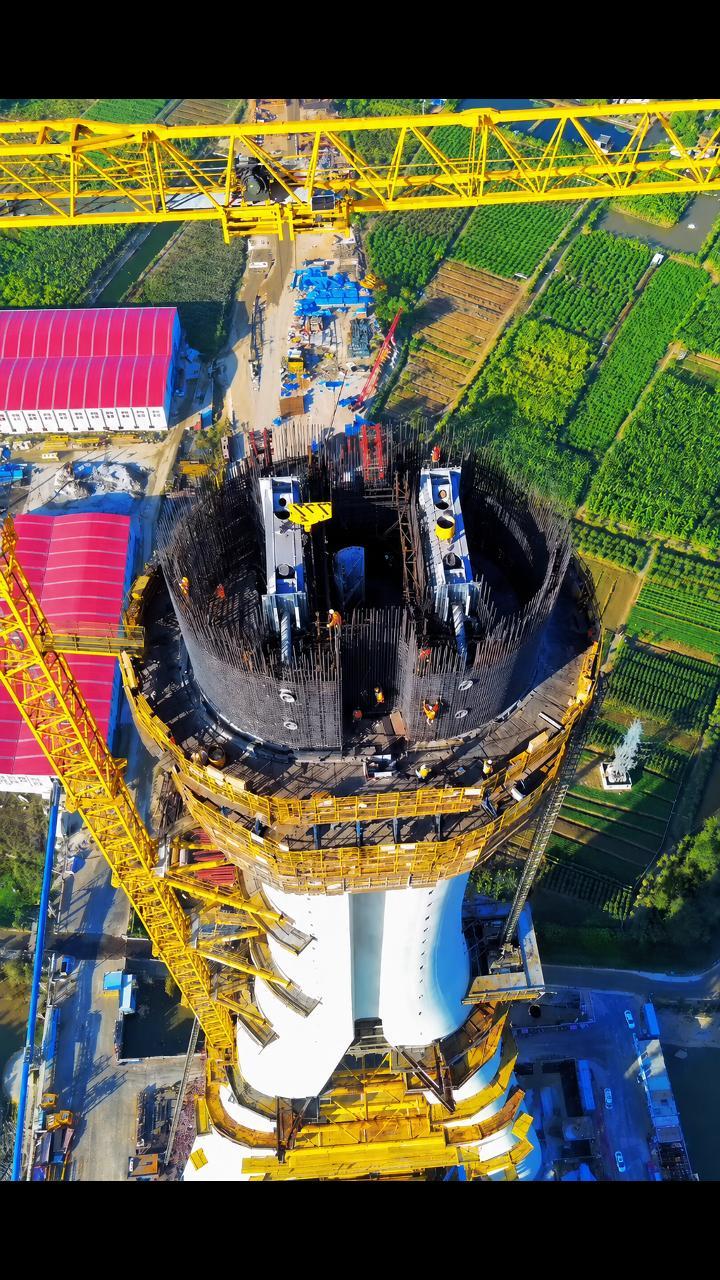
In terms of core structural design, the bridge's main towers adopt an innovative diamond-shaped separated structure along the bridge direction, paired with a dedicated steel tie beam system, featuring a novel and unique tower shape with excellent mechanical performance. The side piers utilize a single-row pile flexible system, effectively accommodating deformations and displacements caused by temperature changes and concrete shrinkage and creep during the bridge's later operation. The main girder innovatively adopts a wide, prestress-free concrete single-box girder design with an ultra-small aspect ratio of only 1/10.24, resulting in a lightweight structure and an open traffic view.
The mid-span closure segment, measuring 5 meters in length, 25.6 meters in width, and 2.5 meters in height, required extremely high construction precision. The project team conducted continuous 48-hour all-weather temperature tracking and monitoring on the five main girder segments before the closure, recording data every 2 hours to precisely identify the optimal closure temperature window. To address the design jacking force of up to 2,000 tons for the closure, the project team innovatively designed a permanent-temporary combined closure jacking device, employing a 7-stage graded jacking construction process, ultimately achieving millimeter-level high-precision closure. Once opened to traffic, the bridge will effectively improve Kuching's urban transportation network and inject new momentum into Sarawak's economic and social development.
Related Products



Acoustic Mineral Fiber Ceiling Tile 595x595x12mm
Shanxi Pano Trading Co., Ltd
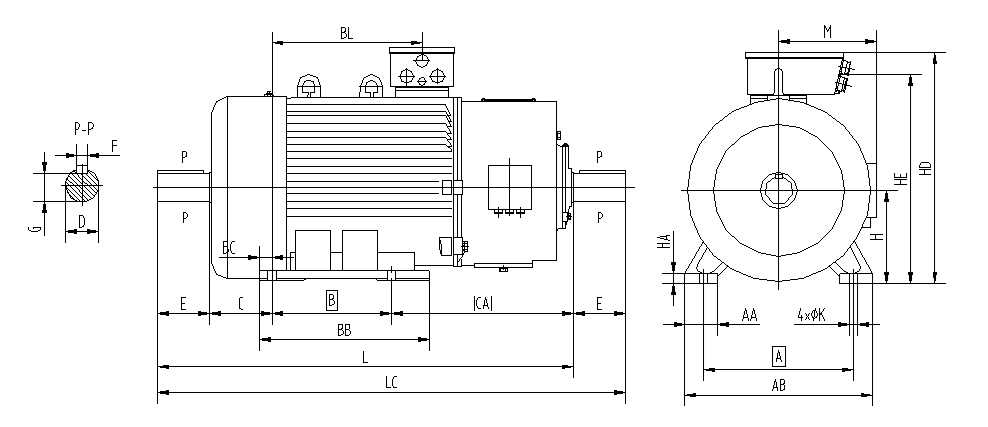
YZR (450-560) Series Wound Rotor Three-Phase Asynchronous Motors for Crane and Metallurgical Applications
Jiamusi Electric Machine Co., Ltd.

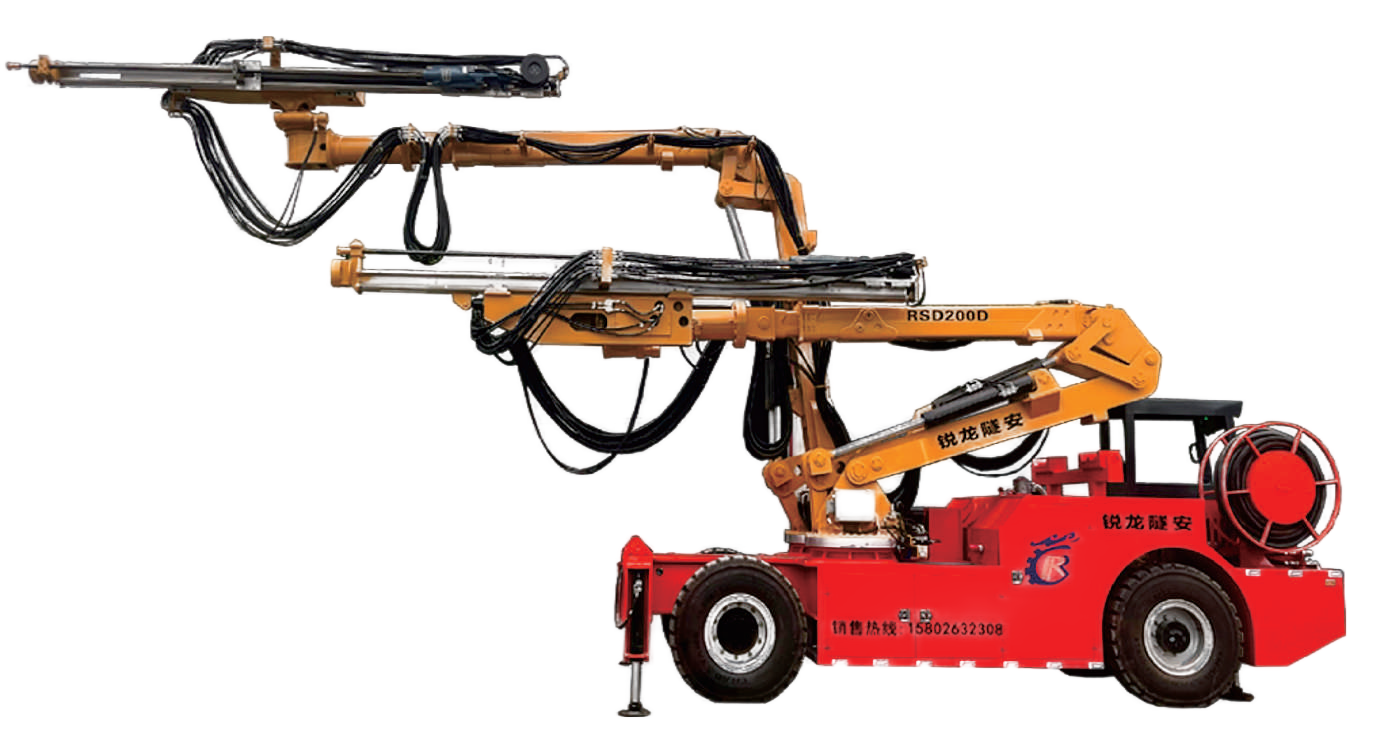
Dual-curved Arm Rock Drilling Trolley RSD200D
Chengdu Ruilong Machinery Manufacturing Co., Ltd.
ERW Welded Pipe (Black Pipe and Hot-dip Galvanized Steel Pipe)
Handan Zhengda Steel Pipe Co., Ltd.