China's Freetech 8T8R Satellite Radar Receives Nearly One Million Orders, Mass Delivery in July 2026
en.Wedoany.com Reported - Freetech, a company specializing in intelligent driving perception technology, announced that its FVR60_SO (8T8R) satellite architecture 4D imaging millimeter-wave radar has entered mass production in June 2026, with batch deliveries starting in July. This marks the second technological iteration by Freetech within a month, following the global debut of the edge architecture 4D imaging radar FVR60_EO in collaboration with Infineon in mid-May.
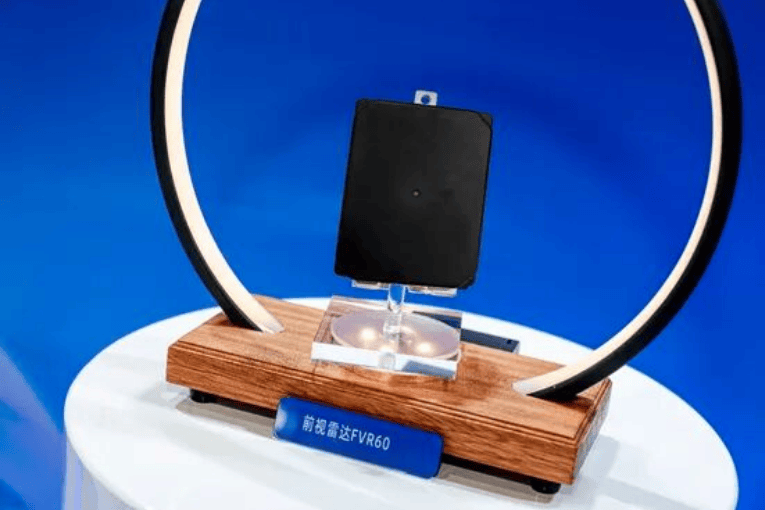
Freetech has secured a mass production designation from a leading domestic independent brand as the first launch platform, with order volumes approaching one million units. In June 2026, the company received another project designation from a leading domestic independent brand for a vehicle model, which will feature the "Fuxing" intelligent integrated solution and self-developed 4D millimeter-wave radar products, with plans for large-scale mass production in October this year. As of the end of 2025, Freetech had established partnerships with 55 automakers, with cumulative mass production projects exceeding 330.
The FVR60 satellite radar adopts a split architecture, where the sensor retains only the RF transceiver and antenna array, while core algorithms such as signal processing, point cloud generation, and object detection are all migrated to the domain controller for execution. Domain control means radar capabilities are no longer locked by hardware; after algorithms are moved up to the domain controller, they can be continuously iterated and upgraded via OTA without hardware replacement. Leveraging the high computing power of the domain controller, perception accuracy is improved by over 30% compared to traditional radars, while system costs are reduced by 15% to 20%. Freetech simultaneously launched two products: the FVR60_SO (8T8R) and the FVR60_SD (16T16R). The former offers a maximum single-frame point cloud of 4096 points, meeting the needs of highway piloting and complex urban scenarios; the latter provides over 10,000 points per frame, serving as the perception foundation for advanced intelligent driving at L3 and above. Both products come with an open SDK development kit, supporting multi-sensor fusion and secondary development, and are compatible with forward and corner radar as well as four-corner radar surround deployment, achieving 360-degree environmental perception.
The FVR60 satellite radar supports integrated driving and parking HNOA (Highway Navigation Assist) and CNOA (City Navigation Assist), with a detection range of 350 meters, enabling early identification of stationary obstacles or slow-moving vehicles ahead. It has been deeply optimized for small and weak targets such as pedestrians and two-wheelers in urban areas. Under low-visibility conditions such as heavy rain, backlighting, or tunnels, the 4D imaging radar leverages the penetration advantages of electromagnetic waves to effectively compensate for camera perception shortcomings. On the ODIN3.5 intelligent platform, Freetech deeply integrates radar and camera signals, offering an integrated driving and parking HNOA plus CNOA solution that meets mandatory national standards. The products are already adapted to a range of vehicles, from entry-level family cars priced around 100,000 yuan to high-end intelligent driving models, and have achieved large-scale application in scenarios including passenger cars, commercial vehicles, and Robotaxis.
Related Products


G.652.D Wavelength-extended Non-dispersion Shifted Single-mode Optical Fiber
HONGAN GROUP CO., LTD.

TWP16 P-Band Tropospheric Wind Profile Radar
China Huayun Meteorological Technology Group Co., Ltd.

MUX Series Communication Interface Device for Security and Stability Control System
Nanjing NR Electric Co., Ltd.

Industrial and Commercial Point-Type Gas Detector
Jinan Benan Technology Development Co., Ltd.
20 Inch 1600*900 Full HD 60Hz TFT LED Monitor with VGA and DP Interfaces for Desktop Computers-Business Use
Guangzhou Zanying Optoelectronics Technology Co., Ltd.